Physiotherapist Shares Three Ways to Strengthen Ankles and Prevent Injury
Ankle injuries account for 5% of UK emergency department visits, according to NICE. Performance physiotherapist Genevieve Tawiah says most can be avoided and outlines three steps: build body awareness, train balance and control, and choose supportive shoes for each activity.
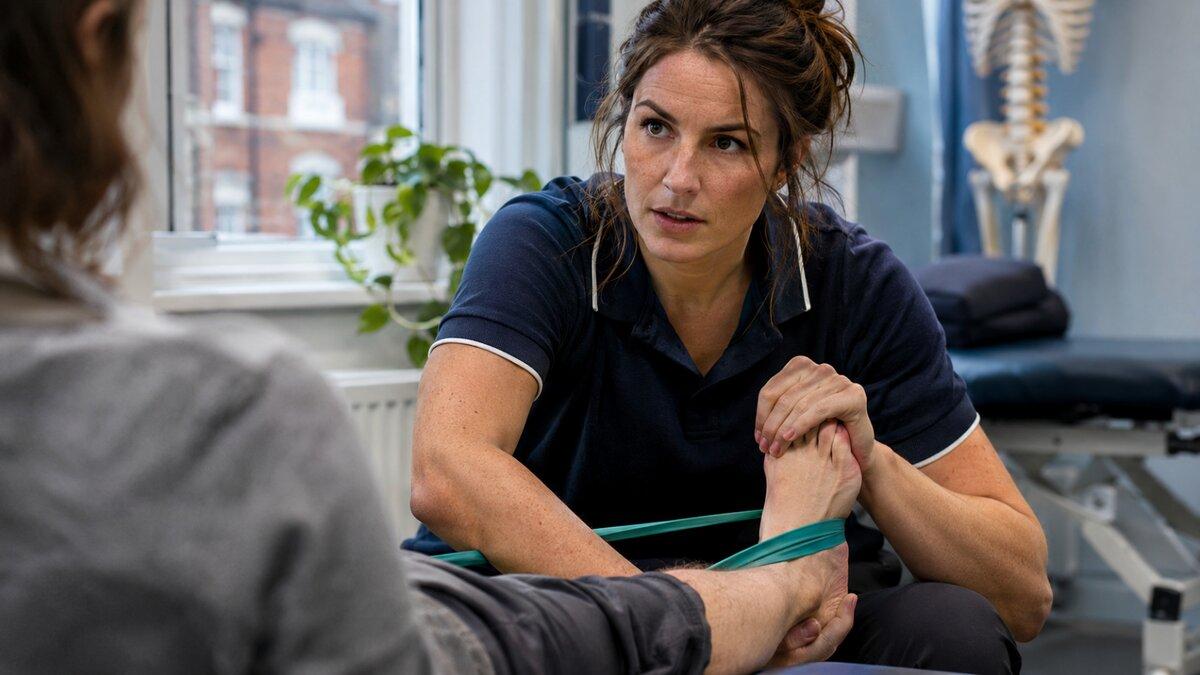
Ankle injuries account for 5% of visits to accident and emergency (A&E) departments in the UK, according to NICE. Genevieve Tawiah, a performance physiotherapist who has worked on shows including Strictly Come Dancing, says ankle injuries are common, and most people can lower their own risk.
The ankles act as the body's primary shock absorber. They are vital for balance, standing, walking and running, yet most people rarely think about them until they hurt them.
Tawiah says injuries can be avoided "if you are strong and aware of your foot and ankle and the chain that affects it". She offers three ways to strengthen them.
Build brain-to-body awareness
The foundation, Tawiah says, is being "brain to body aware". That means sensing what your ankles are doing without looking down at them.
She suggests starting with small toe movements, which affect how weight passes through the ankles. In the first drill, press the tip of your big toe into the floor, hold it and watch how the arch of your foot engages. "This will feel like something pulling through the arch of your foot," she says.
In the second, place a pen on the floor parallel with your big toe. Then try to move the toe towards the pen, a movement called toe abduction.
Train balance and control
The ankle helps us balance, bear weight and transmit force, Tawiah says. She lists several exercises.
For heel raises, stand next to a sturdy surface and lift your heels off the floor, rolling onto your toes. Keep your ankles from wobbling or sticking outwards.
To practice balance, walk with one foot in front of the other, like a gymnast on a beam, and keep control of your foot. Standing up from a seat on one or two legs, and going up or down stairs, also build control.
"If you go up the stairs and you find that you lead with one leg, practice leading with the other side," she says.
People recovering from sprains might try balancing on one leg while throwing and catching a ball. They can also work on landing control by stepping to either side and balancing on the landing leg. For tendinopathy, or chronic tendon pain, she says a slow, heavy load matters, such as weighted calf raises on a leg press.
Choose the right shoes
Footwear matters too. Tawiah says many people fall into the trap of wearing flat ballet pumps, pointy shoes or trainers that are narrower at the front. Her test: imagine the top of the shoe removed and ask whether your toes would have space or your big toe would push over.
Barefoot shoes are growing in popularity and can help, she says. But she advises building a good baseline of foot and ankle strength first and pacing yourself.
She also recommends "a degree of arch support", because it affects how you take weight through the foot. Different activities call for different shoes. Squats suit a flatter shoe, while a spongy sole makes balance harder. Runners may want a trainer with more cushioning for impact.
On longer all-terrain walks, Tawiah says "hiking boots are often useful in reducing the risk of big sprains". Wearing them for long periods day to day, she adds, can increase ankle stiffness because they limit mobility to a degree.