Root-to-Tip Eating: Scraps Can Pack More Fiber
Using more of fruits and vegetables could add fiber to meals and reduce food waste, according to nutrition experts and a King’s College London study. Some scraps contain far more fiber than the edible flesh, but pesticide residues can also concentrate in peels, and rhubarb leaves can be harmful in large quantities.
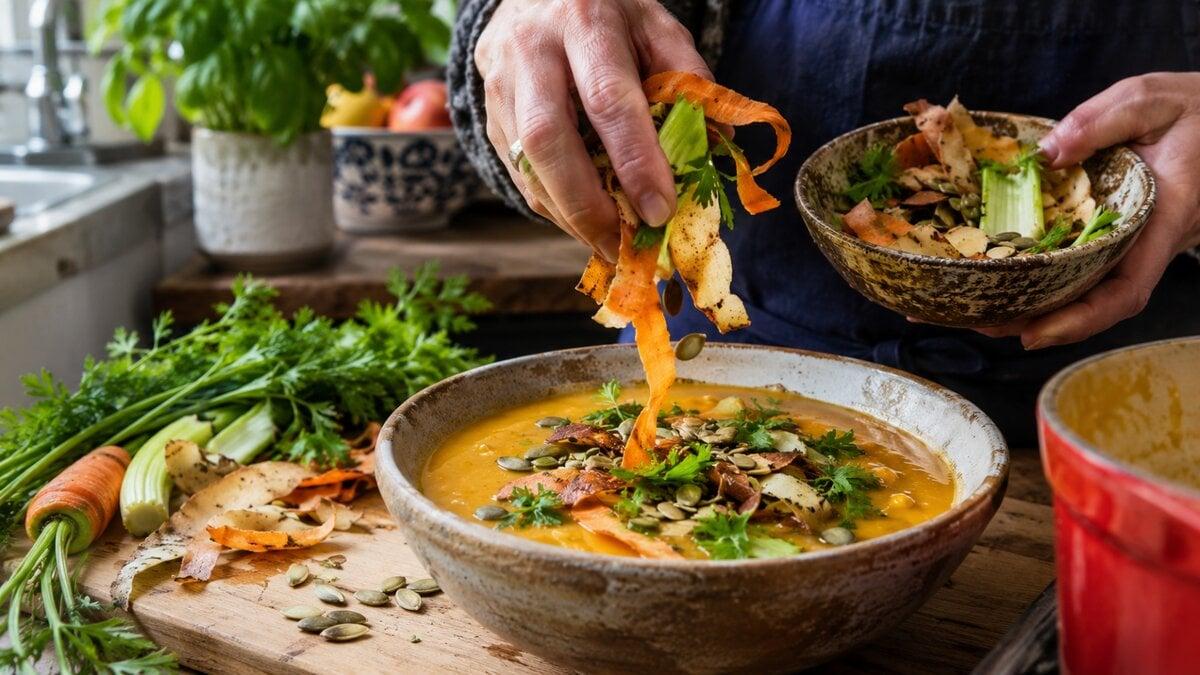
A King’s College London study found that peels, skins, stalks and seeds in 10 of 12 fruit and vegetable types it analyzed contained more fiber than the flesh, supporting the root-to-tip revolution a-z eat approach to reducing food waste. Nutrition experts say using these parts can add fiber to meals, though some require careful preparation and rhubarb leaves can be harmful in large quantities.
The study, published in the International Journal of Food Sciences and Nutrition, found that produce scraps made up 25-48% of the total weight of the foods analyzed. Discarding them means throwing away potentially useful ingredients, researchers said.
“Leftovers are a valuable source of fibre and worth incorporating into meals, especially given that 96% of adults do not meet the recommended daily intake of 30g of fibre,” said Sammie Gill, a senior nutrition scientist at the British Nutrition Foundation.
Fiber levels varied widely by ingredient. Cauliflower cores and leaves contained 112% more fiber than the florets, while kiwi skin had 195% more than the flesh. Pineapple skin and core contained 454% more, according to the study.
Some scraps can be used with little effort. Chef Tom Heywood grates cauliflower cores into couscous and rice, while Adam Handling recommends roasting, pickling or fermenting cauliflower leaves and stalks. Carrot tops can be blended into pesto, and celery leaves can go into salads.
“A lot of the parts that people see as ‘waste’ are actually great ingredients in their own right; you just need to treat them with a bit of imagination,” said Handling, a chef who runs zero-waste restaurants and wrote the cookbook Why Waste?
Root vegetables such as potatoes, carrots, parsnips and turnips do not need to be peeled, according to the advice in the report. Washing them well is recommended. Vegetable peelings can also be baked with oil and seasoning to make crisps.
There are exceptions. Gill said pesticide residues can also concentrate in fruit and vegetable skins. She said rice vinegar and carbonated water were among the most effective household options explored in research to remove residues, while buying organic was the only way to avoid them altogether.
Rhubarb leaves also require caution. “Although cases are rare, consuming large quantities of rhubarb leaves can cause adverse symptoms, including abdominal cramping, nausea, vomiting and a burning sensation in the throat,” Gill said.
For a simple way to use scraps, Handling recommends saving vegetable trimmings to make stock. “You don’t need to make things complicated. Start by keeping your vegetable trimmings and use them to make a stock,” he said.
 Take the quizWhat Kind of Holiday Spender Are You? Take the Black Friday QuizStart →
- 1U.S. Emergency Alert Test Nov. 17 Is Not a Power Outage

- 2Women With Autoimmune Diseases Wait About 4 Years for Diagnosis, Study Finds

- 3DUP Chairman Lord Morrow Loses Wife and Daughter Within Hours in NI

- 4Micron Stock Falls 28% as $35.16 Billion Buyback Nears

- 5I’m A Celebrity 2026 Line-Up: Rooney Leads 11 Stars Into Jungle

 Lifestyle7 Signs Your Social Battery Is Running Low (and Why You Keep Cancelling Plans)
 Lifestyle · Food & HealthThanksgiving Food Safety: How Long Leftovers Last and the Safe Turkey Temperature
 Lifestyle7 Quiet Habits of Emotionally Intelligent People, According to Psychologists
 LifestylePeople Who Don’t Like Celebrating Their Birthday Often Share These 7 Traits