Thanksgiving Food Safety: How Long Leftovers Last and the Safe Turkey Temperature
Leftovers should be in the fridge within two hours and eaten within three to four days. Here is what CDC and FDA guidance says about thawing, cooking and reheating the Thanksgiving meal.
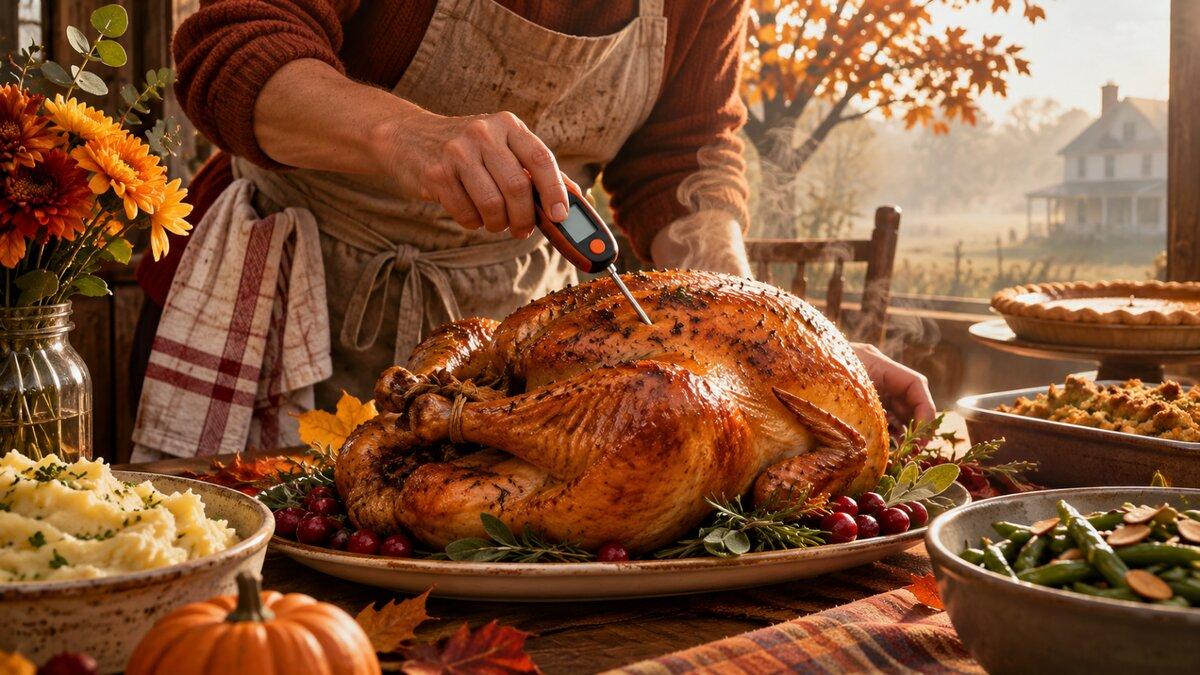
Thanksgiving leftovers should be in the refrigerator within two hours of cooking and eaten within three to four days. The turkey is safe to eat when a food thermometer reads 165°F (74°C) in the right spots, and a frozen bird must never thaw on the kitchen counter. Those three rules come straight from US health agencies, and they cover most of what goes wrong at holiday tables.
Thanksgiving falls on November 26 this year, so the thawing clock may already be running. Here is what the Centers for Disease Control and Prevention (CDC) and the Food and Drug Administration (FDA) say about each stage, from the freezer to the last slice of pie.
The short version
- Thaw a turkey in the refrigerator, in cold water or in the microwave, never on the counter.
- Cook it until the thickest part of the breast, the innermost part of the thigh and the innermost part of the wing reach 165°F.
- Refrigerate leftovers within two hours, or within one hour if they sat in heat above 90°F.
- Eat leftovers within three to four days, or freeze them, and reheat to 165°F.
- Do not rinse raw turkey.
How long does a turkey take to thaw?
The CDC says to allow about 24 hours of refrigerator time for every 4 to 5 pounds of turkey. The FDA gives a concrete example: a 20-pound turkey needs four to five days to thaw in the refrigerator. Keep the bird in its original wrapping and set it in a container to catch drips. Once thawed, the CDC says a turkey can stay in the refrigerator for one to two days before cooking.
If you are short on time, cold water is the faster route. The CDC advises placing the turkey in a leakproof bag, covering it fully with cold tap water and changing the water every 30 minutes. Plan on about 30 minutes per pound. The microwave is a third option, following the manufacturer's instructions. In both cases the turkey has to be cooked immediately afterward.
The one method both agencies rule out is thawing on the counter. The CDC points out that a turkey left out for more than two hours is unsafe even if the center is still frozen, because the outer layers sit in the temperature range of 40°F to 140°F that it calls the danger zone.
What temperature is a turkey safe to eat?
Both agencies give the same number: 165°F. The FDA says to measure it in the innermost part of the thigh and wing and the thickest part of the breast. The CDC adds that you should avoid touching bone with the thermometer and check all three spots.
Color is not a reliable guide, according to the FDA, and the CDC says a pop-up timer does not replace a food thermometer. The CDC recommends an oven temperature of at least 325°F with a completely thawed bird, and letting the turkey stand for 20 minutes before carving.
What about the stuffing?
Stuffing has to reach 165°F as well, whether it was cooked inside the bird or outside it. The CDC says a casserole dish is the safest way to cook it. If you do stuff the turkey, the FDA advises preparing the stuffing right before it goes in and stuffing loosely, about three-quarters of a cup per pound of turkey. The CDC adds that you should wait 20 minutes after taking the bird out of the oven before removing the stuffing.
Should you wash the turkey?
No. The FDA says not to rinse raw meat or poultry, and the CDC notes that federal agencies have advised against washing turkey since 2005. Even so, a 2020 survey cited by the CDC found that 78% of respondents rinsed their turkey before cooking. The CDC also cites a US Department of Agriculture study in which 1 in 7 people still had germs in the sink after cleaning it. Cooking to 165°F is what kills the bacteria, not rinsing.
How long do Thanksgiving leftovers last?
Both agencies give the same window: use leftovers within three to four days, or freeze them for longer storage. The clock for getting them cold is shorter. The FDA says to refrigerate leftovers within two hours, and that includes pumpkin pie. The CDC tightens that to one hour if the food has been exposed to temperatures above 90°F, for example in a hot car on the way home from a relative's house.
Two habits help food cool faster. The CDC suggests cutting large pieces of turkey into smaller ones before storing them. And the FDA says to keep the refrigerator at or below 40°F and the freezer at 0°F, checking both with an appliance thermometer rather than trusting the dial.
How should you reheat leftovers?
Heat everything to at least 165°F, the CDC says. For sauces, soups and gravies, the FDA says to bring them to a rolling boil. If you are unsure whether something has been out too long, the FDA's advice is blunt: when in doubt, throw it out.
Other holiday kitchen rules worth remembering
The FDA's holiday guidance also covers the basics that are easy to skip in a busy kitchen. Wash hands with warm water and soap for 20 seconds before and after handling food, which takes about as long as singing "Happy Birthday" twice. Use separate cutting boards for raw meat and for produce, and never put cooked food on a plate that held raw poultry. For eggnog or other recipes that use raw eggs, use pasteurized eggs or egg products, and skip uncooked cookie dough.
Symptoms to watch for
The FDA lists vomiting, diarrhea and flu-like symptoms as the signs of foodborne illness, and says they can start anywhere from hours to days after eating contaminated food. If symptoms are severe or do not pass, contact a doctor.
The CDC's guidance is dated April 2024 and the FDA's was current as of January 2025. Agencies occasionally update their pages, so a quick check of cdc.gov or fda.gov before the big day is worthwhile. With the thaw started early, a thermometer in the thickest part of the breast and the leftovers packed away within two hours, the rest of the dinner can stay stress-free.
 Take the quizWhat Kind of Holiday Spender Are You? Take the Black Friday QuizStart →
- 1Column: 4 Reasons to Eat Dark Chocolate, Dietitians Say
- 2Chrissie Swan, 52, Tears Up Over Secret Surprise While Recovering

- 3Aspyn Ovard Reveals Daughter Has Terminal Cancer on Mormon Wives

- 4Mavericks Surfers Race to California for Waves Near 50 Feet

- 5Meghan Markle Plans US Return to See Mother After Father’s Arrest

 Lifestyle7 Quiet Habits of Emotionally Intelligent People, According to Psychologists
 LifestylePeople Who Don’t Like Celebrating Their Birthday Often Share These 7 Traits
 Lifestyle · Food & HealthVitamin D in Winter: Do You Need a Supplement, and How Much?
 Lifestyle · Food & HealthWhat Is Seasonal Affective Disorder? Signs, Causes and What Helps