Turkey’s President Calls War in Gaza an ‘Ecocide’ at COP31
Turkish President Recep Tayyip Erdogan told world leaders at the COP31 climate summit in Antalya on November 11, 2026, that the Gaza war is an ecocide as well as a genocide. He also urged Israel to allow more aid into the territory.
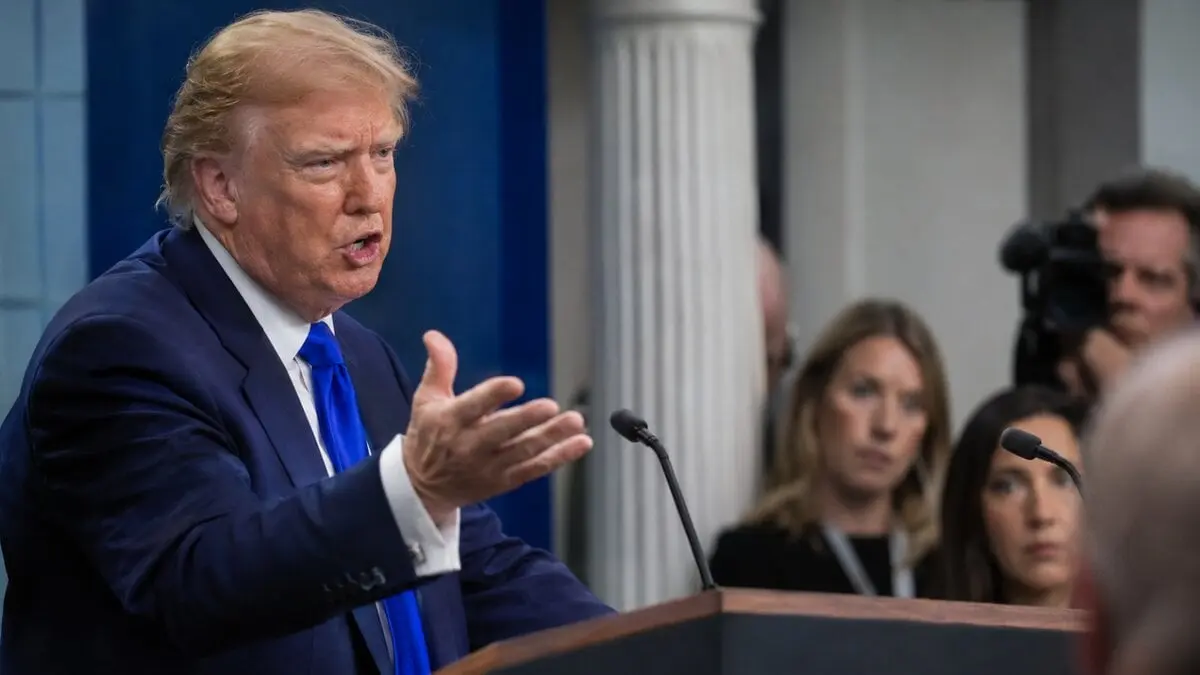
Turkish President Recep Tayyip Erdogan said on Wednesday, November 11, 2026, that the war in Gaza is an ecocide, speaking at the U.N. climate summit known as COP31 in Antalya, Turkey. Turkey's president calls war damage to Gaza's environment a crime alongside genocide, and asked Israel to grant more aid access.
"What has taken place in Gaza is not only a genocide, but it is also an ecocide," Erdogan said, to applause from world leaders and other climate envoys.
He described the damage in detail. "Centuries old olive trees have been cut down. The soil and water have been polluted in Gaza, and cities in Gaza have been turned into enormous piles of rubble," he said.
Erdogan also pointed to the flooding. Gaza's destroyed infrastructure, combined with torrential rain, has inundated tens of thousands of tents and shelters, he said.
Israel's Foreign Ministry did not immediately respond to requests for comment. Israel was not invited to COP31.
Disputed genocide finding
A U.N.-backed panel of independent experts concluded last year that Israel had committed genocide in Gaza. Israel strongly denies the allegation and has accused the panel of antisemitism.
Erdogan has been an outspoken critic of Israel. Israeli Prime Minister Benjamin Netanyahu has called him an antisemitic "tyrant." Speaking at the U.N. General Assembly in September, Netanyahu said, "The latest country to become a superspreader of antisemitic lies is Turkey."
Rain and flooding in Gaza
Heavy rain and flooding in recent days destroyed many of the tents and makeshift shelters where displaced Palestinians live. At least four people died earlier this week when a sand embankment collapsed on their shelter. Many displaced people were left without food, drinking water or a dry place to sleep.
Humanitarian aid enters the territory, but imports remain far below levels before the war began. Many items are still blocked by Israel.
Environmental toll
A 2025 report by the U.N. Environment Program (UNEP) outlined the war's effect on Gaza's environment. Remote sensing assessments showed that by May 2025, more than 97% of tree crops, 82% of annual crops, 95% of shrubland and 89% of grass and fallow land had been damaged, according to the report.
Mohammed Usrof, co-founder and executive director of the Palestinian Institute for Climate Strategy, said families now have only 3% of cropland to use, "assuming it's distributed across 2 million Palestinians."
The war began after Hamas-led fighters attacked southern Israel on October 7, 2023, killing around 1,200 people and taking 251 hostages. Israel's offensive has killed more than 74,000 people, according to local health authorities. The Health Ministry, part of Gaza's Hamas-run government, does not distinguish between civilians and combatants but says women and children make up nearly half of the dead.
"Not talking about these losses undermines Palestinians' food supply, livelihoods and ability to remain on their land," Usrof said.