Trump's Proposed 18% Tariff Puts Indonesian Apparel at Risk
A proposed 18% US tariff on Indonesian goods could affect footwear and clothing prices and factory orders, though its effects remain uncertain.
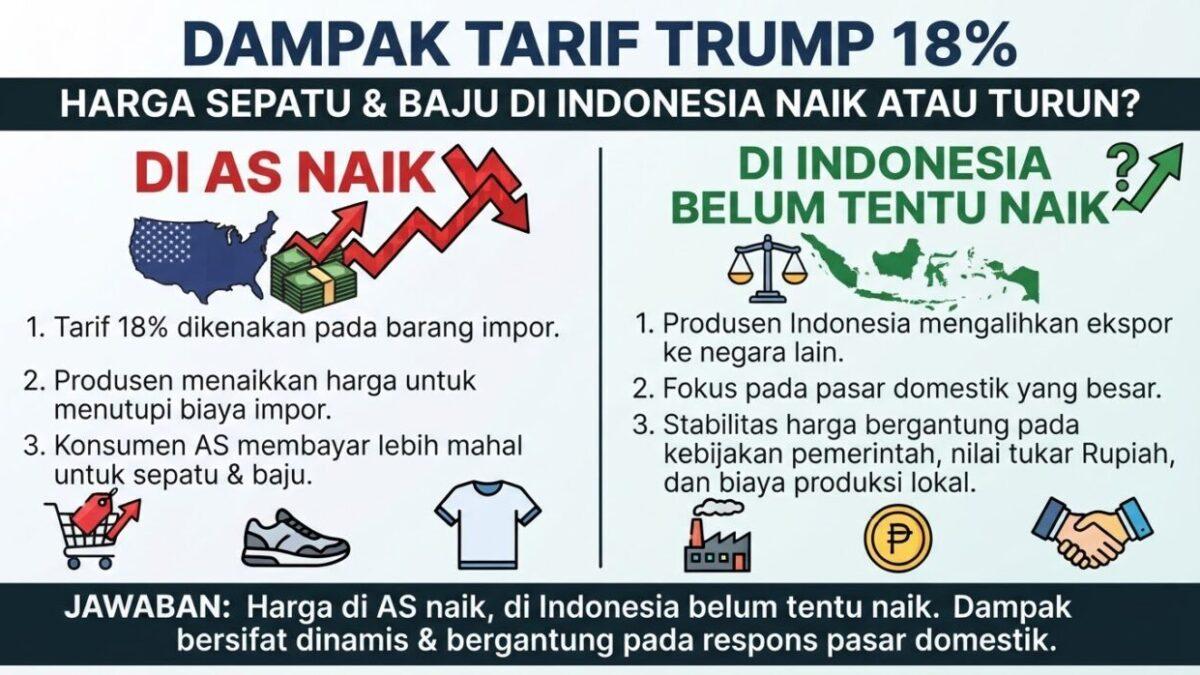
JAKARTA, Indonesia — A proposed 18% US tariff on Indonesian goods could raise costs for American importers of shoes and clothing and put orders at Indonesian factories at risk, although the effects on prices and employment remain uncertain.
The Indonesia tariff proposal would apply to goods entering the United States, not directly to shoes and clothing sold in Indonesia. US importers pay tariffs when goods enter the country and may pass some of the cost to buyers, but an 18% tariff would not automatically translate into an 18% increase in store prices. The outcome depends on how importers and other businesses share the cost.
Higher prices could also affect US consumers' purchasing decisions. If American demand weakens, buyers could reduce orders from Indonesian factories, prompting manufacturers to seek customers in other markets, including Indonesia.
Factory orders and domestic prices
Redirected export stock could give Indonesian shoppers more choice, and discounted goods could cost less. Neither outcome is assured: it would depend on whether manufacturers divert stock to the domestic market and what sellers charge. The proposed US tariff alone does not provide a way to calculate changes in Indonesian retail prices.
Footwear and garment factories that rely on US orders could respond to reduced demand by cutting overtime or production, depending on their circumstances. Lower production could reduce demand for labor, but the proposal does not itself mean layoffs have occurred. The effect on workers would depend on whether the policy takes effect and how orders change.
Indonesia's Ministry of Industry estimates that the country's textile and textile products industry employed about 3.8 million people in 2025, while the footwear industry employed about 600,000. Manufacturers with buyers in several markets have more options; Europe, Japan and the domestic market have been identified as possible destinations for redirected sales. Businesses could also negotiate with buyers over how to share tariff costs.
Indonesia pursues talks
As of Nov. 27, 2026, Indonesia's government had not announced retaliatory tariffs against the United States. It was pursuing bilateral negotiations and seeking to help factories diversify their markets.
The government was also preparing public comments for the Office of the United States Trade Representative, or USTR. The stated deadline for submissions was Jan. 5, 2027.
 Take the quizWhat Kind of Holiday Spender Are You? Take the Black Friday QuizStart →
- 1Qualcomm shares rise to $168.66 as chipmaker bucks wider tech selloff

- 2Meta Platforms shares rise 2.5% as AI loan and Amazon talks draw focus

- 3Broadcom shares edge down as late rebound trims early AI selloff

- 4Qualcomm stock climbs to $168.66 as chipmaker sets $500 target for CEO

- 5Alphabet stock slides to $270 as credit concerns deepen

 Lifestyle · Food & HealthNormal Blood Sugar Levels: A1C, Fasting and After-Meal Ranges Explained
 Lifestyle · Food & HealthNorovirus Symptoms: How Long It Lasts and When You Stop Being Contagious
 Lifestyle · Food & HealthCold vs Flu vs RSV: How to Tell the Difference by Symptoms, Speed and Duration
 LifestyleWhy Do Long Lines Make People Curious? 5 Reasons We Join the Crowd