DWP Cyber Incident Was Probably an Attack, Ex-Official Says
The UK’s benefits and pensions portal remains offline after a cyber incident that former government technology chief David Knott believes was probably an attack. The Department for Work and Pensions says regular payments will continue, while people affected by the outage will not face sanctions.
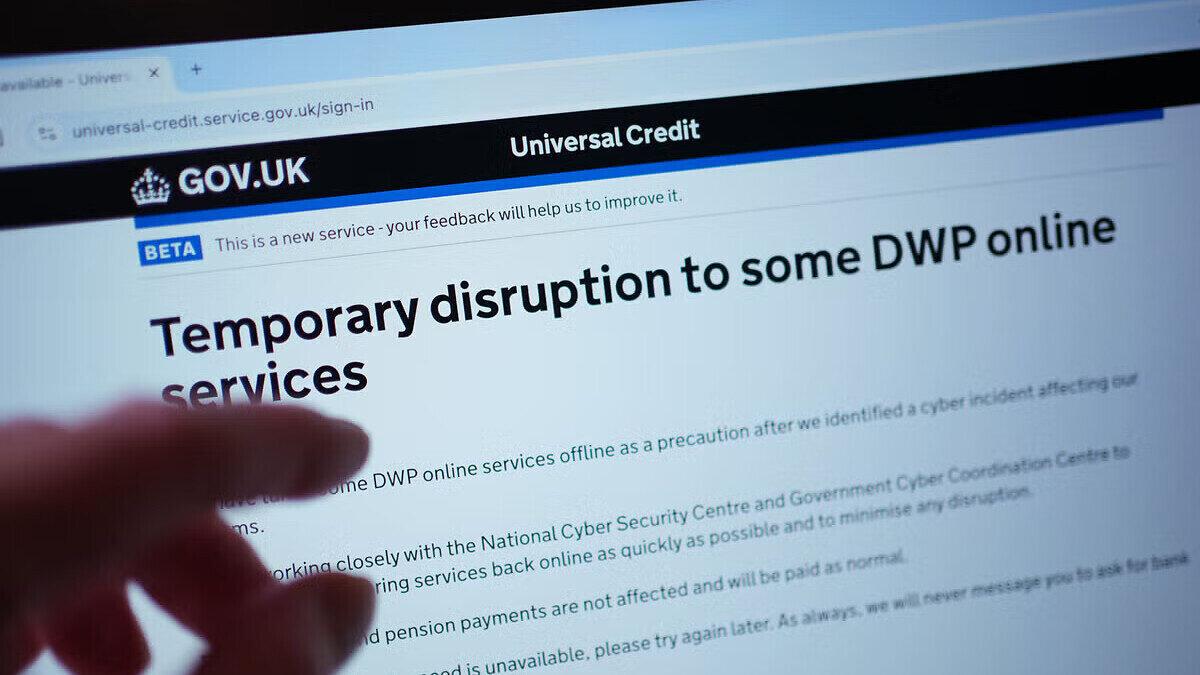
The UK’s benefits and pensions portal remained offline after a cyber incident that former government technology chief David Knott said was probably an attack. The Department for Work and Pensions, or DWP, said regular payments would continue and affected claimants would not face sanctions.
People cannot use the portal to check their state pension, apply for disability benefits or claim Universal Credit. The department took services offline as a precaution after detecting unusual activity.
Knott, who led government technology until December 2025, said the government had used precise language about the incident. He said the use of the word cyber and the removal of public-facing services pointed toward an attack.
“My strong suspicion is this is an attack,” Knott said.
Downing Street said there was no evidence that a malicious actor had targeted other government departments. The National Cyber Security Centre and Government Cyber Coordination Centre are working with the DWP to investigate.
Regular payments will continue
The DWP makes about 2.5 million regular payments a day and said benefit and pension payments were not affected. It advised anyone experiencing payment delays or other problems to call its helplines.
The department said people facing urgent difficulties should contact their benefit helpline. It also said customers directly affected by the outage would not face sanctions for failing to meet conditions while the system was offline.
The DWP warned people to watch for scams linked to the outage. The department said the government would never ask people to confirm bank details or click a link.
Internal DWP systems have been restored, allowing officials to resume work. Officials also faced a potential backlog of manual payments running into tens of thousands, according to DWP insiders.
Knott warns of aging systems
Knott said government infrastructure had become more vulnerable because of outdated systems, underinvestment in defenses and increasingly sophisticated attacks. He said attackers were using artificial intelligence tools to make attacks easier.
Systems with known security weaknesses can be attacked without advanced artificial intelligence, Knott said. He also described defending against cyberattacks as difficult.
Knott said the government measured how much of its infrastructure was considered out of date. “I think in 2023, it was 26%. In 2024, it was 28%,” he said.
The UK’s data protection watchdog said it was in contact with the DWP about the incident.
 Take the quizWhat Kind of Holiday Spender Are You? Take the Black Friday QuizStart →
- 1Qualcomm stock climbs to $168.66 as chipmaker sets $500 target for CEO

- 2Sandisk shares jump nearly 16% to $85.36 after Kioxia-Nvidia test

- 3Tesla shares jump 4.86% to $398.60 after German robotics filing

- 4Nasdaq Composite rises nearly 2% as tech rebound eases AI fears

- 5Apple shares edge up to $355.58 as AI selloff spares iPhone maker

 LifestylePeople Who Type Long Texts and Delete Them Often Share These 5 Traits, Psychologists Say
 Business · Macro & PolicyFull Retirement Age Chart: Social Security Ages by Birth Year Explained
 Lifestyle · Food & HealthWhat Is a GLP-1 Receptor Agonist? How It Works, Uses and Side Effects
 LifestylePeople Who Cover Their Laptop and Water Bottle in Stickers Often Share These 6 Traits