NASA’s Swift Observatory Ends Mission After Reentry
NASA’s Neil Gehrels Swift Observatory has ended its mission after nearly 22 years studying some of the universe’s most powerful explosions. The spacecraft reentered the atmosphere over North Sumatra, Indonesia, after a planned operation to raise its orbit was canceled.
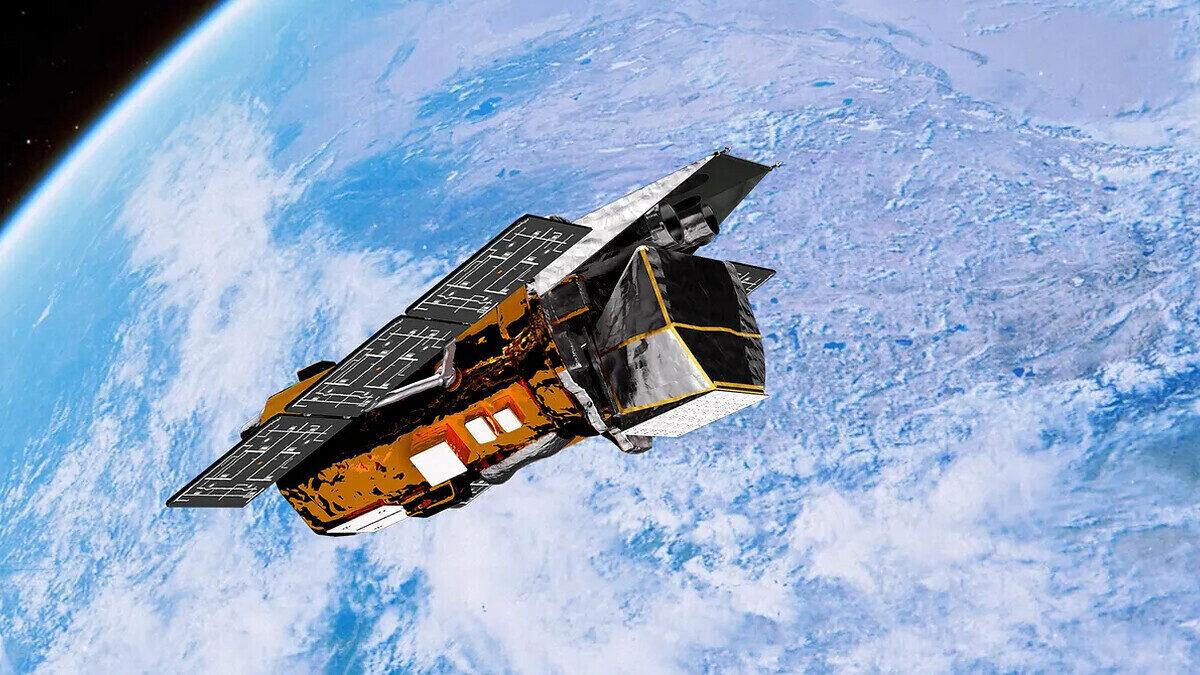
NASA’s Neil Gehrels Swift Observatory has ended its mission after nearly 22 years revealing secrets of space. The telescope reentered the atmosphere on November 4 over North Sumatra, Indonesia, after its falling orbit made stable observations impossible.
Swift tracked more than 2,000 gamma-ray bursts, the universe’s most powerful explosions. Its observations helped scientists locate the brief flashes and study their fading light.
The observatory also left a public archive containing more than 1.5 million ultraviolet and visible-light images. The full dataset amounts to about 12 terabytes and includes approximately 22 years of brightness measurements.
Swift Tracked Fleeting Cosmic Explosions
NASA launched Swift on November 20, 2004, and the observatory began operating the following month. Its instruments included a gamma-ray-burst alert telescope, an X-ray telescope, and ultraviolet and visible-light telescopes.
Swift detected bursts, pinpointed their locations and alerted other observatories. It then turned its own telescope toward the fading light, usually completing the sequence in about a minute.
That speed was essential for short bursts. Their emissions end in less than two seconds, making their afterglows difficult to observe.
“Swift was designed as a satellite dedicated to studying gamma-ray bursts, outbursts that came and went so quickly that no one could target them with large telescopes to learn more,” said S. Bradley Cenko, the mission’s principal investigator at NASA’s Goddard Space Flight Center.
In May 2005, Swift turned toward GRB 050509B, a burst that lasted 0.03 second, and detected 11 X-ray photons. It was the first short gamma-ray burst with a detected afterglow.
The observation supported theories that short bursts most likely result from two neutron stars merging. These objects pack a mass comparable to the sun into a space the size of a city.
Swift also observed more than 1,400 supernova explosions and watched black holes tear stars apart. Its observations contributed to approximately 7,000 scientific papers.
Rescue Attempt Was Canceled
NASA and Katalyst Space Technologies canceled an operation to raise Swift’s orbit on August 19. A malfunction in the attitude-control system of Katalyst’s LINK spacecraft made capturing Swift and lifting it difficult.
NASA had awarded Katalyst a $30 million contract in September 2025. The plan called for LINK to use three robotic arms to dock with Swift and raise it to a safe operational altitude.
LINK launched on July 3, 2026, aboard a Northrop Grumman Pegasus XL rocket. After the rescue was canceled, it approached Swift to within 12 to 15 kilometers (7 to 9 miles) during an in-orbit demonstration.
LINK reentered Earth’s atmosphere on September 25. Swift lacked thrusters to maintain its orbit, and atmospheric resistance continued to pull it lower.
Swift’s team restarted its ultraviolet, visible-light and X-ray telescopes on August 26. They captured images of Tycho’s supernova remnant, approximately 13,000 light-years away.
Swift made its final observation on October 20. NASA is considering ways to use and expand its existing fleet of space telescopes to respond to cosmic phenomena.
 Take the quizWhat Kind of Holiday Spender Are You? Take the Black Friday QuizStart →
- 1Qualcomm stock climbs to $168.66 as chipmaker sets $500 target for CEO
- 2Sandisk shares jump nearly 16% to $85.36 after Kioxia-Nvidia test
- 3Tesla shares jump 4.86% to $398.60 after German robotics filing

- 4Nasdaq Composite rises nearly 2% as tech rebound eases AI fears

- 5Apple shares edge up to $355.58 as AI selloff spares iPhone maker
 LifestylePeople Who Type Long Texts and Delete Them Often Share These 5 Traits, Psychologists Say
 Business · Macro & PolicyFull Retirement Age Chart: Social Security Ages by Birth Year Explained
 Lifestyle · Food & HealthWhat Is a GLP-1 Receptor Agonist? How It Works, Uses and Side Effects
 LifestylePeople Who Cover Their Laptop and Water Bottle in Stickers Often Share These 6 Traits