IHSG Dips to 5,801 as Markets Await U.S. Jobs Data
IHSG fell to 5,801 on Tuesday as investors await key U.S. jobs data and monitor U.S.-Iran tensions, while domestic liquidity and foreign inflows offer support.
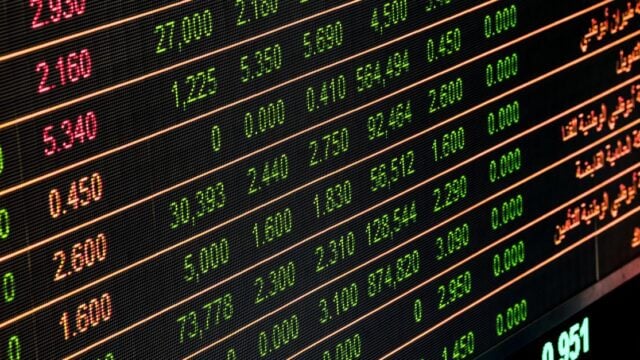
JAKARTA — On Tuesday morning, the IHSG opened trading by immediately slipping into the red. The index fell 19.34 points, or 0.33 percent, to 5,801.45 — still below 6,000 for the second straight day.
Market participants are not moving aggressively yet. They are waiting for a series of U.S. economic data releases due throughout this week, including Non-Farm Payrolls employment data on Thursday (1/7). The figure will be an important signal for the direction of the Federal Reserve’s interest rate policy.
The LQ45 index — which tracks 45 blue-chip stocks — also fell 4.02 points, or 0.70 percent, to 568.99.
Two Straight Days in the Red
A day earlier, on Monday (29/6), the IHSG had already fallen more sharply. The index closed down 75.34 points, or 1.28 percent, at 5,820.79, with the LQ45 tumbling 1.83 percent. Trading volume in Monday’s session reached 15.48 billion shares with transaction value of Rp9.10 trillion — a relatively busy figure, but most stocks still ended lower: 449 declined, while only 214 advanced.
The pressure came from two directions at once: geopolitical tensions in the Middle East that flared again, and investor caution ahead of U.S. economic data.
Tensions between the United States and Iran rose sharply over the weekend. Iran attacked several ships in the Strait of Hormuz, and the U.S. responded by striking Iranian military facilities. The situation briefly triggered panic in global markets, although it later eased somewhat after signals of a diplomatic meeting in Doha, Qatar — even though Iran itself denied any negotiation agenda.
"This situation has pushed geopolitical risk premiums higher again, but it has not yet triggered panic in global financial markets," said Head of Research at Kiwoom Sekuritas Indonesia, Liza Camelia Suryanata, in her analysis in Jakarta on Tuesday.
Where Could the IHSG Move?
Liza outlined two possible scenarios. If a rebound occurs, the IHSG could test resistance around 5,996–6,013. If it breaks through that area, gains could continue toward 6,097 and even 6,221–6,287.
But there is also a downside risk. If support at 5,722 fails to hold, the correction could deepen toward 5,677 and then 5,594.
So for now, the market is at a crossroads. It could rise, or it could fall further — depending on incoming data.
Throughout this week, investors will be watching several important U.S. releases: Job Openings (JOLTs) data, a speech by Fed Governor Kevin Warsh, Non-Farm Payrolls figures, and the unemployment rate. All of these will shape market expectations on whether the Fed will cut interest rates or keep them elevated for longer.
From the global side, there was a positive signal that briefly lifted sentiment. Wall Street closed higher on Monday night: the Dow Jones rose 0.59 percent, the S&P 500 jumped 1.17 percent, and the tech-heavy Nasdaq surged 2.07 percent. But in Asia this morning, the picture was mixed. The Nikkei gained 0.54 percent to 69,885, while the Hang Seng fell 1.39 percent and the Shanghai Composite slipped 0.33 percent.
One interesting note from Deutsche Bank: technology-based ETFs and mutual funds recorded an outflow of $9.3 billion last week. That means some investors chose to exit the technology sector even as the index strengthened — a cautionary signal that cannot be ignored.
A Domestic Buffer
Amid external pressure, several positive developments at home could provide support.
The Finance Ministry decided to return Rp110 trillion from the Remaining Budget Balance (SAL) to state-owned bank holding companies (Himbara). The total amount of government funds placed in banks now remains at Rp281 trillion, and it has been extended until the end of December 2026. The government has also prepared Rp100 trillion in standby funds as a standby facility to maintain banking liquidity — amid credit growth that in May 2026 was still expanding 11.5 percent year on year.
From the monetary side, the 100-basis-point increase in the BI Rate throughout 2026 is starting to bear fruit. As of June 26, 2026, foreign inflows into government securities (SBN) and Bank Indonesia Rupiah Securities (SRBI) reached around $9 billion. The figure is significant — reflecting renewed foreign investor confidence in Indonesian assets.
This week, the domestic market is also awaiting Indonesia’s Manufacturing PMI, June inflation, and the trade balance. All three will serve as a gauge of how strong Indonesia’s economic activity is.
"The combination of foreign capital inflows, stronger banking liquidity, and government support for investment and exports could become a positive sentiment for rupiah stability, the bond market, and the banking sector," Liza said.
3-Point Summary
- The IHSG weakened again at Tuesday’s open (1/7), down 0.33 percent to 5,801 — after falling 1.28 percent on Monday. The market remains below the 6,000 level.
- Two main factors are weighing on sentiment: military tensions between the U.S. and Iran in the Strait of Hormuz, and investor caution ahead of Thursday’s U.S. Non-Farm Payrolls release, which will help determine the Fed’s policy direction.
- There is a domestic buffer: Rp281 trillion in government funds parked in banks, Rp100 trillion in standby funds, plus about $9 billion in foreign inflows into SBN and SRBI — enough to limit a deeper slide, at least for now.
Quick FAQ
What are support and resistance levels for the IHSG?
Support is the lower boundary where prices tend to stop falling and turn back up — currently at 5,722. Resistance is the upper boundary that is difficult to break through — currently around 5,996–6,013. If the IHSG breaks resistance, further upside becomes possible.
Why does U.S. NFP data affect the IHSG?
Non-Farm Payrolls data shows the condition of the U.S. labor market. If the figure is strong, the Fed tends to delay rate cuts — which strengthens the U.S. dollar and pressures emerging-market assets such as Indonesian stocks.
Is the U.S.-Iran conflict dangerous for Indonesian markets?
It has not yet triggered major panic. But if the escalation continues and permanently blocks the Strait of Hormuz, oil prices could surge — which would ultimately worsen inflation and pressure the currencies of oil-importing countries, including Indonesia.