July 2026 Fuel Prices Face Pressure Amid 3.34% Inflation
July 2026 fuel prices are under scrutiny as Indonesia’s inflation hits 3.34% and trade deficits, oil prices, and rupiah pressure weigh on subsidy policy.
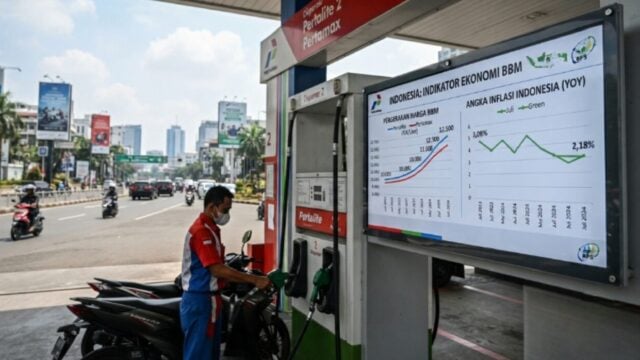
JAKARTA, JOURNALARTA.COM – As Indonesia’s annual inflation rate rose to 3.34% in June 2026, public attention and business operators once again centered on one highly crucial commodity: fuel, or BBM. Amid the recording of the first trade deficit in six years, speculation over a possible adjustment to subsidized fuel prices resurfaced and became a hot topic that fueled public concern.
This development places the government in a difficult position, because any decision taken will have broad impacts, ranging from the state budget to overall public purchasing power.
Double Pressure: Subsidy Burden vs Trade Deficit
The government is currently at a challenging crossroads. On one hand, the 2026 State Budget (APBN) has allocated a large amount of energy subsidy funds with the aim of maintaining price stability and supporting public purchasing power. However, conditions on the ground show growing pressure.
The trade deficit recorded in June 2026, driven by a drop in export value and high import costs, has added to the state’s spending burden. In addition, global crude oil prices remain volatile and the rupiah is under pressure due to tight monetary policy from the United States.
“Every time global oil prices rise or the rupiah weakens against the US dollar, the subsidy burden automatically gets larger,” said an economist from the Institute for Development of Economics and Finance (INDEF), quoted Monday (6/7/2026).
“In a situation like this, the government faces a classic dilemma: keep prices unchanged and risk widening the budget deficit, or make a price adjustment so the country’s finances remain healthy?” he added.
Threat of a Ripple Effect on Business and Logistics
The concern is felt not only by household consumers, but also by business players, especially in logistics and goods distribution. Indonesia’s manufacturing sector, according to the latest Purchasing Managers’ Index (PMI) data, is already in contraction territory, making it highly sensitive to rising operating costs.
If BBM prices, both subsidized and non-subsidized such as Pertalite and Dexlite, are adjusted, transportation costs for goods will quickly surge. These higher costs are expected to be passed on by producers into the final selling prices of products, which in turn could push inflation even higher, even though inflation of 3.34% was only just reported by the Central Statistics Agency (BPS) in the previous period.
Government Response: Stability Still the Priority
Responding to growing public and market unease, the Ministry of Energy and Mineral Resources (ESDM) had not provided certainty on any possible fuel price changes as of early July 2026. A ministry spokesperson stressed that maintaining energy price stability remains the main priority in supporting the recovery of the industrial sector, which is currently slowing.
Nevertheless, a number of capital market observers warned that if global crude oil prices (Indonesia Crude Price/ICP) continue to stay above the assumptions set in the 2026 APBN, then a gradual adjustment mechanism may no longer be avoidable in the third quarter of this year to preserve the sustainability of the state budget.
Public View: Fuel as an Indicator of Living Costs
At the broader public level, fuel price changes are often seen as a main “psychological trigger” for movements in the cost of living. Peaceful demonstrations held in several major cities in early July, in addition to raising reform issues, also included calls for the government to keep basic goods and energy prices affordable.
“For us, if fuel prices go up, almost all daily necessities will definitely go up too. Transport costs, work costs, everything is affected,” said Budi, a public transport driver in Jakarta who feels the impact of fuel price fluctuations directly in his work.
Looking Ahead to the Rest of 2026
The second half of 2026 will be a test of Indonesia’s fiscal and economic resilience. Amid still-strong external pressures and domestic conditions that require attention, decisions on fuel prices will not only determine the direction of inflation, but also affect public trust in the government’s ability to manage a difficult economic situation.
For millions of Indonesians, fuel prices are not merely about vehicle costs, but a reflection of the nation’s economic health as it struggles through waves of global challenges.
Conclusion
Amid rising inflation and pressure on state finances, the fate of BBM prices has become a central issue bringing together the government’s budget interests and the public’s welfare needs. The decisions made going forward will be key to maintaining a balance between macroeconomic stability and people’s ability to meet their daily needs.
FAQ
Q: Why do fuel prices have such a strong impact on inflation?
A: Fuel is the main energy source for transportation and goods distribution. When it becomes more expensive, production and delivery costs rise, and those increases are then passed on to the prices of goods and services generally.
Q: Will the government definitely raise fuel prices this year?
A: There is no official certainty yet. The decision depends heavily on movements in global oil prices, the rupiah exchange rate, and the APBN’s ability to bear the subsidy burden.
Q: What happens if fuel prices are kept unchanged?
A: The subsidy burden will grow larger, potentially widening the state budget deficit and limiting the government’s room to maneuver in carrying out development in other sectors.
Q: How can the government manage the impact if fuel prices rise?
A: Usually, this is accompanied by targeted social assistance schemes so that the burden on low-income communities does not become heavier.