RoRo Logistics: Indonesia Eases Private Investment Rules
RoRo logistics gets a policy push as Indonesia eases permits and costs, aiming to attract private investors without subsidies.
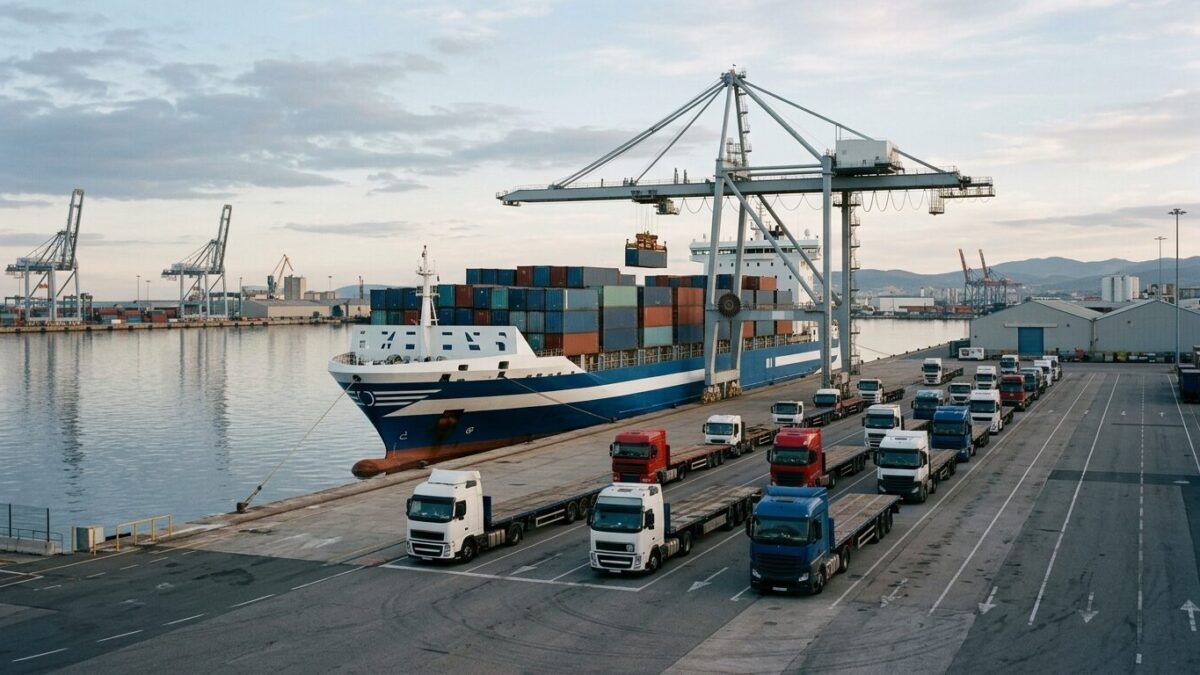
JAKARTA — RoRo logistics is now a new focus for the government as it tries to attract private investment in freight transport, after Transportation Minister Dudy Purwagandhi said on Friday night, June 26, in Jakarta, that the state will cut business barriers, extra operating costs, and permit hurdles that have weighed on companies.
The message from Dudy was simple. If private investors see a business opportunity in roll-on/roll-off logistics services, the government wants to make the entry path smoother. No unnecessary costs. No red tape that makes investors hesitate.
The government opens room for RoRo ships
In a conversation with reporters, Dudy said the government is opening as much room as possible for anyone who wants to invest in logistics services using RoRo ships, as long as the business outlook looks promising. He stressed that the government will not limit business players who see market potential in the sector.
"We are removing obstacles, barriers for them, or basically making it smooth so they do not have to bear additional costs," Dudy said.
That line matters. The government is not promising public money to cover every expense. What it is promising is a better business climate. Private players still have to decide on their own whether a route, cargo volume, and sailing frequency make commercial sense.
That is the policy direction in plain terms: the state wants to reduce friction, not absorb all the risk. For logistics investors, that can be attractive once the market is forming, ports are ready, and cargo flows are stable enough.
No subsidy, companies must do the math
Dudy said the government is not preparing a subsidy scheme for RoRo ship operators. His reason is straightforward: logistics is a business activity that must run on each company’s own economic calculation.
That means the government is not treating RoRo ships as a service fully supported by the state budget. Operators still need to weigh fuel costs, vessel maintenance, cargo certainty, sailing schedules, and whether the route fits the market. If the numbers work, investment can move ahead. If not, the plan usually stops at the spreadsheet stage.
He added that if the various barriers can be removed, companies can focus on operating costs, which should improve efficiency and make investment more attractive. That logic is familiar in logistics. Margins are thin. Fleet rotation has to stay quick. A small mistake can eat into profit fast.
In the same explanation, Dudy also stressed that if a business still looks unprofitable, the reason has to be examined broadly. Not just from the ship or port side, but from market demand too.
Demand will decide RoRo logistics
According to Dudy, demand is the main factor that determines whether a logistics service succeeds. That is why the government is also trying to push demand growth through various catalysts, including incentives that could increase interest in RoRo logistics services.
"The catalysts can come in many forms. Incentives can be all sorts of things, and incentives can help demand grow. I offer it to anyone," the minister said.
On the ground, that means the issue does not stop at whether ships are available. Cargo shippers need to feel that sea freight is cheaper, or at least more efficient, than trucking. If the gap is tiny, they may still choose trucks. If the sea option is cheaper and the schedule makes sense, ports can get busy.
The government believes RoRo ships can help shift part of freight distribution from roads to sea lanes. The impact is not just about logistics efficiency, but also about easing the burden on highways that carry heavy truck traffic every day.
That matters for many people. Lower distribution costs can affect the final price of goods, especially for inter-island commodities. In many regions, transport costs still push prices above their place of origin. A more active sea route could slowly change that map.
ASDP moves first, private firms wait and see
Dudy said state-owned PT ASDP Indonesia Ferry (Persero) has started planning RoRo ship operations for container transport on several routes as an initial step in developing the logistics service.
"Right now, ASDP is the one willing to enter. If the private sector is not willing, I also cannot force them, can I? It is not possible for them to push themselves if it is not visible to them," he said.
The statement suggests the government sees SOEs as the opening move. After that, the market is expected to follow. If a route proves viable, other operators may join. If not, the business model will struggle to grow further.
That makes ASDP’s plan a kind of first test. From there, Indonesia will see whether RoRo ships for container logistics really fit market needs, port capacity, and operating costs. If it works, expansion room opens up. If not, the government still has much more to adjust.
Dudy also said the government cannot force private companies to take the same step. Investment decisions remain tied to each company’s funding strength and business calculation.
"Whether it looks viable or not depends on each company. But if someone has extra money, investing here can be considered visible, depending on each person’s capacity, each company’s capacity. They are all different, from A to Z," Dudy said.
Distribution efficiency is at stake
From a policy angle, the government appears to want a bigger shift in national logistics distribution. Roads have long carried a heavy load from freight transport. If part of that cargo moves to RoRo ships, truck flow on land could ease and road infrastructure could last longer.
But that shift will not happen on its own. Operators must believe cargo will come. Shippers must believe schedules will hold. Ports must be ready for fast loading and unloading. All those links are connected.
Dudy said he is optimistic that the more competitive RoRo shipping becomes, the bigger the chance of moving logistics from roads to sea lanes. National distribution efficiency could improve if the market really responds.
What comes next will be tested by one very practical question: do businesses see RoRo ships as a logistics model worth funding? The government has opened the door. Now the market has to decide who walks in first, and which route proves itself fastest.