Sudaryono Tells Palm Oil Mills to Follow FFB Prices in West Kalimantan
Sudaryono urges West Kalimantan mills to follow palm oil FFB prices and backs farmer protection, fertilizer access, and food self-sufficiency.
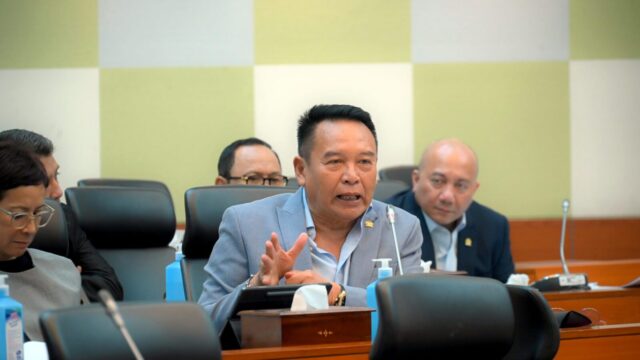
PONTIANAK — palm oil FFB prices in West Kalimantan must not be manipulated by mills. Deputy Agriculture Minister Sudaryono called on all palm oil mills to buy fresh fruit bunches, or Tandan Buah Segar, at the price set by the local government while attending the inauguration of the West Kalimantan Regional Leadership Board of the Indonesian Farmers Harmony Association (HKTI) in Pontianak on Sunday (6/28/2026).
He delivered the message as the government pushes to achieve food self-sufficiency and strengthen farmers’ income. For Sudaryono, food policy cannot be separated from protecting farmers in the field. If farmers lose money, production comes under pressure. If farmers profit, the supply chain moves.
Sudaryono: farmers must prosper first
Deputy Agriculture Minister Sudaryono, who also serves as chairman of the National Leadership Board of HKTI, stressed the government’s commitment under President Prabowo Subianto to achieve food self-sufficiency. He said food independence can only be reached if farmers receive protection, business certainty, and profitable crop prices.
“Indonesia can no longer depend on food imports. Under President Prabowo’s direction, we are committed to ending rice and corn imports, reducing sugar imports, and gradually cutting dependence on imports of other food commodities. Most importantly, Indonesian farmers must become more prosperous,” Sudaryono said, according to a statement delivered in Pontianak.
The statement matters. A self-sufficiency target cannot rely on slogans alone. The government must make sure farmers have enough incentive to plant, maintain crops, and sell harvests at fair prices. In the field, even a small price gap can eat into the margins of small farmers.
Sudaryono said HKTI has a strategic role as a government partner. The organization, he said, can bridge farmers’ complaints and central policy. The channel must be smooth. Fast.
Palm oil FFB prices must follow the rules
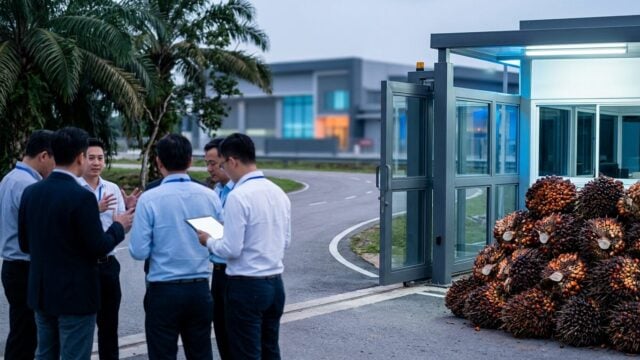
During the visit, Sudaryono paid special attention to palm oil farmers in West Kalimantan. He reminded palm oil mills to buy fresh fruit bunches at the price set by the local government. That price, he said, comes from a collective agreement and must be followed.
“FFB prices must not be bought below government provisions. When global CPO prices are good, farmers should also enjoy the gains. The price set by the local government is the result of a joint agreement and must be obeyed,” he said.
For farmers, that message touches daily life. Fresh fruit bunches are the main source of income. When mills hold prices down, farmers feel the impact first. On the other hand, when prices follow official rules, farmers can calculate harvesting costs, transport, and plantation maintenance with more certainty.
In West Kalimantan, palm oil is one of the region’s economic pillars. That is why enforcing palm oil FFB prices is not just a matter of transactions at the mill. It has a chain effect on harvest workers, transport drivers, collectors, and small-market traders around the plantation area.
Direct communication with farmers
Sudaryono also opened direct communication with the public and farmers so field problems could be handled quickly. He asked farmers to report issues involving irrigation, fertilizer, seed quality, and other agricultural needs so the government can move faster.
“Tell us if there are problems with irrigation, fertilizer, seeds, or other agricultural needs. The government wants to make sure every farmer’s concern can be handled quickly,” he said.
This kind of communication matters because many agricultural problems start at the lowest level. Fertilizer arrives late. Seeds do not match the planting season. Water channels clog up. These small problems often hold back yields far more than what appears on paper.
In this context, HKTI West Kalimantan is expected to be more than a ceremonial group. It must serve as a channel for farmers’ voices. If that role works, complaints from the plantation can reach policy desks without much delay.
Food self-sufficiency needs a tidy supply chain
Sudaryono closed his remarks with optimism that cooperation between the central government, local governments, HKTI, and all agricultural players will speed up Indonesia’s path toward food independence. He stressed that the commodities consumed by the public should be produced by Indonesian farmers themselves.
“We want what people consume to be produced by our own farmers. That way Indonesia becomes stronger, farmers become more prosperous, and national food security becomes more solid,” he said.
For readers, the message has a clear implication. When the government presses imports and strengthens domestic production, prices, supply, and farmer income move in one chain. If one link weakens, the food self-sufficiency target slows down as well. That is why attention to palm oil FFB prices in West Kalimantan is part of the larger job the government is chasing.
Sudaryono came with a firm message. Prices must be fair. Farmers must profit. And food self-sufficiency, in his view, cannot remain a slogan.