West Java Investment Equity Gets Push as 2025 Nears Rp300T
West Java investment equity is in focus as 2025 investment nears Rp300 trillion, with lawmakers urging broader gains for districts and workers.

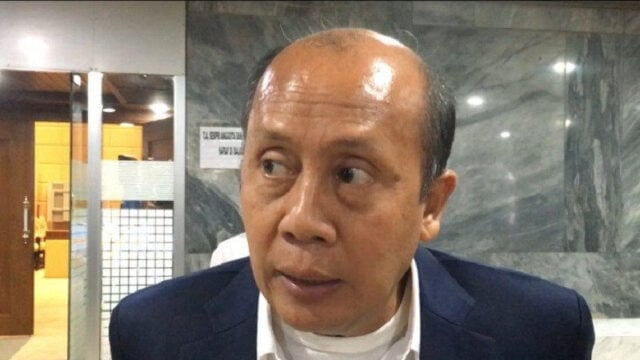
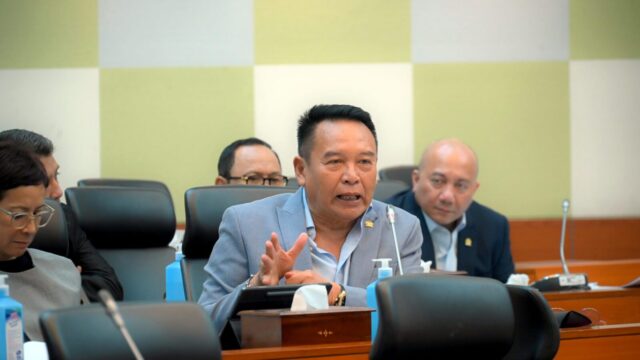
BANDUNG — West Java investment equity is back on the agenda after the province’s 2025 investment realization climbed to nearly Rp300 trillion, a figure lawmakers say should benefit more than just one economic hub. West Java House Commission III Chairman Jajang Rohana wants the provincial government to keep investment flowing across the region so growth reaches more districts and cities.
Jajang made the remarks in Bandung on Sunday, stressing that strong investment numbers must come with easier business conditions and clear policy direction. “Therefore, so it does not go down, the investment value must be raised through easier and more certain investment climate,” he said.
The number matters. A lot. In many regions, an inflow that large can trigger hiring, freight activity, raw material demand, and more movement in trade and transport. But if capital keeps piling up in only one area, the benefits also get lopsided. That is why the push for West Java investment equity carries weight.
Investment realization in West Java beats the target
Jajang said West Java’s 2025 investment realization has already surpassed the target set by the provincial government. The value is said to be close to Rp300 trillion. He argued that the achievement has also helped lift West Java’s economic growth above the 2024 level.
“Regarding investment, this has exceeded the target. This also makes economic growth higher than in 2024,” he said.
For readers, the figure is important because West Java remains one of Indonesia’s main industrial centers. When investment comes in, the effect does not stop at boardrooms or project sites. It means jobs, factory orders, logistics traffic, and local spending. The real question is not just how much money enters. It is where that money lands.
Commission III sees this momentum as something that needs protecting. Investment can slow fast if local governments fail to provide policy certainty, faster licensing services, and basic infrastructure support.
Permits, law, and infrastructure remain the key tests
According to Jajang, local governments still need to strengthen licensing ease, legal certainty, the investment climate, infrastructure development, and the quality of the workforce. He said those five elements are the core conditions for keeping investment growing and preventing it from clustering in just a few areas.
He also highlighted the need for broader investment so districts outside the main industrial belts do not fall further behind. If road access is poor, electricity is unstable, or the local workforce is not ready, investors tend to hesitate. The result is familiar. The already advanced areas pull further ahead. The others lag again.
That is why the Commission III push is not just about the size of investment figures. It is about the quality of growth. West Java investment equity gives districts and cities outside the usual industrial centers a chance to feel the economic spillover too.
In practice, broader distribution also affects jobs. Areas that receive industrial projects usually see more small business activity, transport services, boarding houses, food stalls, and daily logistics needs. The ripple effect often shows up faster at the local level than in macroeconomic statistics.
Manufacturing still anchors the provincial economy
Jajang said the manufacturing sector remains the backbone of West Java’s economic growth. Automotive, electronics, and textile industries are still major contributors inside the processing industry cluster.
Infrastructure and transport, wholesale trade, construction, and agriculture also play a significant role in the provincial economy. Together, those sectors keep West Java strong as a production and distribution hub on Java island.
But strength brings its own strain. If growth centers become too concentrated, traffic congestion, land pressure, and higher costs can build up in one area. Wider investment distribution helps ease that burden. It creates room for new industrial clusters and support services in other districts.
For West Java, the policy direction is clear. Better roads, more stable utilities, trained workers, and simpler licensing can make new areas more attractive to investors. It will not happen overnight. Still, the direction is set.
What it means for businesses and workers
For businesses, investment equity means a wider market and less risk of crowding in one overheated zone. For workers, it opens more job options closer to home. Living costs may be lighter. Commutes shorter.
For local governments, Jajang’s message is direct: chasing investment totals matters, but spreading the benefits matters more over the long run. If the distribution is healthy, economic growth becomes more resilient when one sector slows.
West Java still has work to do. Faster permits, better connectivity, stronger workforce readiness, and firmer rules will decide whether nearly Rp300 trillion remains a headline number on a report card — or becomes growth that people can actually feel in more places across the province. The next test lies in whether the policy drive stays consistent on the ground.