
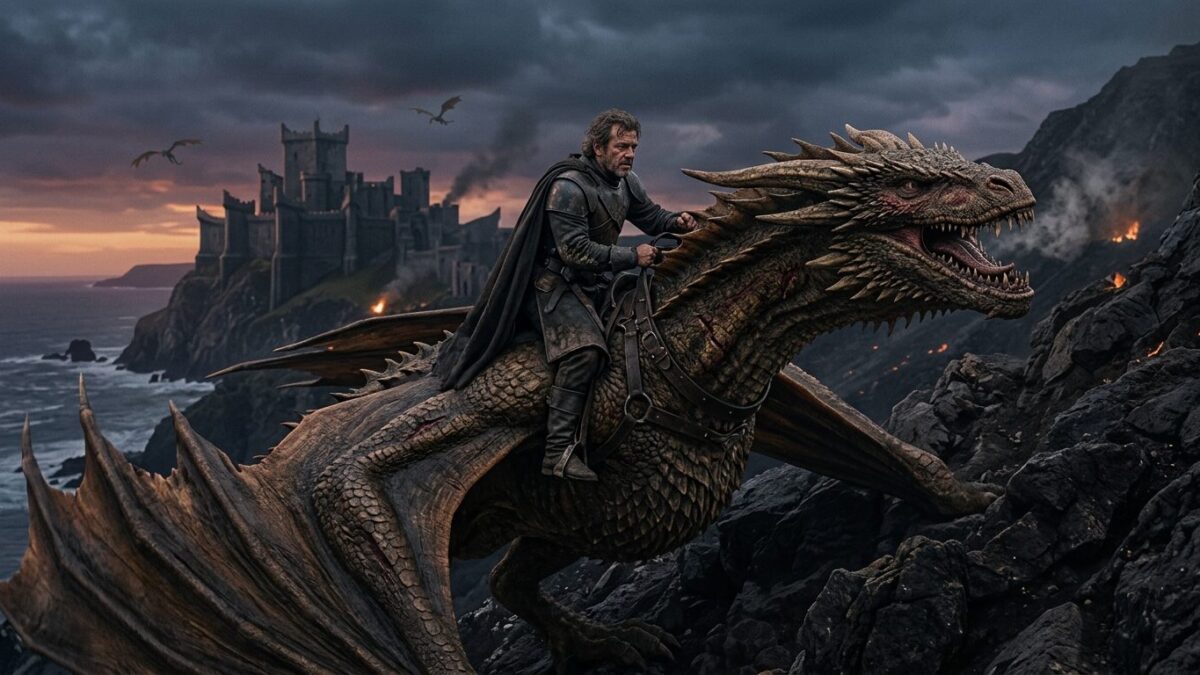
JAKARTA, JOURNALARTA.COM – In Dragonseeds House of the Dragon, power means one thing above all: dragons. Yet the people who try to claim them are not always nobles, and they are not always obvious Targaryens.
As the Targaryen civil war known as the Dance of the Dragons grows fiercer in Season 2, a desperate need for dragonriders pushes the Black faction to look far beyond the royal family. That search leads to a dangerous and controversial answer: the Dragonseeds.
Who the Dragonseeds are
The term Dragonseeds refers to people believed to carry Valyrian blood, even if they come from humble backgrounds, were born outside noble lines, or are treated as bastards. They attempt to approach and subdue wild dragons living on Dragonstone.
Why does this matter? Because dragons are not just large animals waiting to be mounted. In Westeros lore, they respond to blood, instinct, and something much harder to measure. The Black side, led by Rhaenyra Targaryen, needs more riders to match its enemies.
Simple answer. They need numbers.
The name itself is not flattering. “Dragonseed” is used by nobles as a slur, a way to belittle people they see as socially inferior even when those people may carry the bloodline that matters most in dragon riding.
Dragonseeds House of the Dragon and the bloodline requirement
According to the lore in George R.R. Martin’s Fire & Blood, three conditions shape a person’s chance of claiming a dragon. Without them, survival chances drop fast.
1. Valyrian or Targaryen blood
The most basic requirement is descent from ancient Valyria. That does not mean the person must come directly from the main Targaryen line. A trace from earlier generations may be enough. Pale silver hair and violet eyes often serve as visual clues.
The danger is brutal. If the blood connection is weak or absent, the dragon may burn the person on the spot. Lore often frames this as a mismatch the dragon can sense instantly.
2. Extraordinary courage
Claiming a dragon is not a calm negotiation. A hopeful rider must enter the dragon’s territory, stand in front of a creature that can tear through stone, and speak in High Valyrian. Often, the word people know best is “Dracarys.”
That takes nerve.
Failure rates are described as terrifyingly high. The attempt is sometimes treated almost like a noble form of suicide, because the creature rarely forgives hesitation.
3. A mental bond
The most misunderstood part is this: the dragon chooses the rider, not the other way around. There must be a mental link, a mutual recognition of will and intent. If the bond does not form, the dragon resists, and the result is usually violent.
As Viserys I Targaryen once put it: “Dragons are never truly tame. They only tolerate those they deem worthy.”
Wild dragons that can be claimed in Season 2
On Dragonstone, several dragons have lived without riders for a long time. Each brings a different level of danger.
Vermithor, the old brute
Size: The second-largest living dragon, smaller only than Vhagar.
Temperament: Fierce, short-tempered, and deeply difficult to handle. He once served as King Jaehaerys I Targaryen’s mount.
Claiming risk: Extremely high. A failed approach is often deadly almost immediately.
Silverwing
Size: Large, female.
Temperament: Calmer and more patient than Vermithor. She once belonged to Queen Alysanne Targaryen.
Claiming risk: Moderate. A gentler nature gives hopeful riders a slightly better chance.
Seasmoke
Size: Medium.
Color: Silvery gray.
Temperament: Younger and active. He was once ridden by Laenor Velaryon.
Claiming risk: Relatively lower. Younger dragons are often easier to adapt to a new rider.
Sheepstealer, the sheep thief
Size: Medium to large.
Nickname: Known for leaving the mountains to feed on local sheep.
Temperament: The wildest of the group. He has never had a rider in his life.
Claiming risk: Very high. If someone succeeds, the bond can be unusually strong, partly because the dragon has no old rider to compare them with.
The lethal risks of becoming a Dragonseed
On paper, the path looks like a shortcut to power. In practice, it is a gamble with death.
Common dangers include being burned alive if the dragon rejects the person’s scent, posture, or presence. Some hopeful riders manage to climb on, only to lose the bond mid-flight and fall from the sky. Others suffer mental strain from trying to connect with a creature far older and stronger than any human mind can comfortably bear.
There is another danger too. Noble families often resent the idea that common-born people can gain dragon power. If a Dragonseed succeeds, politics can turn ugly fast. Very fast.
Historical notes in Fire & Blood describe failed claimants’ bodies piling up near dragon lairs, turning the place into what readers might call a dragon graveyard.
Jinak dragons and wild dragons are not the same
To understand the scale of the risk, it helps to compare dragons raised with riders from an early age and dragons that must be taken by force.
| Type | Example | Bond start | Response to commands | Risk | Loyalty |
|---|---|---|---|---|---|
| Tamed dragon | Syrax | From egg or youth | Usually obedient | Low | Often lifelong |
| Wild dragon | Vermithor | Must be won by force | Tests the rider’s authority | Very high | Can change if disrespected |
That difference changes everything. A bonded dragon behaves more like a lifelong partner. A wild dragon acts like a power struggle with teeth, fire, and no patience for mistakes.
Why Dragonseeds matter to readers
For viewers, the Dragonseeds storyline explains why dragon power in Westeros is not only about birthright. It is also about luck, timing, and the ability to survive a test that most people would never dare attempt.
It also deepens the politics of the show. When common-born characters can become dragonriders, the old social order starts to crack. That is exactly why nobles fear them.
George R.R. Martin’s larger point is clear: power always carries a cost. In this world, the price is often not money. It is life, loyalty, and sometimes sanity.
Source notes: Fire & Blood by George R.R. Martin, official House of the Dragon lore material, and Westeros historical analysis.
This explanation is meant to clarify the story world only, not to encourage or instruct anyone to try anything similar in real life.
FAQ: Dragonseeds House of the Dragon
Can an ordinary person claim a dragon?
In theory, yes, if they have Valyrian blood and enough courage. In practice, the fatality rate is extremely high.
Which wild dragons are easier to claim?
Seasmoke and Silverwing are usually seen as less dangerous than Vermithor and Sheepstealer.
Do claimants need to speak High Valyrian?
Yes. A command like “Dracarys” is part of the ritual, along with the will to stand still when a dragon decides to judge you.
What happens next in the story?
The search for more riders keeps reshaping the balance of power, and the dragons left on Dragonstone will remain central to the conflict.

📝 Leave a Comment
Comment as . Reviewed by an admin before it appears.