Indonesia Auto Industry 2026: EV Sales Target 100,000 Units
Indonesia auto industry 2026 faces a shift: Toyota still leads, BYD rises, and the government targets 100,000 EV sales with tax incentives.
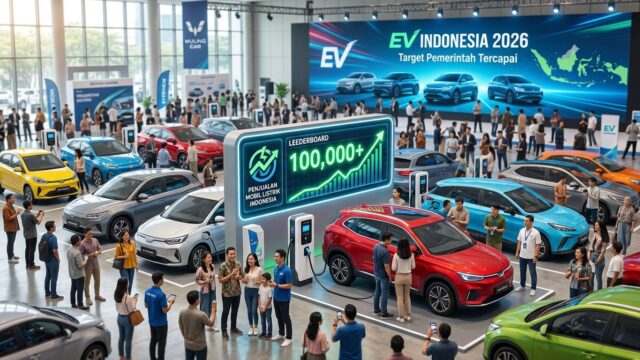
JAKARTA, JOURNALARTA.COM - Toyota still sits firmly at the top of Indonesia’s car sales charts, but the market is moving. BYD keeps climbing, and the government is targeting 100,000 electric cars in 2026 through large-scale tax incentives. Gaikindo data for January–May 2026, released this week, shows two trends at once: the continued dominance of Japanese brands and a clear acceleration in electric vehicles.
The impact is immediate for consumers. Electric car prices could fall by tens of millions of rupiah, electric motorcycle conversion workshops are seeing more opportunities, and EV charging stations are being expanded along toll roads and in major cities.
Toyota Sells 111,000 Units, BYD Emerges as a Serious Rival
Based on Gaikindo wholesale data for January–May 2026, Toyota posted 111,119 units, reinforcing its position as the country’s best-selling brand. Daihatsu, also part of the Astra Group, ranked second with 59,420 units. Suzuki followed in third among Japanese brands.
But something has changed this year. BYD has climbed the ranks faster than many analysts expected. The China-based brand is pressuring the market with an affordable electric lineup and hybrid SUVs. Consumers are starting to take notice, especially in upper-middle segments in major cities.
That shift is no accident. Fuel prices that remain unstable, much lower operating costs for electric cars, and now government incentives are combining to push more buyers to consider EVs for the first time.
| Brand | Jan–May 2026 Wholesale | Rank |
|---|---|---|
| Toyota | 111,119 units | 1 |
| Daihatsu | 59,420 units | 2 |
| Suzuki | Top 3 | 3 |
| BYD | Significant rise in rank | — |
100,000 Electric Cars Target: VAT Incentives Up to 100%
The government is moving aggressively. Under the VAT borne by the government scheme, or PPN-DTP, incentives for electric cars are set between 40% and 100%, depending on battery type and how much local content, or TKDN, has been met. The more local the components, the bigger the tax break.
For electric motorcycles, Finance Minister Purbaya Yudhi Sadewa has allocated a special budget with a Rp5 million subsidy per unit for 100,000 electric motorcycles this year.
The government’s official 2026 target is 100,000 electric cars and 100,000 electric motorcycles receiving incentives. The number is ambitious, but not baseless. Technical regulations from the Finance Ministry are being finalized, while the supporting ecosystem is beginning to take shape.
For consumers, the meaning is concrete: an electric car priced at Rp400–500 million could see an effective price cut of Rp40 million to more than Rp100 million, depending on the incentive scheme in force.
Manufacturing in Karawang–Cikarang and the Battery Challenge
Indonesia’s automotive manufacturing hub remains concentrated in the Karawang–Cikarang–Bekasi triangle in West Java. Gaikindo production data for January–April 2026 shows the cluster is still the backbone of the industry, with TKDN serving as a mandatory requirement to qualify for government incentives.
Indonesia has a major advantage: the world’s largest nickel reserves, a key raw material for NMC batteries, or Nickel Manganese Cobalt. The government is pushing downstream industrialization so added value does not flow overseas.
But industry experts are warning about one thing. If LFP, or Lithium Iron Phosphate, batteries continue to dominate without policy intervention, Indonesia could lose out because the main raw material for LFP is not one of the country’s comparative strengths. The solution being pushed is to develop the NMC battery route, which can be integrated into national battery plants, while also requiring technology transfer from foreign investors as a market entry condition.
Subsidies alone are not enough. Experts say the minimum conditions are clear: build physical production facilities in the country, raise TKDN gradually, and ensure technology actually transfers — not just assembly.
Impact on Consumers, MSMEs, and Infrastructure
For the wider public, the 2026 EV wave has direct implications. First, on price: PPN-DTP incentives make electric cars more affordable than before. Second, SPKLU charging station development is being accelerated along toll roads and in city centers, including South Sumatra, which is on the priority list because of the Trans-Sumatra route.
MSMEs are also seeing opportunities. Workshops converting gasoline motorcycles into electric ones are starting to look like promising businesses, as motorcycle subsidies fuel demand for conversions.
Second-Half 2026 Outlook: GIIAS and the China Brand Surge
With 48 new models scheduled for launch and GIIAS set for August 2026, sales in the second half of the year are projected to rise. BYD, Wuling, and Chery are expected to attack the sub-Rp400 million EV segment aggressively. Toyota and Daihatsu are likely to stay strong in LCGC and hybrid segments.
Three variables will determine whether the 100,000-unit target is achieved: EV prices must come down, SPKLU coverage must expand evenly, and TKDN must rise. If all three move together, the target looks realistic — not just a number on paper.
Quick FAQ
Who led Indonesia’s car sales from Jan–May 2026? Toyota with 111,119 units, followed by Daihatsu with 59,420 units, according to Gaikindo.
What is the government’s 2026 EV target? 100,000 electric cars and 100,000 electric motorcycles receiving incentives.
How big are the 2026 electric car VAT incentives? PPN-DTP ranges from 40% to 100%, depending on battery type and TKDN compliance. Data and policies may change, so follow official Gaikindo and Finance Ministry releases for the latest updates.