
PRAIA — The football world has just been stunned. Cape Verde suddenly became the talk of the game after putting up fierce resistance against powerhouse Argentina in the round of 32 at the World Cup, a match that showed Cape Verde is now a real threat.
Although the final result did not go their way, the courage of this island squad proved that the balance of power in world football is becoming harder to predict. The narrow defeat they suffered was more than just a number on the scoreboard. It was a message that this small country in the Atlantic Ocean has big nerve.
Breaking Down Cape Verde’s Football Strength
Structurally, Cape Verde consists of 10 major islands and five smaller islands. But make no mistake. Behind its limited land area, the country has a player-development system that relies heavily on the diaspora. Many of its talents are born and raised in European academies, such as those in Portugal or the Netherlands, but choose to represent their ancestral homeland.
Their tactical edge lies in quick transitions and a compact *low block* discipline. Against Argentina, they played with a deep defensive line to neutralize the speed of the opponent’s star players. The approach frustrated the other team for nearly 70 minutes before the deadlock was finally broken.
“We are not afraid of big names. We came here to give everything for our people,” the coach said in the post-match press conference. That commitment was clear in the way the players maintained distance between the lines. They rarely lost shape under pressure.
⚽ Read also: World Cup 2026 — Bagan, Schedule Hari Ini & Klasemen Live
Unique Geography and Natural Challenges
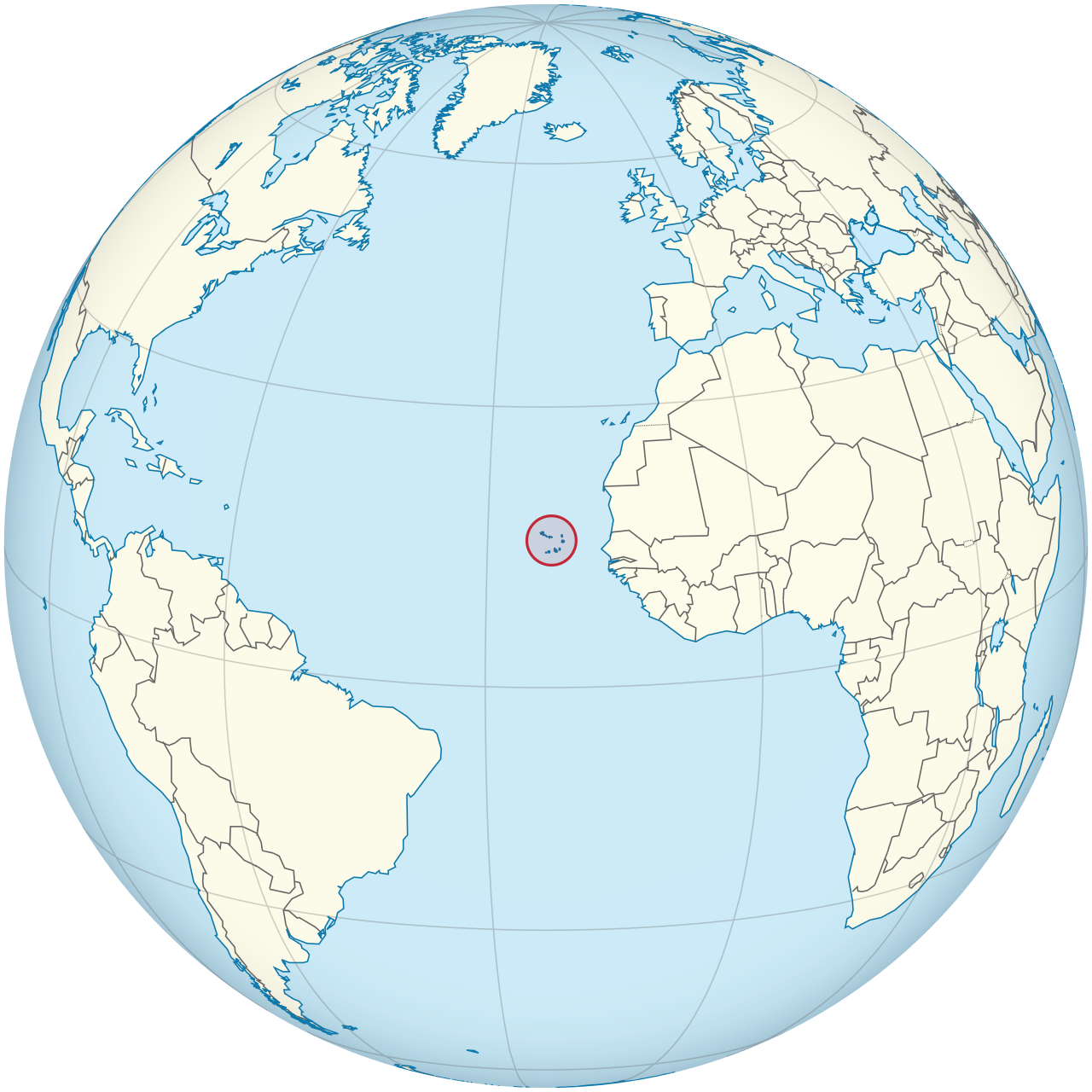
Geographically, Cape Verde is located about 450 kilometers off the west coast of Africa. The country is part of the Macaronesia ecoregion, alongside other exotic destinations such as the Canary Islands and Madeira. The natural conditions here are considered harsh for sports development, but they have shaped the mentality of the players.
Rainfall is extremely limited, with the annual average in the capital, Praia, reaching only 24 centimeters. Periodic drought is a life challenge for its residents. Yet the lack of training facilities in their homeland has pushed many players to seek opportunities abroad. This is a story of resilience.
Cultural Heritage and the Diaspora
Cape Verde’s history carries a long colonial legacy under Portugal dating back to 1456. Initially, the islands were uninhabited. The arrival of Europeans, who brought laborers from Africa, created a unique cultural blend. Today, Cape Verde’s population reflects a striking mix of African and European ancestry.
Another notable phenomenon is the diaspora. Of more than 1 million people of Cape Verdean descent, fewer than half live on the islands themselves. Many have migrated to the United States, the Netherlands, and Portugal. The connection to the homeland remains strong. This is a major social asset for their national team in searching for quality players across Europe’s top leagues.
The Long Road to Sovereignty
Cape Verde’s independence from Portugal was not won overnight. In 1956, Amilcar Cabral founded PAIGC, a movement that demanded economic and political reform and became the embryo of the independence struggle. After political upheaval in Portugal in 1974, Cape Verde was finally established as a sovereign state on July 5, 1975.
Today, the country operates under a democratic system. That sovereignty has taken it to the global stage, not only as a nation with beautiful landscapes but also as a rising force on the pitch. Football has become a symbol of national pride, uniting those who live on the islands and those who are abroad.
Outlook for the Future
Going forward, Cape Verde’s challenge is consistency. Playing well in one tournament is only the beginning. Building strong domestic football infrastructure will determine whether they can remain a consistent dark horse. Investment in youth academies will be key in the long term.
Their heroic World Cup showing is only the start. Cape Verde has proven that limited natural resources do not weaken its ambition to stand alongside major nations on the global stage. Attention now turns to the next continental tournament qualifiers, where they are expected to become a more mature and dangerous team.
The football world must now begin to count Cape Verde as a serious contender. They are no longer just a filler team, but one that knows how to disrupt the dominance of bigger sides. What happens on the pitch will continue to echo across the islands, igniting hope for future generations of footballers there.
📝 Leave a Comment
Comment as . Reviewed by an admin before it appears.