Indonesia’s Rare Earth Minerals Need Careful Management, Says DPR
Indonesia's DPR calls for careful rare earth mineral management as the government targets a national mineral exchange by 2027 to cut transfer pricing and boost downstream value.
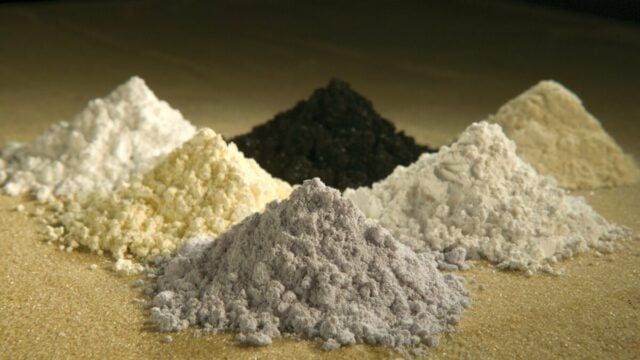
JAKARTA — Rare earth minerals cannot be managed carelessly, said House of Representatives Commission XII Chairman Bambang Patijaya while discussing the direction of strategic mineral downstream processing and a national mineral exchange targeted to launch on January 1, 2027. The discussion emerged as the government and DPR work to restructure the mineral supply chain — from mine to market — so Indonesia can set its own benchmark prices and resist manipulation by global markets.
Bambang highlighted two issues at once. First, the establishment of a mineral exchange to curb transfer pricing and under-invoicing practices. Second, stronger governance over rare earth minerals, which are increasingly sought by the technology industry — from telecommunications to defense. "The management of rare earth minerals must be done carefully," Bambang said during a dialogue with Maria Katarina on CNBC Indonesia's Economic Update, Tuesday, June 23, 2026.
Why does this matter? Because rare earth minerals are not ordinary commodities. Their value is enormous, their supply chain is long, and nations worldwide are racing to secure supply. If Indonesia is slow to establish proper rules, the economic potential could flow overseas — leaving producing regions with little more than environmental costs.
A Mineral Exchange: Benchmark Prices vs. Dirty Tricks
The strategic mineral and commodity exchange currently being prepared by the government and DPR is projected to become a tool for establishing national benchmark prices. In mineral trading, opaque pricing frequently opens the door to manipulation — both in export documents and transactions between business players. This is exactly where transfer pricing and under-invoicing tend to emerge.
Transfer pricing occurs when transaction prices are set artificially, usually between entities within the same business group. Under-invoicing is more straightforward: the value of goods in official documents is recorded lower than the actual price. Both practices risk eroding state revenue. Tax receipts, royalties, and foreign exchange earnings can quietly leak away.
The mineral exchange is expected to serve as an early safeguard. With a clear benchmark price, the state can more accurately assess commodity values. Businesses would also share the same reference point. No more wildly divergent interpretations between prices at the mine, at the port, and on international markets.
Bambang frames the exchange as part of a broader downstream strategy. Indonesia does not want to simply stop at exporting raw materials. The government wants value added to rise domestically, with the proceeds flowing back to industry, workers, and producing regions. The logic is straightforward: the longer the processing chain that stays in-country, the greater the economic benefit that remains here.
Rare Earths: Small in Volume, Enormous in Impact
Rare earth minerals hold a unique position in modern industry. These materials are used in precision, high-performance components. Smartphones, telecommunications networks, electric vehicles, turbines, and defense equipment all require specific elements from this group of minerals. The world does not need large volumes — but it depends critically on the quality and continuity of supply.
That is why Bambang believes their management cannot be treated the same as ordinary minerals. The state must simultaneously regulate processing technology, investment, markets, and trade governance. Loosen any one of those, and the entire value chain weakens. If the market is not ready, production stalls. If the technology lags, raw materials keep flowing out in low-value form.
Indonesia has genuine opportunity here — but also real homework to do. Several regions long known as tin-producing centers, such as Bangka Belitung, turn out to hold rare earth mineral potential. Bambang also mentioned newly identified potential in Sulawesi. Indonesia's strategic mineral map, in other words, is far more complex than most people assume. What is visible on the surface is often just tin, nickel, or coal. Underneath lies untapped potential waiting to be developed.
The problem is that potential alone is not enough. Without regulatory certainty, well-documented reserves, adequate laboratories, and a processing industry capable of consistent output, rare earth minerals risk becoming yet another old story that keeps repeating itself. Discovered, discussed, then delayed again.
Producing Regions Need Certainty, Not Momentary Euphoria
For producing regions, discussions about rare earth minerals should not stop at the level of rhetoric. Done right, proper management can deliver a multiplier effect: jobs, investment, and healthier regional revenues. Done wrong, regions bear the environmental burden while the economic value is captured elsewhere.
This is precisely why the governance framework being discussed in the DPR matters. Bambang emphasized the need to strengthen technology, investment, and market aspects together. That sounds technical — but the impact is concrete. Technology determines how far minerals can be refined domestically. Investment determines whether projects can actually get off the ground. Markets determine whether buyers exist at prices that make sense.
Indonesia also needs to learn from the experience of other commodities. When raw material exports are left unrestricted for too long, the country often loses control over pricing before it realizes what happened. When global markets turn volatile, domestic producers get swept along. With rare earth minerals, the risk is higher because of their strategic nature and ties to sensitive industries.
The establishment of a mineral exchange in 2027 and the push for rare earth downstream processing should therefore be read as two interlocking pieces of policy. One governs prices and trade. The other governs value-added development and industrial direction. If both move forward together, Indonesia gains significantly stronger bargaining power on the global stage. If not, another enormous opportunity may simply pass by.
CNBC Indonesia's dialogue between Maria Katarina and Bambang Patijaya signals that this discussion is still very much in motion. What comes next is how quickly the government can translate political momentum into concrete regulations, infrastructure, and an industrial roadmap. In commodities like these, time is often more expensive than the ore itself.
Key Takeaways:
1. Indonesia's DPR is calling for careful management of rare earth minerals, recognizing their strategic importance to the technology and defense industries.
2. The government and DPR are preparing a national mineral exchange targeted to launch January 1, 2027, to establish benchmark prices and curb transfer pricing and under-invoicing.
3. Bangka Belitung and Sulawesi have been identified as areas with rare earth mineral potential, but realizing that value requires clear governance, technology, investment, and market development.