Starlink Internet Prices in Indonesia for 2026: Plans & Kits
Starlink internet prices in Indonesia for 2026, from hardware kits to monthly plans, plus what each option means for homes and businesses.
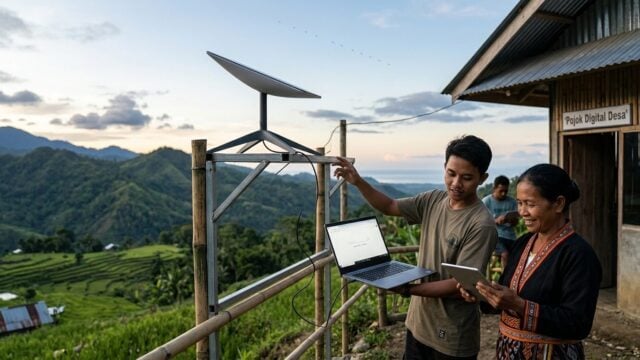
JOURNALARTA.COM, JAKARTA - Starlink internet prices in Indonesia for 2026 remain a major question for millions of people in areas not yet reached by fiber-optic networks. SpaceX’s satellite internet service now offers three device options and several monthly plans, from the most affordable tier to enterprise-grade service.
Starlink works through a Low Earth Orbit (LEO) satellite constellation, not the usual geostationary satellite setup. The result is download speeds of about 50 Mbps to more than 220 Mbps, with latency of 20–40 milliseconds. That is far more responsive than older satellite services, which can run into hundreds of milliseconds.
For people in remote villages, fishermen, resort operators, or mining companies that need reliable connectivity, this is not just another gadget. It is access that many have never had.
Starlink Internet Prices for Hardware Kits
Before subscribing, users must first buy the antenna hardware. As of mid-2026, there are three official kits sold in Indonesia:
| Kit Type | Price | Strength |
|---|---|---|
| Starlink Mini Kit (Portable) | Rp4,750,000 – Rp5,500,000 | Laptop-sized, suitable for mobile users |
| Starlink Standard Kit (Gen 3 / V4 Flat) | Rp5,900,000 – Rp6,500,000 | Dual Wi-Fi, 2 LAN ports, latest home model |
| Starlink High Performance / Enterprise Kit | Rp35,000,000 – Rp45,000,000 | Built for extreme weather, mining, maritime, and large industry |
The Mini Kit has become a popular choice for users who move around a lot. It is compact and easy to carry. The Enterprise Kit, meanwhile, comes with a steep price tag, but for mining firms or ship operators, it is an investment rather than an expense.
One thing to note: in areas with very high demand, Starlink may apply an extra network adjustment fee when new hardware is purchased.
Monthly Starlink Plans: Personal and Business
After buying the device, users choose a subscription plan. Starlink separates its service into personal and business segments.
Personal plans are designed for individuals and families:
| Plan Name | Monthly Cost | Notes |
|---|---|---|
| Residential Lite | Rp510,000 | Unlimited data, but speeds may slow during busy hours |
| Residential (Standard) | Rp800,000 | Fixed location, consistent speed, ideal for families |
| Roam | Rp1,750,000 | For travelers and users who move between locations often |
Source: Starlink.com
The Rp510,000 Residential Lite plan is the cheapest option. But there is a trade-off: speeds can slow when the network is crowded. If you need stable performance throughout the day, the Rp800,000 Standard plan is the safer pick.
The Roam plan is built for people whose lives happen on the road, from wildlife photographers and outdoor enthusiasts to campervan operators. There is no need to re-register every time the location changes.
Business Plans: Priority Bandwidth for Companies
Business users have different needs. Starlink offers Local Priority plans with tighter bandwidth guarantees:
| Business Plan | Monthly Cost | Details |
|---|---|---|
| Local Priority 50 GB | Rp550,000 | Suitable for small offices or limited operations |
| Local Priority 1 TB – 2 TB | Starting at Rp2,800,000 | Speeds up to 350 Mbps, for resorts, plantations, and mines |
A 350 Mbps speed tier is no small number. For operations in remote areas that rely on video conferencing, large file transfers, or real-time monitoring systems, this plan can become the backbone of the network.
Are Starlink Internet Prices Worth It?
Honestly, Rp510,000 per month for the cheapest plan is still above the average local broadband rate in major cities. But that comparison is not exactly apples to apples.
Starlink reaches all of Indonesia, including villages without stable electricity, small islands, and mountainous regions that have never had fiber-optic service. As long as the antenna has a clear view of the sky, the signal comes through. No matter how remote the location is.
For users in cities that already have cheap and stable fiber, Starlink may only serve as a backup option. But for millions of people in underserved 3T regions, short for frontier, outermost, and disadvantaged areas, the service can change access to information, education, and business in a real way.
The initial investment is not small. Hardware starts at Rp4.7 million, before monthly fees are added. But over the long term, especially for businesses that have depended on unstable connections, that price can start to look very reasonable.
What comes next will depend on how quickly demand grows, how Starlink manages capacity in crowded areas, and whether more households outside Java decide the service is worth the upfront cost.