Turkey’s Kayaköy Preserves a Forced Migration’s Ruins
About 2,500 homes remain abandoned in Kayaköy, where a forced population exchange after the 1922 Greek-Turkish War emptied a once-thriving town. The historic site now draws visitors as its buildings deteriorate.
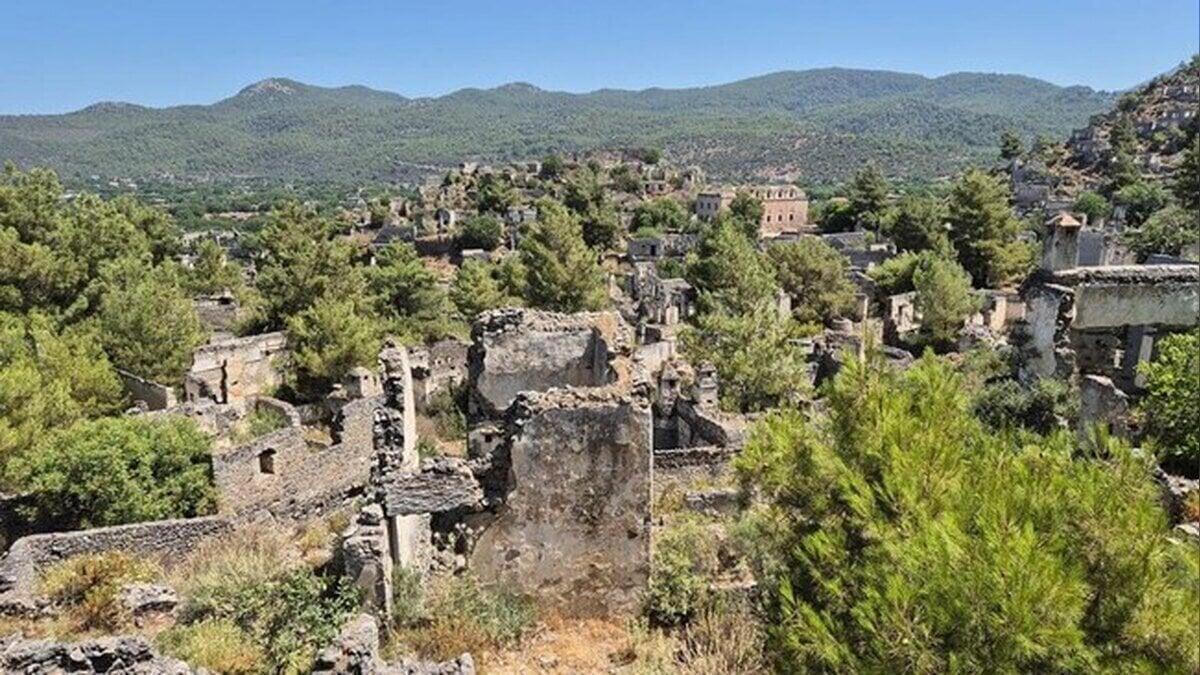
KAYAKÖY, Turkey — A century after a forced population exchange emptied a thriving town, about 2,500 abandoned homes in southwestern Turkey stand as a stark reminder of displacement—and a fragile heritage site for visitors to the region.
Kayaköy, in Muğla province, was once known as Levissi. Its Greek Orthodox residents were moved out after the Greek-Turkish War ended in 1922, while Muslim Turks from Kavala, now in Greece, arrived in their place. The town gradually emptied as some newcomers left for other areas.
Before the exchange, at least 10,000 Greek Orthodox residents lived in Kayaköy, many working as craftspeople. They coexisted with Muslim Turkish farmers in the surrounding area. Today, roofless houses, collapsed walls and narrow lanes spread across the hillside, where vegetation is reclaiming parts of the settlement.
Stories of departure endure
Aysun Ekiz’s family is among the few from the incoming population who remained. The family runs a small restaurant near the main entrance, and Ekiz sells handmade jewelry to visitors. She said her grandparents passed down accounts of Greek residents reluctant to leave.
“The Greeks were crying because they did not want to leave, that’s what my grandparents told me,” Ekiz said.
Some people left their children with Turkish friends, believing they might return, Ekiz said. “But they never came back.”
The ruins also retain traces of daily life and local trades. Some houses have basement openings once used for tanning animal hides, evidence that shoemaking was common in Kayaköy. Homes had water cisterns because residents lacked piped water; drinking water was carried by donkey, Ekiz said.
A fragile historic site
The town’s two-story houses were arranged so they would not block one another’s sunlight. Some walls were painted blue, a color local stories say was meant to ward off scorpions or snakes. Kayaköy was once a major regional trading center, surpassing nearby Fethiye, Ekiz said.
Access to the site’s historic buildings is limited by their condition. The Upper Church, a prominent structure with faded pink plaster and a vaulted ceiling, is closed because it is fragile. The ruins of an old school remain at the settlement’s highest point, overlooking the main church and the homes below.
Jane Akatay, co-author of A Guide to Kayaköy, said earthquakes, storms, heavy rain and other weather have accelerated the damage. The material binding the buildings together has also deteriorated after years without maintenance. Ankara visitor Yiğit Ulaş Öztimur described Kayaköy as a dark reflection of Turkey’s past.