Technology Not Always Positive, Prabowo Warns on AI and Nuclear
Technology not always positive, Prabowo said in Jakarta, pointing to AI and nuclear power as progress that also carries real risks.
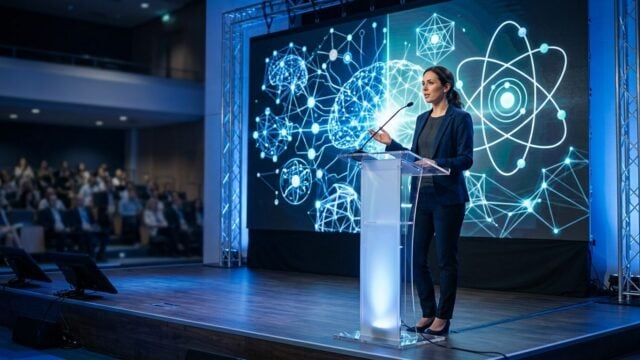
JAKARTA — technology is not always positive, President Prabowo Subianto said as he closed the National Consciousness Symposium at the 2026 Indonesia Science, Technology, and Industry Convention (KSTI) in Jakarta on Sunday (June 28, 2026). He pointed to two technologies that now shape modern life: nuclear power and artificial intelligence, or AI.
Prabowo said scientific progress often arrives with major benefits, but it also brings risks that are easy to ignore. From cheaper energy to the risk of destruction, from smart machines to questions of human control, he asked the public, campuses, and scientists to look at technology with more caution.
Nuclear power can be cheap, or destructive
At the KSTI 2026 closing session, Prabowo used nuclear power as the clearest example of a technology with two faces. In his view, nuclear energy can help people through relatively clean and cheap power, as well as in medicine and agriculture.
“Technology is also not always positive for humans. Now we look at nuclear power, on one hand it is extraordinary and can help humans,” Prabowo said.
The point did not stop there. He quickly added that great capability always comes with the potential for harm. The same technology, he said, can also be used to damage, which means its value should never be read without considering the wider consequences.
For Indonesia, that message carries real weight. The country still wrestles with the need for stable, affordable, low-emission energy. At the same time, debate over advanced technologies often gets stuck on safety, governance, and the readiness of human resources.
AI is moving fast, and its creators are sounding alarms
Prabowo then turned to a technology that is far closer to daily life: artificial intelligence. He said nearly every country is now racing to develop AI so it does not fall behind in global competition.
But, according to him, the people who created AI have also issued warnings. Prabowo said the technology can become “troublesome for humans” if people do not understand and monitor it properly. He did not reject AI’s development, but asked everyone to see its risks from the start.
“Almost every country is now chasing AI and does not want to be left behind. But the inventors of AI themselves have already given a warning that AI can become troublesome for humans,” Prabowo said.
The issue feels close because AI has already entered many jobs and public services. From writing, translation, and design to data analysis and customer support, machines now handle tasks that once belonged only to humans. At the same time, AI raises new questions: who is responsible when a system fails, who watches the data, and how can society make sure the technology is not used for scams or misinformation?
In Indonesia, those questions matter even more. The government has started pushing technology adoption across sectors, while digital literacy among citizens remains uneven. That gap often lets technology move faster than the rules and the users around it.
“Five million AI agents” and a new human limit
One of the most striking parts of Prabowo’s speech came when he spoke about the rise of AI agents. Such systems, he said, can work for individuals, groups, corporations, organizations, and even states. He also cited information that millions of AI agents are already interacting in their own conversational space.
“And reportedly now there are already five million AI agents, five million, maybe that was three weeks ago. And they supposedly already have their own chat room,” Prabowo said.
He added that these agents are said to communicate in their own code language. For Prabowo, that picture shows humans have created a technology with ever larger abilities and a scale that is increasingly hard to grasp at a glance.
“These five million are talking among themselves in their own code language. So, humans have created something even more powerful,” he said.
The statement may sound dramatic, but the core message is clear: technology is moving fast, sometimes beyond the understanding of ordinary users and even beyond the comfort zone of policymakers. At that point, the question is not only what machines can do, but also who holds control.
Universities are asked to read the risks, not just chase progress
Prabowo asked professors and university leaders to study these technological changes more deeply. He said academics should not only praise new achievements, but also examine the social, economic, and security risks that come with them.
He gave a simple example: machines can now beat humans in certain fields, including chess. From there, he wanted to make one point clear. Modern computing is no longer just a supporting tool. In many situations, machines are now direct competitors to humans.
“Now even the chess champion loses to the machine, the chess champion. Machines can now produce extraordinary works,” Prabowo said.
For higher education, the message is relevant. Universities cannot stop at teaching people how to use technology. What matters more is building the ability to spot limits, check bias, and set rules for ethical use. Without that, AI can become a tool that makes life easier today and leaves new problems for tomorrow.
Prabowo said technologies such as nuclear power and AI can still deliver major benefits. But, in his view, that benefit only matters if people place the right brakes, rules, and oversight in the right place. If not, the same technology that is celebrated today could turn into a new source of trouble.
The warning ended on a note that was careful rather than comforting. There was admiration for science, but also a hard warning. And from Jakarta, that signal went in many directions: to the government, to campuses, to industry, and to the public that is getting closer every day to intelligent machines.
Brief summary
1. Prabowo said technology is not always positive because it can bring both benefits and risks.
2. He highlighted nuclear power and AI as examples of technologies that need close oversight, not just praise.
3. He urged universities and scientists to study the social and security risks that come with technological progress.
Quick FAQ
What was Prabowo’s main point? He warned that technological progress does not automatically benefit humans.
Why did he mention AI? Because AI is advancing rapidly, many countries are racing to build it, and its own inventors have warned about the risks.
What does this mean for readers? Technology should be used carefully, because major benefits always come with equally major responsibility.
Looking ahead, debates over AI and energy technology are likely to appear more often, and the public will be expected not only to use these tools, but also to understand the stakes behind them.