TPG Supports 13-Year Schooling, Kemendikdasmen Says
Kemendikdasmen says TPG supports 13-year schooling by boosting teacher professionalism and classroom quality, with real impact in Lampung.
JAKARTA — TPG supports 13-year schooling, the Education Ministry said as it highlighted the role of teacher professional allowances in keeping classroom quality on track. Deputy Minister of Primary and Secondary Education Fajar Riza Ul Haq said the allowance is more than extra income; it is meant to push teachers to keep improving their professionalism and help make 13-year compulsory education work.
He made the remarks in a written statement from Jakarta on Sunday. Fajar stressed that the quality of education depends heavily on teachers who spend every day managing classes, preparing materials, and finding ways to keep students engaged. That work is easy to miss from the outside. In the classroom, though, the impact is immediate.
TPG helps strengthen the classroom
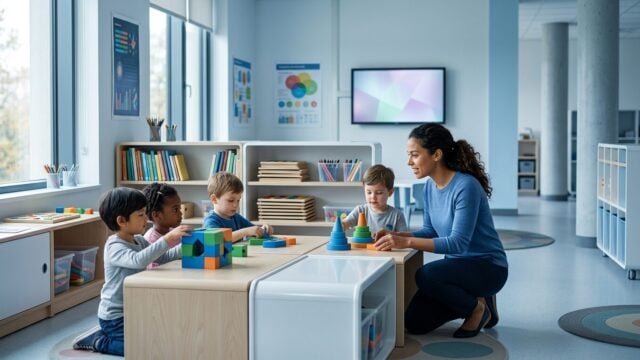
One example shared by the ministry came from Budi Iswanti, a kindergarten teacher at TK Al Muttaqien in Bandar Lampung, Lampung. Budi said the teacher professional allowance helps her stay motivated, join training sessions, learn independently, and keep up with policy changes and teaching innovations.
She also uses the allowance to buy reference books and pay for internet access so she can use Ruang GTK. For early childhood teachers, that is no small thing. On the ground, fresh teaching materials and stable internet often decide whether a class feels lively or flat. Budi said those modest investments have made a real difference in how she teaches.
She also links the allowance to her professional growth as an early childhood educator. Together with parents and the school environment, Budi encourages literacy, applies play-based learning, and instills character values in her students. “Fun learning has a strong impact on children’s optimal development. That way, children become healthy and ready to continue to elementary school,” Iswanti said.
Why 13-year compulsory education matters
The 13-year compulsory education program includes one year of pre-school before children enter elementary school. In practice, the idea is not just about keeping children in school longer. The government wants children to be better prepared to read the classroom, interact with others, and absorb basic learning when they move to the next level.
That puts early childhood teachers in a crucial position. If learning in kindergarten stays rigid, children can lose interest fast. If the classroom feels friendly, uses meaningful play, and leaves room for exploration, students find it easier to build good habits. That is why the ministry connects TPG with compulsory schooling. Teachers who are competent and financially stable have more room to innovate.
Fajar Riza Ul Haq also emphasized the role of teachers in delivering learning that is both high quality and enjoyable. The line sounds simple, but the relevance is huge. In many schools, education quality comes down to concrete things: teachers willing to relearn, the right learning media, and the readiness to change methods when children start drifting off.
Another teacher’s experience in Pringsewu
A similar account came from Puput Angellica, a kindergarten teacher at TK Harapan Bangsa Banjarejo in Pringsewu regency, Lampung. She said the teacher professional allowance helps cover daily living needs and supports professional development through training, seminars, and education workshops.
Puput sees 13-year compulsory education as a good step toward giving every Indonesian child an equal chance, including through one year of pre-school. In her view, steady teaching innovation affects learning in early childhood education and prepares students for the next level. That matters because the transition from PAUD to elementary school is often decisive: children need to feel safe, interested, and free from pressure from the start.
She said the training she has joined has pushed her to create a classroom that is fun, creative, and child-centered by using contextual learning media. With that approach, Puput hopes children will enjoy coming to school, get used to positive character values, and grow in a healthier way. The hope sounds simple, but that is exactly the point. Children who enjoy learning usually find it easier to stay on the education path for the long haul.
The impact reaches the classroom
The two teachers’ stories from Lampung offer a clear picture: TPG is not only about incentives, but also about protecting the quality of learning. When teachers have more room to join training, buy teaching materials, or access digital learning resources, the classroom moves forward too. Students may not think in policy terms, but they can feel the difference.
At the same time, the ministry’s message is a reminder that compulsory schooling will not run smoothly unless teachers receive proper support. The government can draft rules and set targets, but learning still happens in the classroom. There, teachers face students who get bored easily, parents with expectations, and the daily challenge of making lessons feel close to real life.
That is why the link between the professional allowance and education quality cannot be seen narrowly. TPG acts as a buffer that helps teachers keep growing instead of merely holding on. If that buffer stays strong, a big target like 13-year compulsory education has a better chance of working in practice, not just looking neat on paper.
“Fun learning has a strong impact on children’s optimal development,” Budi Iswanti said. “That way, children become healthy and ready to continue to elementary school.”
Quick summary
• The Education Ministry says TPG helps improve teacher professionalism and supports 13-year compulsory education.
• Two early childhood teachers in Lampung use the allowance for training, teaching media, and internet access.
• The government sees early childhood teachers as key to preparing children for elementary school through engaging classrooms.
Short FAQ
What is the link between TPG and 13-year compulsory education?
TPG helps teachers improve their skills and teaching quality, which in turn supports children’s readiness for pre-school before elementary school.
Who shared practical examples?
Budi Iswanti from TK Al Muttaqien in Bandar Lampung and Puput Angellica from TK Harapan Bangsa Banjarejo in Pringsewu.
Why is pre-school included in the program?
Because one year of pre-school is seen as important for helping children build social skills, character, and learning habits before entering elementary school.