AI-Edited Microscope Contest Winner Faces Backlash From Scientists
A microscope video that won first prize in a Nikon competition is now at the center of a storm over AI manipulation. Scientists say the
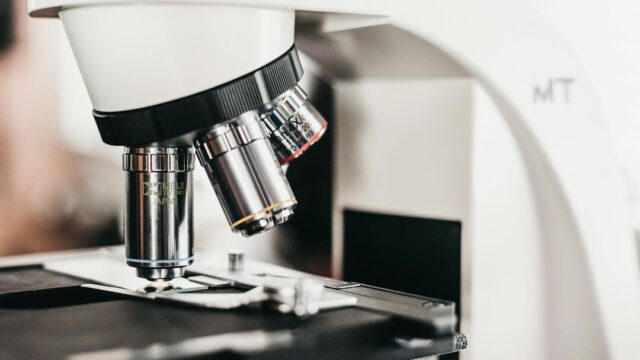
A microscope video that won first prize in a Nikon competition is now at the center of a storm over AI manipulation. Scientists say the winning entry does not hold up under closer scrutiny, and the researcher behind it has admitted it was altered with artificial intelligence.
Dr Ning Xu, a researcher at Tsinghua University in China, took the £2,250 top prize in the Nikon Small World in Motion contest with a video said to show cilia — the tiny hair-like structures that line airways — in a child’s patient-derived sample. The problem came fast. After Nikon announced the winner on LinkedIn, scientists began asking whether the cilia in the footage were real.
Questions over what the camera actually saw
Edward Phelps, an associate professor at Florida University, said the entry had “many serious problems.” Among them, he pointed to nuclei that “do not behave as nuclei,” scaling that “does not occur in biology,” and cilia that seem to “appear from nowhere” and do not match the known size.
The criticism goes to the heart of microscopic imaging, where contests and journals depend on trust that the image reflects an actual specimen, not a digital reconstruction. In this case, the dispute landed in a field already watching closely as AI tools spread through research, image processing and scientific communication.
A judge says it looked familiar
Andrew Moore, a former judge for the annual competition, said the footage offered “incompatible interpretations” and reminded him of “old photographs restored with AI.” He said, “The high-res, colorised photo may look nice,” a remark that captured the tension at the center of the backlash: technical polish can be persuasive, but it does not guarantee authenticity.
The Nikon Small World in Motion contest has run each year for the past 15 years, making the episode especially sensitive for organizers and entrants alike. For researchers who spend years capturing living structures at extreme magnification, the episode raises a blunt question. Where does enhancement end and fabrication begin?
Dr Xu’s admission that the winning entry was altered by AI has left the contest facing awkward scrutiny just as scientific images become easier to enhance, edit or synthesize. The dispute now hangs over one of microscopy’s best-known competitions — and over the standards it will use the next time a striking image lands on the judges’ table.
Source: telegraph.co.uk