Israel’s stock market drops as election leaves power unclear
?s Tel Aviv 125 index fell as much as 3.5 percent in early trading as election projections showed neither Prime Minister Benjamin Netanyahu’s coalition nor the…
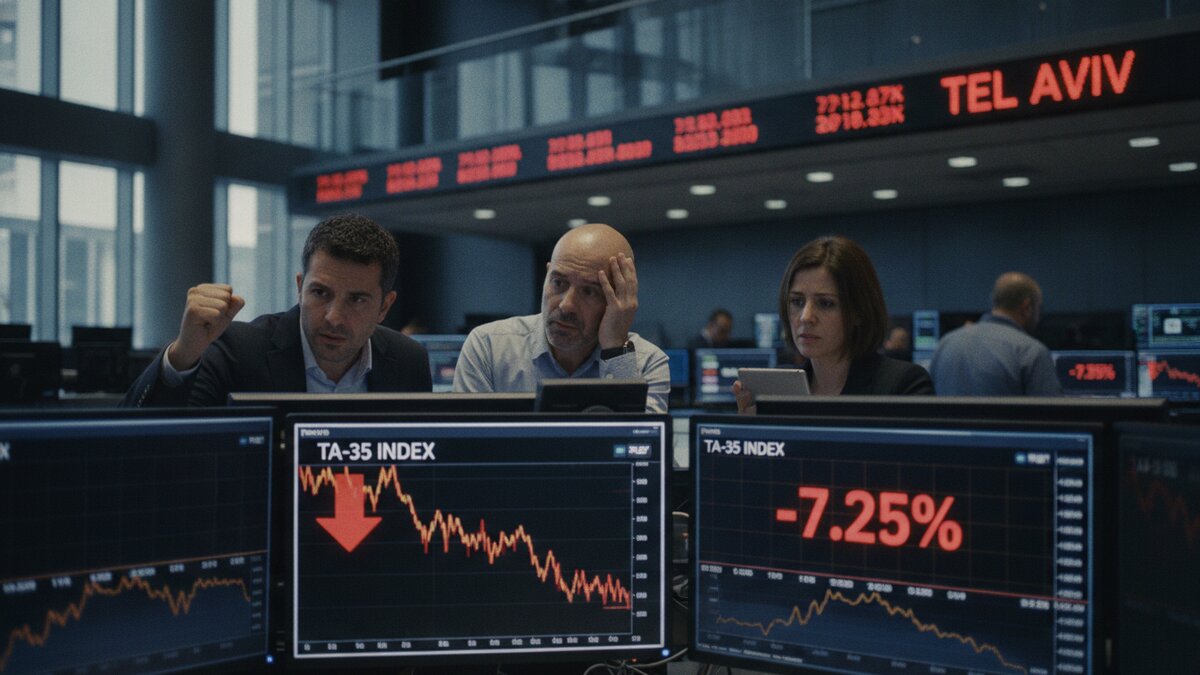
Israel’s stock market drops as exit polls show no clear election winner, with the benchmark Tel Aviv 125 index falling as much as 3.5 percent in early trading on Wednesday. Investors were weighing projections that neither Prime Minister Benjamin Netanyahu’s coalition nor the opposition bloc had a clear path to a parliamentary majority.
The result leaves the country facing uncertain coalition talks, while the market’s decline reflects investor reaction to an unclear political outcome. Israel’s first parliamentary election since the start of its war on Gaza has not produced an obvious governing bloc.
With more than 76 percent of votes counted as of 09:30 GMT, Netanyahu’s coalition was on course for 54 seats, while the opposition bloc headed by Yashar leader Gadi Eisenkot was projected to win 47, according to tallies published by Israeli media. A majority requires 61 seats in the Knesset.
Israel’s stock market drops amid deadlock
The early decline came as the exit polls and vote tallies offered no decisive lead for either side. A market reacting to political uncertainty can move before negotiations reveal whether a government can be formed; in this case, investors were assessing a contest that remained unresolved as counting continued.
The gap matters. Neither bloc had reached the threshold needed to govern alone, leaving the next stage dependent on political negotiations. That uncertainty could affect the business climate investors are pricing into Israeli securities, although the source reporting linked the immediate market move to the unclear election result.
Israel’s economy has continued to grow despite operating on a war footing for the past three years, according to Al Jazeera. The report cited an influx of investment into the local technology sector as part of that economic picture.
Government figures put gross domestic product growth at 2.9 percent in 2025 and 3.2 percent in the first half of 2026. The Bank of Israel last week raised its forecast for full-year growth to 5.6 percent from 4 percent, citing increased production by Israeli firms overseas.
The central bank projected growth of 7.5 percent for 2027, a forecast the report said was above estimates for advanced economies including the United States, the United Kingdom, Germany and Japan. Those figures offer a contrast to the immediate uncertainty facing investors after the vote, rather than a guarantee about how markets will respond next.
Political talks now become the next point to watch. The vote count and the blocs’ ability to assemble a majority will determine whether the deadlock eases or continues to weigh on the market.
Source: aljazeera.com