Earth’s Rocks Missing Layer: Mantle Motion Behind Great Unconformity
Researchers say heat-driven motion in Earth’s mantle lifted ancient continents above the sea, letting ice sheets scrape away up to a billion years of rock. Their Nature study offers an explanation for the Great Unconformity, a gap geologists first noticed in the 1870s.
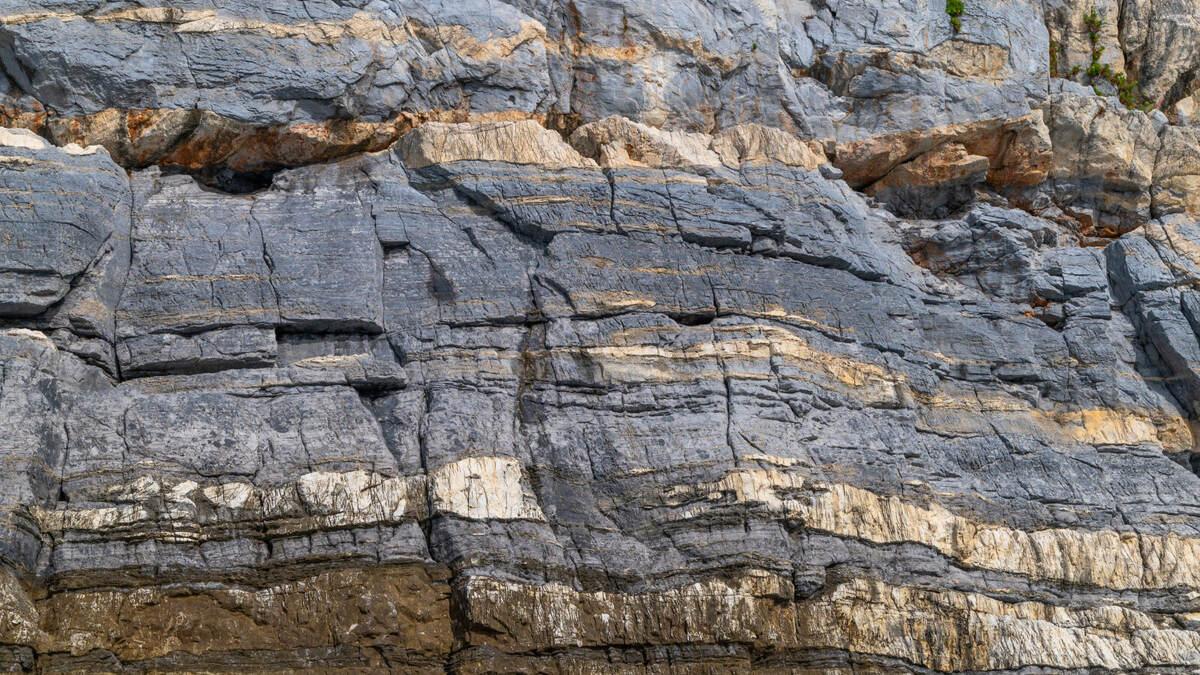
Researchers say deep movement in Earth’s mantle, combined with grinding ice sheets, explains the earth’s rocks missing layer known as the Great Unconformity, a gap of up to a billion years in the planet’s rock record. They report the finding in the journal Nature.
Geologists first spotted the gap on several continents in the 1870s. For 150 years, nobody knew what erased those missing chapters.
What the Great Unconformity is
Rock layers usually stack in order, with the oldest at the bottom and the youngest on top. In some places they do not. At the Grand Canyon in North America, a flat layer of sedimentary rock about 540 million years old or younger sits directly on a crystalline “basement” up to two billion years old.
Between the two, up to a quarter of Earth’s history has vanished. Geologists have found the same gap across North America, parts of northern China, and beneath younger rocks in northern Europe.
The timing matters. The sedimentary layers just above the gap appear alongside the Cambrian explosion, a huge diversification of life that began around 540 million years ago. Scientists have speculated that the erosion of entire continents may have changed the chemical balance of seawater and helped animal life flourish.
Competing explanations
Researchers had proposed many causes. Some pointed to ice-sheet erosion during the Snowball Earth period, between 720 million and 635 million years ago. Others favored the reshuffling of continental blocks, mountain building, heat-driven movement inside Earth, volcanic activity, or global sea level change.
Testing those ideas is hard because the main evidence is rock that no longer exists. The team had to work from what is known to fill in the gaps.
Supercomputer modeling of the mantle
The researchers started from a theory that heat-driven motion in the mantle shaped the gap. The mantle is a 2,900-kilometre-thick layer of hot solid rock that moves slowly over tens to hundreds of millions of years. Hot rock rises and cold rock sinks, pushing and pulling the surface above by hundreds of metres.
They used the Australian supercomputer Gadi to model how that motion affected continents over the past billion years. The results consistently showed three ancient continental blocks being lifted from around a billion years ago to 540 million years ago. Those blocks were Laurentia, which now makes up much of North America, Baltica, covering parts of northern Europe, and North China.
Over the following 540 million years, the models show the blocks being pulled downward.
Uplift, ice and preservation
The researchers say this rise and fall is the ideal scenario for creating and preserving the gap. While the blocks were raised, the crystalline underlayer sat at the surface and the sediment above it eroded away. When they sank, new sediment layers formed and survive in the rock today.
The modeled uplift also coincided with Snowball Earth. During that period, enormous ice sheets scraped over the continents for tens of millions of years. The team concludes that deep Earth processes raised the continents high above the sea, where moving ice scoured their surfaces down.