Earth’s Rocks Missing Layer: Mantle Motion May Explain the Gap
A computer model suggests slow movement in Earth’s mantle lifted three continental blocks, exposing rock layers to erosion before the land sank and new sediments accumulated. The proposed sequence could explain the Great Unconformity, a gap in the geological record that spans hundreds of millions of years in some locations.
Researchers using an Australian supercomputer modeled how movement deep inside Earth may have created the Great Unconformity, the earth's rocks missing layer found in geological records across several continents. Their results suggest mantle motion lifted ancient continental blocks, exposing rock to erosion before the land later sank and new sediment accumulated.
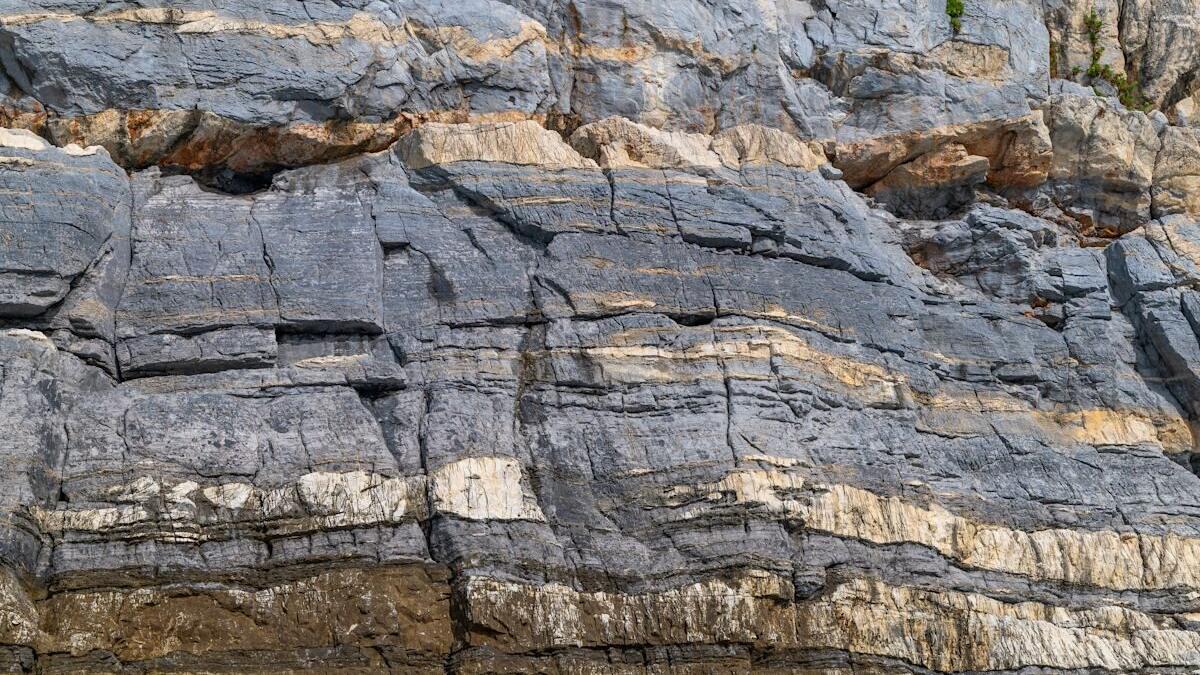
The gap spans hundreds of millions of years in some places. In the Grand Canyon, sedimentary rock about 540 million years old or younger lies directly atop crystalline basement rock up to two billion years old.
A gap in the geological record
Geologists identified the Great Unconformity in the 1870s. It appears in North America and parts of northern China, and beneath younger rocks in northern Europe.
The missing interval covers as much as a quarter of Earth’s history. The younger sedimentary layers formed around the time of the Cambrian explosion, a major diversification of life that began around 540 million years ago.
Scientists have proposed several explanations, including erosion by ice sheets during the Snowball Earth period, continental rearrangement, mountain building, volcanic activity and changes in global sea level. The evidence is difficult to test because the rock layers in question are absent.
Model points to uplift and erosion
The researchers used the Gadi supercomputer to model mantle movement over the past billion years. Earth’s mantle is a 2,900-kilometer-thick layer of hot solid rock that moves slowly over tens to hundreds of millions of years.
The model showed mantle convection lifting Laurentia, Baltica and North China from around a billion years ago to 540 million years ago. Laurentia now makes up much of North America; Baltica includes parts of northern Europe.
As the blocks rose, crystalline rock came to the surface and overlying sediment was eroded. The model then showed the blocks sinking over the past 540 million years, allowing new sediment layers to form and remain preserved.
The predicted uplift coincided with the Snowball Earth period, when enormous ice sheets scraped across continents for tens of millions of years. The researchers’ proposed explanation combines that glacial erosion with changes in elevation driven by movement in the mantle.