Space Station: Final Solar Array Installed by Spacewalkers
NASA astronauts Anil Menon and Joshua Kutryk installed the International Space Station’s eighth and final roll-out solar array during a spacewalk lasting six hours and 59 minutes. The new panel was extended to 63 feet, completing a power upgrade that began in 2021.
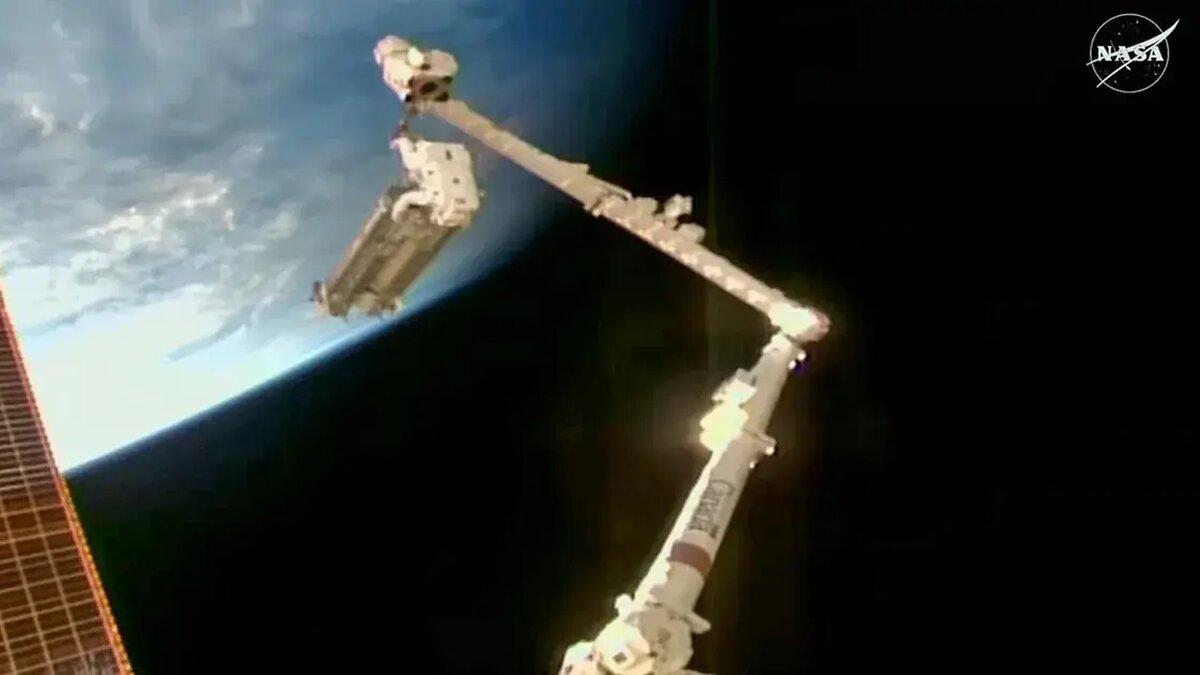
NASA astronauts Anil Menon and Joshua Kutryk installed the International Space Station’s eighth and final roll-out solar array on Thursday, completing a power upgrade expected to raise the orbiting laboratory’s output to about 215 kilowatts.
The spacewalk lasted six hours and 59 minutes. It finished a project NASA began in 2021 to help offset the declining output of the station’s original solar arrays.
The new panel was mounted at the far right end of the station’s power truss. Because the station’s robotic arm could not carry the folded array directly to that location, Menon and Kutryk passed it between them in a leapfrog maneuver to reach a support frame.
They unfolded the array, secured it with bolts and connected its power and data cables while the station was in orbital darkness. After the station moved back into sunlight, flight controllers saw that one of the two folded blankets was not producing a small amount of electricity as expected.
The astronauts waited for another night pass to check the connections. The issue was resolved, and the final arrays were extended to their full length of 63 feet.
“These solar arrays are incredible, half the size of the old ones. It's delivering 40% more power,” Menon said after returning to the airlock. He said the additional power supports the station’s research and other work.
NASA’s upgrade uses eight roll-out solar arrays, known as IROSAs. The first was installed in 2021, and six more followed; the seventh was mounted during a spacewalk the previous week by Menon and Kutryk.
The final two arrays arrived aboard a SpaceX Cargo Dragon capsule earlier this month, folded in half in its unpressurized trunk. The station’s robotic arm placed them on the left side of the power truss before the spacewalks to install them.
Before the first IROSA installation, the station’s original arrays generated about 160 kilowatts. NASA expected the final panel to bring the total to about 215 kilowatts, supporting life-support systems, computers, research and visiting vehicles through the station’s planned retirement and de-orbiting in 2030.
The new arrays use solar cells and provide more power despite shading parts of the original arrays they cover.