Scientists crushed water between diamonds at extreme pressure
Researchers squeezed a tiny water droplet between diamond tips at pressures exceeding 222 gigapascals, observing an unusual change in the structure of ice. The…
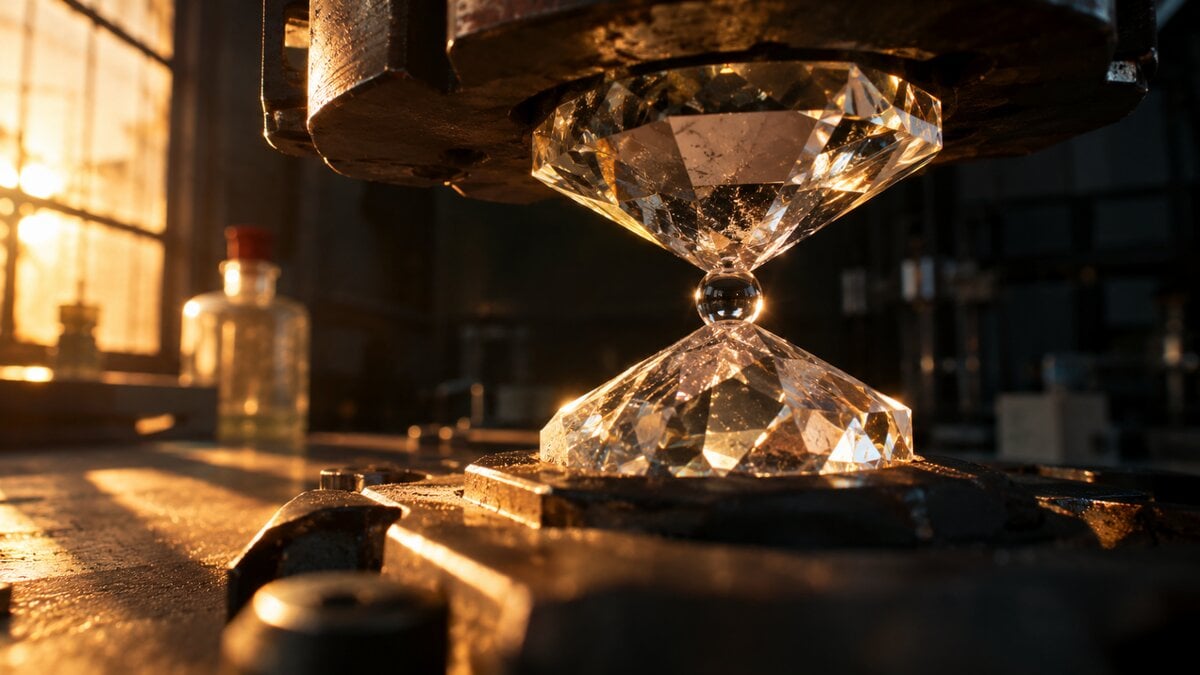
Researchers crushed water between diamond tips at pressures beyond 222 gigapascals in a laboratory experiment, observing an unexpected change in ice’s atomic structure. The finding offers new evidence for how water may behave inside planets such as Uranus and Neptune, where extreme pressure shapes conditions far beyond those on Earth.
The experiment found that the ice became more lopsided and stretched rather than more symmetrical as its atoms were compressed. That structural shift could affect how water conducts heat, influences magnetic fields and contributes to a planet’s density—properties scientists use when interpreting telescope observations.
Researchers placed a tiny droplet between two diamond tips and increased the pressure to more than 222 gigapascals, about 2.2 million times the pressure people experience walking on Earth. They used X-ray diffraction to identify changes at small scales by measuring how X-rays scattered through the water.
What did scientists observe when they crushed water between diamonds?
The ice’s crystal structure became more uneven and stretched under extreme pressure, contrary to the expected shift toward greater symmetry. Simulations had predicted a transformation of this kind, but the study appears to be the first time scientists observed it in a laboratory.
“Water beyond Earth-like conditions has more complex behavior than we ever previously imagined,” said physicist Ashkan Salamat of the University of Nevada, Las Vegas. “It's amazing how water can behave under pressure.”
The team also pushed ice-X beyond its previously known limits. Ice-X, one of more than 20 types of ice known to scientists, forms gradually across a broad range of pressures. At around 50 gigapascals, its oxygen and hydrogen atoms shift into a highly symmetrical structure.
The new experiment suggests that ice-X can enter a more complex structural regime at higher pressure. The researchers wrote that the transition “marks the onset of a new regime of structural complexity in high-pressure H2O, redefining the upper stability limit of ice-X.” Further study will be needed to establish whether the resulting structure is a distinct new form.
Why does the result matter for studying distant planets?
Scientists cannot directly enter the crusts or atmospheres of distant planets, Salamat said, so they combine observations with laboratory experiments that reproduce some planetary conditions. The study provides a firmer basis for interpreting what water could be like inside Neptune and other worlds.
There is an important limit: the experiment matched pressure conditions found on some planets, but not their temperatures. The result therefore informs one part of the picture rather than recreating the full environment.
That distinction matters when researchers build models from telescope data. If water’s structure changes, the chemical reactions it drives may change as well. The study raises the possibility that rock and metal compounds formed under those conditions could differ from compounds found on Earth, affecting how scientists assess planetary interiors and what future probes might encounter.
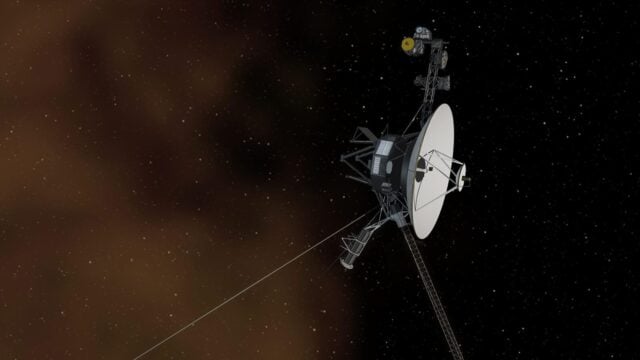
Salamat said researchers can draw on data from the Voyager program and use laboratory work to test what may occur inside planets. “When we eventually get to these worlds, what are we going to see?” he said. “We're really the initial pioneers in trying to answer these questions in the laboratory.”
The findings were published in Communications Chemistry.