NASA’s Voyager 1 Probe Restores Contact After 48-Hour Gap
NASA’s Voyager 1 probe has resumed communications after going silent for about 48 hours in October. Engineers say a thruster group switched off and its backup…
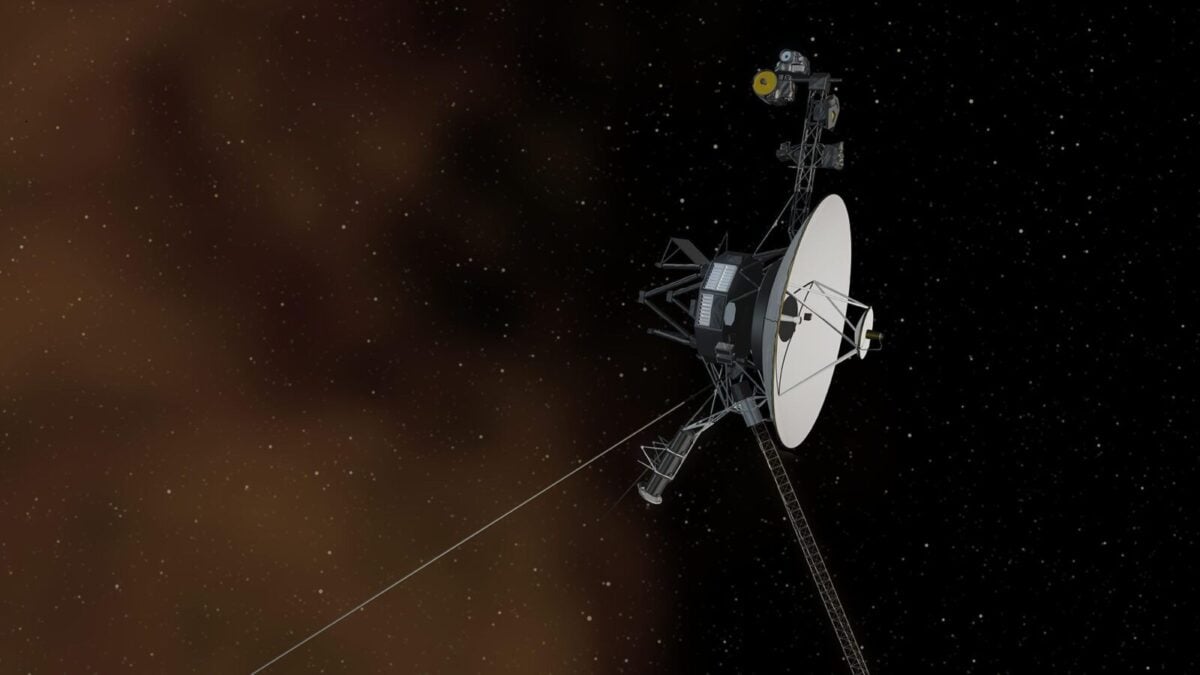
NASA’s Voyager 1 probe resumed contact with Earth after a communications glitch left the spacecraft silent for about 48 hours between Oct. 18 and 20. Engineers are investigating what caused the interruption as the probe approaches a one-light-day distance from Earth.
The signal disappeared during check-ins on Oct. 18 and 19, then reappeared on Oct. 20. NASA’s Deep Space Network uses three antennas to monitor the spacecraft, which is now so far away that a command takes nearly a day to arrive and a response nearly another day to return.
That delay leaves little room for quick intervention. The spacecraft restored communications on its own before engineers could send a remote fix.
What caused Voyager 1’s communications glitch?
Engineers have not determined the cause, but the spacecraft appears to have entered a kind of safe mode. The team found that one group of thrusters went offline and backup thrusters switched on automatically after the spacecraft’s computers detected a problem.
“This is the first time we've seen the spacecraft do something like this, but we are also at a point in the mission where we have to expect the unexpected,” Kareem Badaruddin, Voyager mission manager at NASA’s Jet Propulsion Laboratory, said in an agency statement on Oct. 29.
The automatic switch suggests the spacecraft’s systems responded to an issue without waiting for instructions from Earth. Engineers are still examining what triggered the change, the Jet Propulsion Laboratory said.
Why is the one-light-day milestone significant?
Voyager 1 is due to reach that distance on Nov. 18, when it will be 16.09 billion miles (25.89 billion kilometers) from Earth. At that point, a radio signal will take about a day to travel one way, making a full command-and-response exchange take nearly two days.
The communications gap came as the spacecraft neared that milestone, highlighting the practical challenge of operating a probe at such a distance. Ground teams cannot expect an immediate reply after sending a command, while the spacecraft must rely on onboard systems to manage some problems.
Voyager 1 and its twin, Voyager 2, launched in 1977 to explore planets in the solar system. Their route took advantage of a rare alignment that let them travel from Jupiter to Saturn, then allowed Voyager 2 to continue to Uranus and Neptune. Voyager 1’s close views of Saturn’s rings and its moon Titan also changed its trajectory, sending it high above the plane of the solar system.
Both spacecraft have crossed into interstellar space and remain operational. Their nuclear power supplies are weakening, however, so engineers have been shutting down instruments and finding ways to reduce energy use.
In early September, engineers turned off three devices on Voyager 1 and replaced them with three lower-power alternatives. The Jet Propulsion Laboratory called the adjustment a “Big Bang”; Voyager 2 underwent a similar power-saving change about six weeks earlier.
Each spacecraft loses four watts of power a year. They launched with 470 watts, and the power adjustments could allow Voyager 1 to keep operating science instruments longer than previously anticipated. Without the change, falling power could have forced engineers to switch off another instrument as soon as next summer.