France protests draw 575,000 as unions demand higher wages
France’s Interior Ministry said 575,000 people joined nationwide protests against living costs and wages, while the CGT union put turnout at 1.6 million. The…
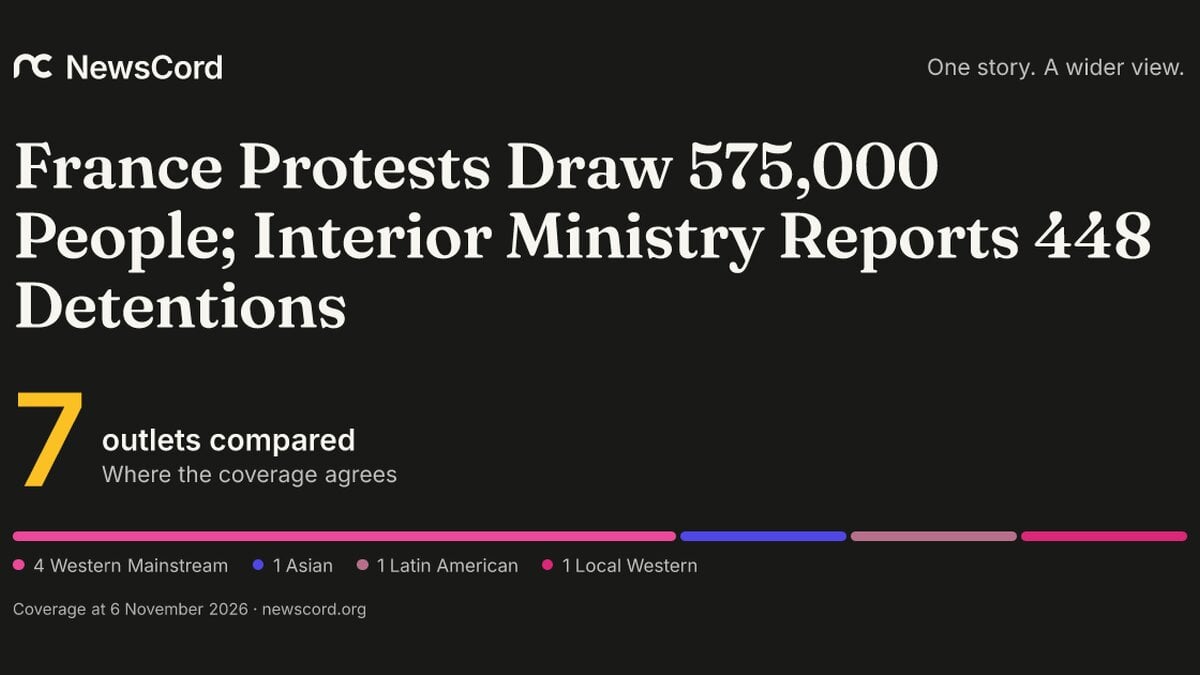
France protests draw 575,000 people nationwide on Thursday, according to the Interior Ministry, as workers and students marched against rising living costs and wages. The CGT union put turnout at 1.6 million, underscoring the divide over the scale of the demonstrations.
The protests brought together workers from public and private sectors after weeks of student-led demonstrations. Authorities reported 448 arrests and 53 police officers injured, while clashes broke out in several cities, including Paris and Lyon.
The gap is wide.
Unions called a one-day strike involving teachers, rail workers, hospital staff and postal employees, with some energy workers joining. Protesters demanded higher minimum wages, raises for workers, changes to the tax system and better conditions in schools.
CGT leader Sophie Binet told protesters in Paris: “The question is not whether workers will win,” but “how much we’re going to win”. In another statement, she said, “Our salaries do not allow us to live anymore.”
The turnout dispute reflects competing counts rather than a change in the protest’s central demands. The Interior Ministry counted 575,000 participants nationwide, while the CGT, one of the organisers, estimated 1.6 million. The ministry’s count was reported up to 17:00 local time.
Where did clashes occur?
Clashes were reported in Paris and Lyon, where police used tear gas. The main authorized march in Paris ran from Place de la République to Place de la Nation and passed without major violence or shop looting, although a small fire on grass at Place de la Nation required firefighters’ attention.
In Lyon, riot police charged a group of demonstrators and used tear gas. The Interior Ministry said officers faced several hundred “black bloc” protesters, and at least one vehicle was set on fire. Authorities said the violence had been contained, though tensions remained high.
In Paris, the march began with a festive atmosphere. A crowd sang “La Marseillaise” as carnival-style floats moved through the streets. Later, some protesters at the front clashed with police, who said hooded individuals had vandalized property and were isolated by officers. Authorities also reported damage at several high schools in the Paris area, including a fire at one school in the city center.
The disruption reached public venues, too. The Eiffel Tower and the Arc de Triomphe closed for the day, while transport was largely unaffected. The Ministry of National Education said about 16 percent of teachers were on strike.
The pressure now moves toward talks. Prime Minister Sébastien Lecornu said he would convene a “social conference” with unions and employers on Monday to address purchasing power and wages. Interior Minister Laurent Nuñez deployed 70,000 police and vowed an “extremely firm response” to potential violence.
Unions and student movements said they would continue street protests until their demands were met, including a 10 percent increase in workers’ remuneration and cancellation of the budget-cut package. A union march was planned for Saturday, November 7, departing at 14:00 local time from Place de la République toward Place de la Nation.