Trump’s Arch Wins Panel Approval, but Judge Halts Work
A federal panel approved President Donald Trump’s planned 250-foot triumphal arch at Memorial Circle, but a federal judge halted construction for two weeks…
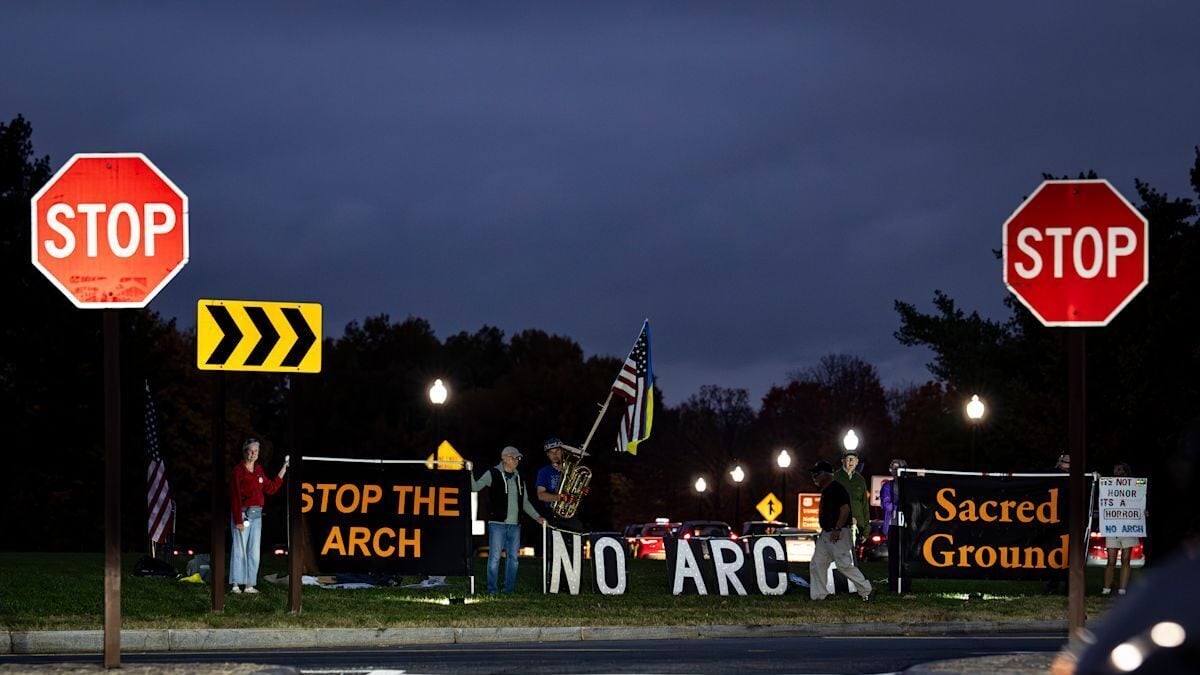
A federal panel approved President Donald Trump’s planned 250-foot triumphal arch at Memorial Circle in Washington, D.C., on Thursday night, but a judge halted construction hours later. The approval briefly cleared the way for work on the project before a court order put it on hold for two weeks.
U.S. District Judge Tanya S. Chutkan issued the pause while the court considers challenges to the arch’s legality. Three Vietnam War veterans, a historic preservationist, the D.C. government and the Commonwealth of Virginia had sued to stop construction.
The National Capital Planning Commission granted final approval after more than eight hours of public testimony and heated debate. Administration officials had said construction could begin immediately, but Chutkan’s order blocks work at or near Memorial Circle while the legal review proceeds.
Why did the judge halt construction?
Chutkan barred the Trump administration from starting construction, excavation, demolition, land disturbance, utility installation or roadway closures connected to the arch. The restriction will last for two weeks as the court considers the legal challenges.
The order followed the commission’s vote, creating an abrupt change in the project’s status: it had received the panel’s final approval, yet construction could not proceed under the judge’s ruling. The dispute now turns on whether the project can move ahead under federal law.
The opponents argue Congress has not authorized the monument. More than 120 members of the public, including architects, historians and military veterans, urged administration officials to abandon it during Thursday’s hearing. They said the arch could overshadow nearby Arlington National Cemetery and interrupt the solemn corridor between the cemetery and the Lincoln Memorial.
They also raised concerns about the project’s effects on the area. Ginge Sivigny, whose husband and his parents are buried in the cemetery, described the prospect of construction noise and traffic interfering with her visits.
“I'm 80 now, and after three-and-a-half years of construction, I may not be able to resume my visits,” Sivigny said.
What did supporters and opponents tell the commission?
Mark Paoletta, a White House official who chairs the commission, backed the proposal at the hearing’s conclusion. “I believe more than ever that this triumphal arch should be approved by this commission,” he said.
Stuart Levenbach, the commission’s vice chairman and a Trump appointee, defended the location as an underused traffic circle. “The proposed arch would transform this place into a monumental gateway,” he said.
D.C. Council Chair Phil Mendelson, who also sits on the commission, opposed the project. He cited conflicting information from Trump and his deputies, including Trump’s comments to reporters last year that the arch would honor “me.” Mendelson also said he believed the plan violated federal laws.
“It is invalid to say this arch was authorized by Congress,” Mendelson said. He argued lawmakers a century ago had envisioned a pair of columns symbolizing national reunification after the Civil War, rather than the arch the administration is pursuing.
Mendelson warned the project could hamper emergency evacuation from Washington and asked the commission to postpone its vote. Trump officials rejected that request. Kevin Lilly, an Interior Department appointee at the agency managing the project, pressed for an immediate decision: “We want a decision tonight,” he said.
The commission approved the arch despite the objections. Chutkan’s order now bars construction-related activity at or near Memorial Circle for two weeks.