Asian Stocks Tumble as AI Spending Concerns Hit Chipmakers
Asian markets fell on Friday as investors sold technology shares amid concerns over artificial intelligence spending and U.S. data-center construction. South…
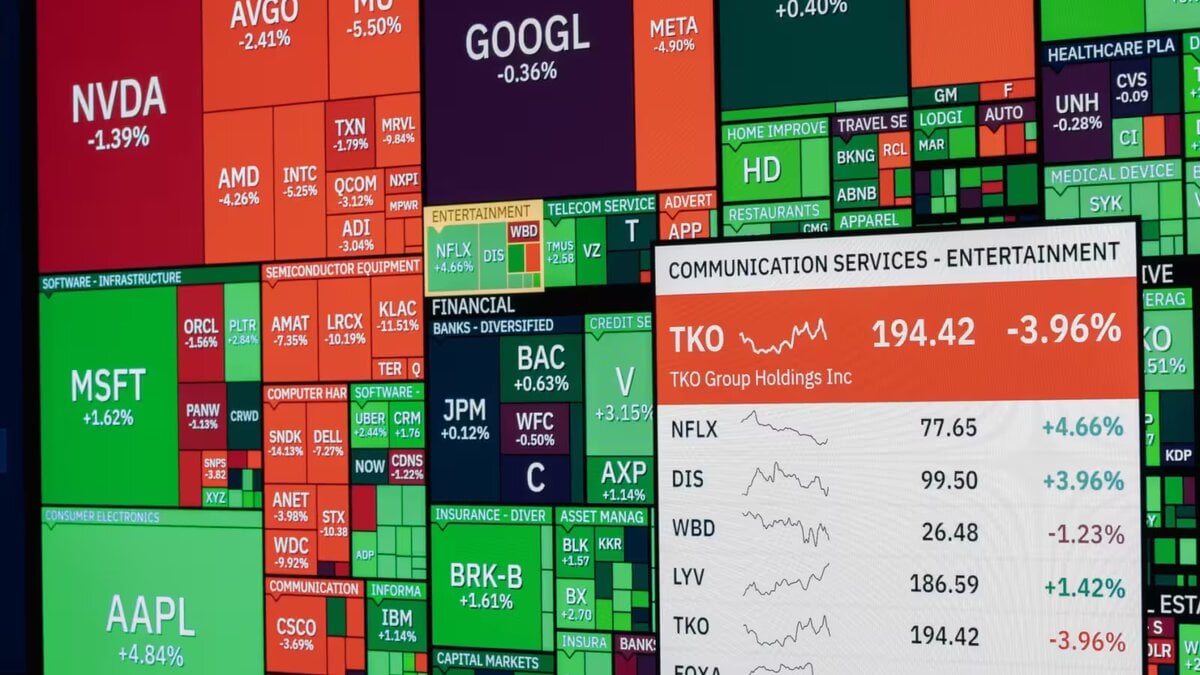
Asian stocks tumbled on Friday, with Japan and South Korea leading a regional sell-off as concerns over artificial intelligence investment drove investors out of technology shares. South Korea’s KOSPI fell as much as 8.8%, prompting a temporary trading halt, while Japan’s Nikkei 225 entered bear-market territory.
The losses followed a steep Wall Street decline on Thursday. The S&P 500 fell 4.4%, the Nasdaq Composite dropped 5.5% and the Dow Jones Industrial Average lost 3.4%; the Philadelphia Semiconductor Index plunged 12.3%. The slide put pressure on Asian chipmakers and technology companies whose business is tied to AI infrastructure.
Why did Asia stocks tumble rout hit chipmakers?
Investors are questioning whether the scale of spending on AI infrastructure will deliver returns, and whether political changes in the United States could slow data-center construction. Those concerns have weighed on semiconductor companies across Asia, where chipmakers and equipment suppliers are central to the technology trade.
Democrats’ gains in the U.S. midterm elections added uncertainty, with investors concerned a Democrat-controlled Congress could increase scrutiny of data-center developments. Campaign opposition to large-scale projects in some states also raised the prospect of slower construction and weaker demand for AI chips and related equipment.
The pressure was stark in South Korea. The KOSPI sank to 4,911.28 points in early trading, its lowest level since early February. The Korea Exchange activated a 20-minute circuit breaker after the index fell 8%, temporarily suspending stock and derivatives trading.
The halt did not end the selling. The KOSPI was last down 4.1%, with Samsung Electronics also falling 4.1% and SK Hynix sliding 7%, according to the market figures reported Friday.
Japan’s Nikkei enters bear-market territory
Japan’s Nikkei 225 dropped as much as 7.1% and was last trading around 5.5% lower. The decline left it more than 20% below its June record high, placing the benchmark in bear-market territory. The broader TOPIX index fell nearly 6%.
Technology shares led losses. Advantest, a semiconductor equipment maker, Kioxia Holdings, a memory-chip producer, and SoftBank Group were among the biggest decliners. Thursday’s losses had already been sharp: Advantest plunged 15%, Lasertec fell 14% and Kioxia dropped 13%.
Investors felt the effects across the region. Taiwan’s technology-heavy Taiwan Weighted index lost 4.1%, while Taiwan Semiconductor Manufacturing Co. shares fell more than 4%. China’s Shanghai Composite declined 1% and the Shanghai Shenzhen CSI 300 slipped 1.3%; Hong Kong’s Hang Seng index edged down 0.3%.
Singapore’s Straits Times Index fell 2.4%, Australia’s S&P/ASX 200 lost 1%, and futures tied to India’s Nifty 50 edged down 0.3%. The spread of declines shows how doubts over AI spending have reached markets well beyond the biggest chipmaking centers.
Investors also faced fresh pressure from U.S. chip stocks. Qualcomm shares sank nearly 10% overnight after smartphone chip sales missed analyst estimates, adding to concerns about semiconductor valuations and the returns on major AI infrastructure investments.
Timothy Moe, chief Asia Pacific equity strategist at Goldman Sachs, said investors were unwinding positions, selling at stop-loss levels and responding to heightened volatility. He also said political resistance to U.S. data-center construction could affect demand and profits for Asian AI hardware suppliers.
“The market's tendency is always to shoot first and ask questions later. I think that's exactly what's happening now,” Moe said.
Oil prices extended gains in Asian trading on Friday after sharp losses earlier in the week, as investors weighed uncertainty over President Donald Trump’s next move regarding Iran after the midterms. U.S. stock futures traded higher during Asian trading, even as regional technology shares continued to fall.