Ex-Airtel COO Shares Years of Stress Led to Paralysis at 40
RamG Vallath, former chief operating officer of Bharti Airtel, says years of high-pressure leadership roles contributed to a rare autoimmune disorder that left him effectively paralyzed by 40. He describes war rooms, missed targets and a seven-year wait for a diagnosis.
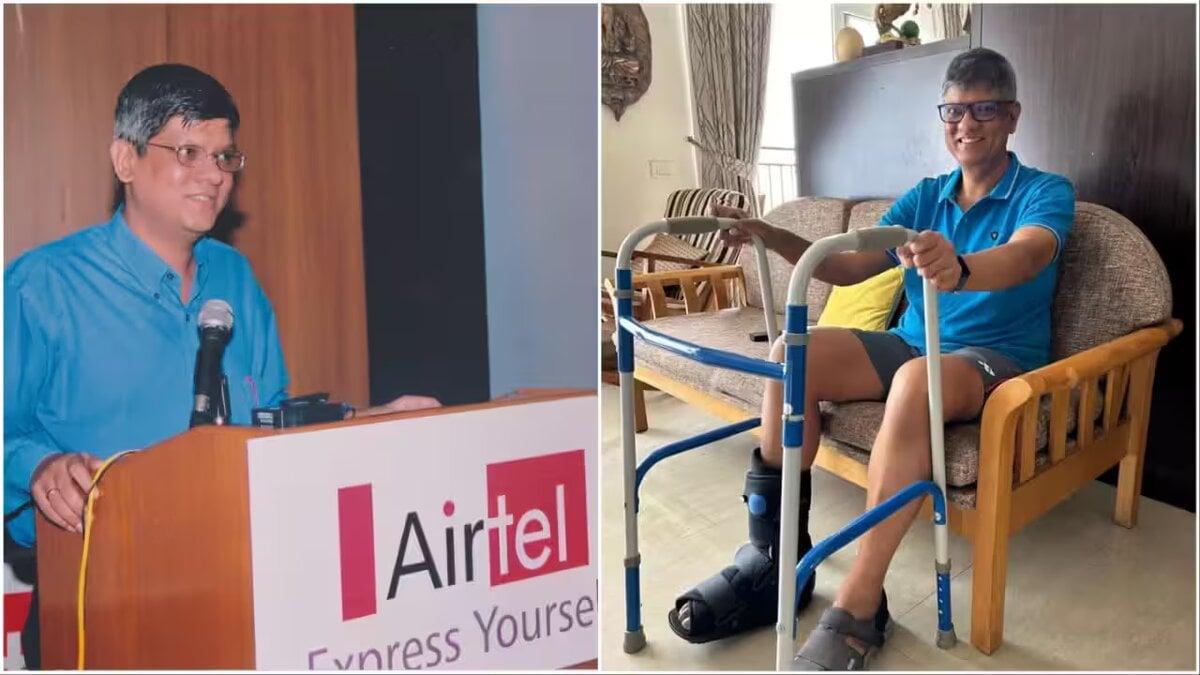
RamG Vallath, a former chief operating officer of Bharti Airtel, said in an interview published November 9, 2026 that years of high-pressure corporate work contributed to an autoimmune disorder that left him effectively paralyzed by age 40. The ex-Airtel COO shares years of detail on a career he says came at a steep personal cost.
Vallath, now 58 and an author, once dreamed of becoming a Fortune 500 CEO. He says the experience forced him to rethink what achievement means.
A balanced start
Vallath joined Titan in 1992 after management school. He described it as one of the lowest-paying recruiters on campus, but one with exceptional work-life balance. "I had a fantastic work-life balance," he said.
That changed as he rose through the ranks, first at Compaq and later in senior leadership roles at 3Com and Airtel.
War rooms and missed targets
The pressure began mounting while he was country leader at networking company 3Com. Weekly performance reviews turned into an intense exercise in accountability. "There was an immense amount of pressure," he said.
He recalled weekly meetings called "war rooms" where leaders had to explain sales funnels, missed targets and projections.
At Airtel, where he served as COO from 2001 to 2006, he helped launch a telecom circle from scratch in Tamil Nadu. Ambitious growth targets and operational challenges made stress a constant presence. "We finally ended up at some 20 percent of that number," he said, referring to aggressive business goals.
The job carried other risks. "Rolling out a telecom operation is extremely complex," he said, adding that litigation was possible and government officials might try to take bribes.
Symptoms and a long diagnosis
Physical warning signs appeared while he was still climbing. "I wanted to become a Fortune 500 CEO," he said of that period. "It started with feeling clumsy when I was walking," he recalled. "I would get a terrible backache even if I walked 400-600 metres."
The symptoms worsened. He developed tremors in his hands and lost strength in his fingers, legs and core muscles. Everyday tasks became harder. "The body had become very unfit," he said.
Doctors eventually diagnosed Chronic Inflammatory Demyelinating Polyneuropathy, known as CIDP, a rare autoimmune neurological disorder. Two highly qualified doctors first misdiagnosed him, Vallath said, and one wrongly told him he had an incurable inherited disease. "The diagnosis took seven years," he said.
Moves that did not slow him
His condition deteriorated steadily as he kept moving between demanding corporate roles. He left Airtel for Dell in 2006, a company he described as offering significantly better balance. He then accepted increasingly challenging assignments, including a later role at Hewlett Packard Enterprise.
Looking back, Vallath said he repeatedly moved "from the frying pan into the fire." He said he usually does not need help walking, unless his autoimmune condition flares up.