Treasury Yields Jump as Hot Inflation Fuels Fed Rate Bets
U.S. Treasury yields climbed after October inflation exceeded economists’ expectations, while a weak auction added pressure to bond prices. Traders increased bets on a December Federal Reserve rate hike after Fed Governor Christopher Waller said officials should consider a larger move if inflation stays high.
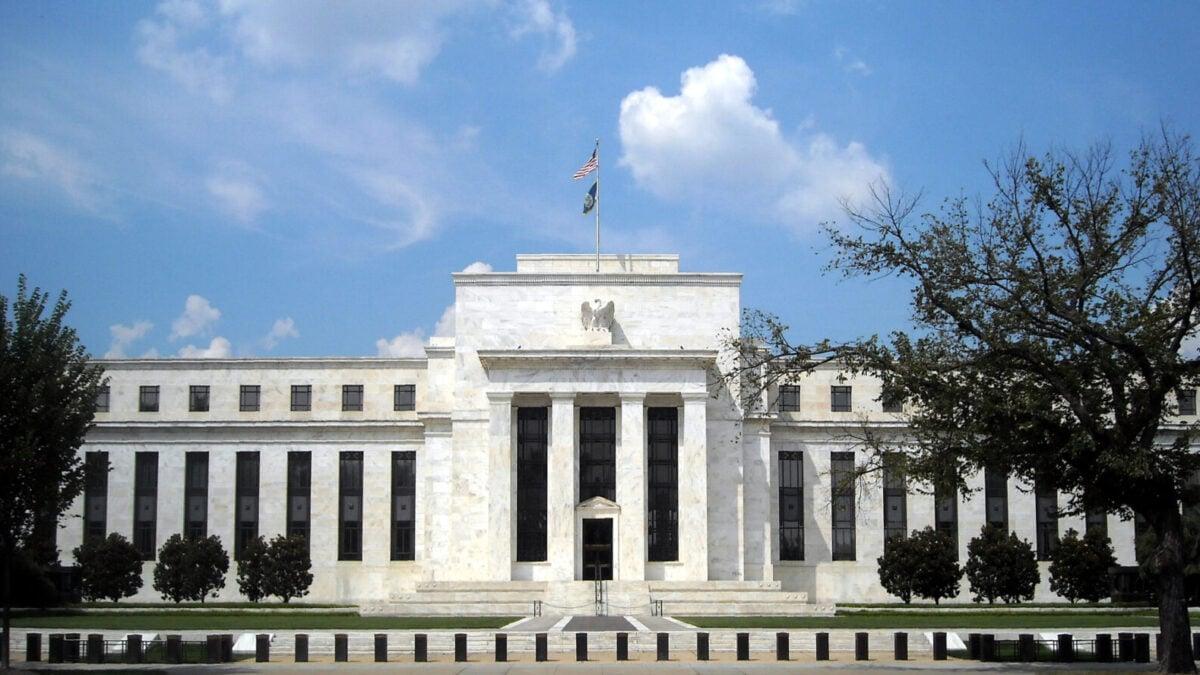
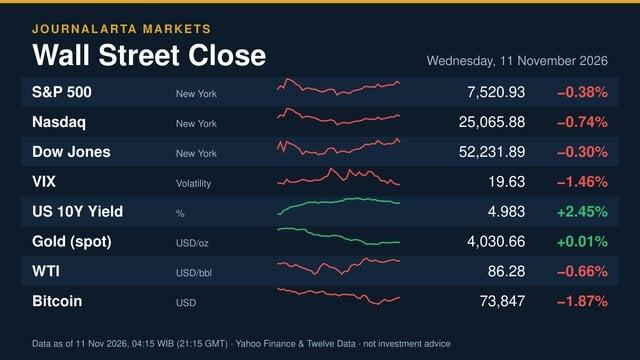
U.S. Treasury yields climbed Tuesday after hotter-than-expected inflation and Federal Reserve comments fueled bets on higher interest rates, a shift at the center of stock market news November. The 10-year yield briefly topped 5%, while major U.S. stock indexes closed lower.
The 10-year Treasury yield was last up 13 basis points at 4.992%, according to market data. A basis point is one-hundredth of a percentage point. The two-year yield rose more than 18 basis points to 4.736%.
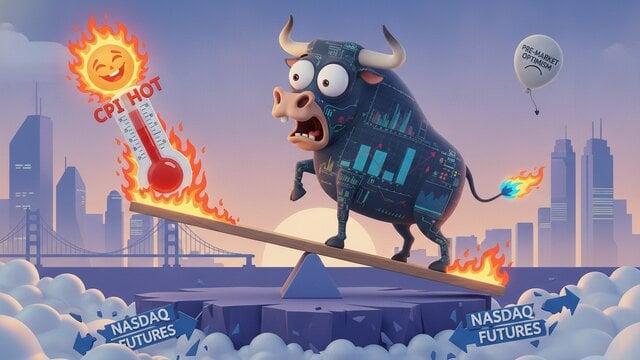
October’s consumer price index increased 0.4%, above economists’ 0.3% forecast, though below September’s 0.6% rise. Core inflation, which excludes food and energy, rose 0.3%, compared with expectations for a 0.2% increase.
Bond prices fell as yields rose. A weak auction of $42 billion in 10-year Treasury notes added pressure, with Peter Boockvar, chief investment officer at One Point BFG Wealth Partners, saying dealers were left with 10% of the auction, the most since May.
Higher Treasury yields can feed into borrowing costs for households and businesses. The 10-year rate is a benchmark for mortgages, car loans and credit card rates.
Fed officials signal openness to larger increases
Federal Reserve Governor Christopher Waller said he would consider a 50-basis-point increase at the central bank’s December meeting if core inflation continues to come in at 0.3% or higher. “Hiking only 25 basis points would put our credibility at risk, a risk I am not eager to take,” Waller said at a conference in London.
Dallas Fed President Lorie Logan said the central bank needs at least two more quarter-point increases. She said the pace could depend on the near-term economic and financial environment.
Traders were pricing in a 91% chance of a quarter-point increase and a 9% chance of a half-point move in December, according to CME FedWatch. One week earlier, they saw a 77% chance of a quarter-point hike and a 23% chance of rates holding steady.
Lindsay Rosner, head of multi-sector fixed income investing at Goldman Sachs Asset Management, said persistent inflation could extend rate increases into 2027. “A December hike is our firm base case despite wider AI jitters,” she said.
Stocks close lower
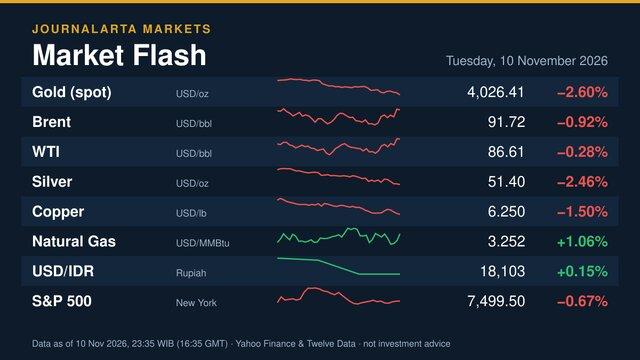
The S&P 500 fell 0.4% and the Nasdaq slipped 0.74% Tuesday. Nvidia shares dropped 5.47%, closing at their lowest level since March 30.
The decline extended recent weakness tied to concerns about the company board’s investigation into reports that Chief Executive Jensen Huang was the “target of a foreign intelligence effort.”
Wholesale inflation figures due Friday may also shape the Federal Reserve’s interest-rate decisions, while the October consumer price report has strengthened market expectations for a December increase.