European Survey Reveals 900M Galaxies in First Euclid Release
The European Space Agency's Euclid mission has released its first major dataset, covering more than 900m galaxies and about 15,000 probable strong gravitational lenses. Scientists say the lenses could help reveal what dark matter is made of.
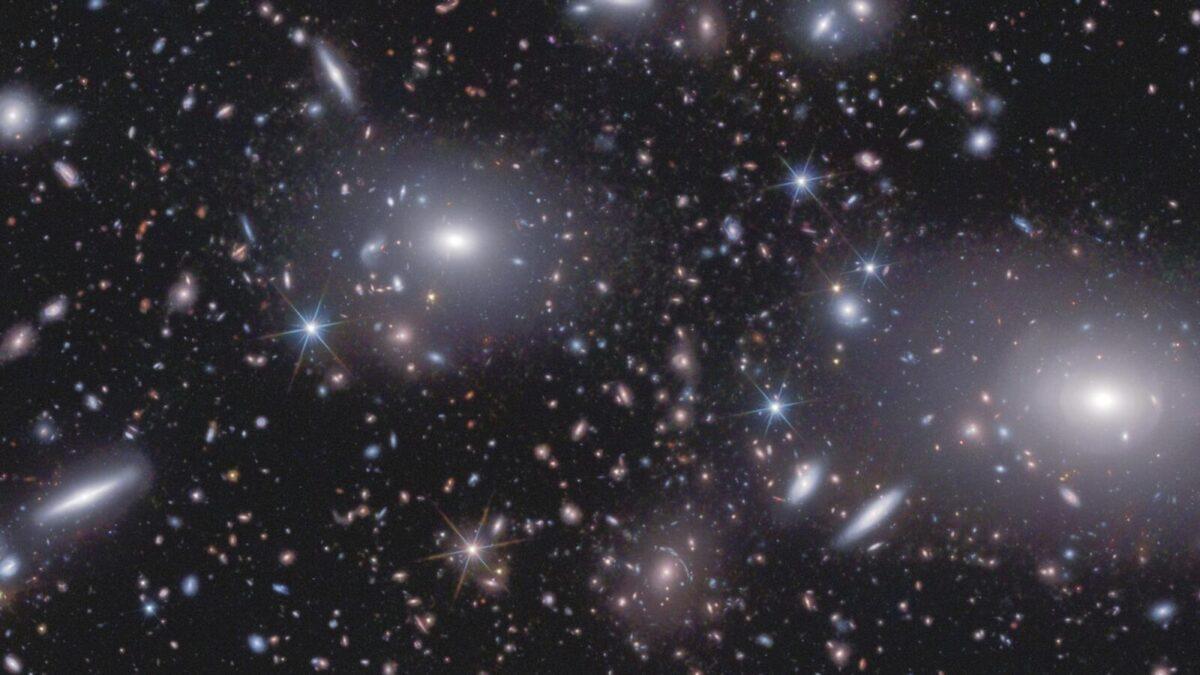
A European survey reveals 900m galaxies in the first major data release from the European Space Agency's Euclid mission, published on November 12, 2026. The data also includes about 15,000 probable cases of strong gravitational lensing, a effect that could help scientists work out what dark matter is.
Euclid launched in July 2023. Its aim is the largest 3D map of the universe ever made, covering a third of the sky and more than 10bn years of cosmic history.
What the release contains
The new data covers about 14% of the total sky area Euclid will eventually map. Beyond the 900m galaxies, it captures more than 60m potential quasars. These are blazing objects at the centre of distant galaxies, powered by supermassive black holes.
"It's the biggest high-resolution image of the universe we've ever had," said Prof Andy Taylor of the University of Edinburgh, who leads the UK science ground segment for the mission.
Taylor said bigger surveys exist, but none matches Euclid's detail. The Hubble telescope produces images of incredible resolution but covers far less sky. "The technological leap that's Euclid is that we can keep that high resolution, but now we can basically map huge volumes of the sky," he said.
Why gravitational lenses matter
Strong gravitational lensing happens when one galaxy, often inside a galaxy cluster, sits in front of a more distant one. The foreground galaxy's gravity bends the light from the background galaxy. The result looks like bright arcs or rings.
Dark matter boosts the effect, because it adds mass and therefore gravitational pull. Taylor said studying these lenses may let scientists rule out different theories about what dark matter is.
Stephen Serjeant, a professor of astronomy at the Open University, agreed. "With strong gravitational lensing, you find out how the dark matter is clumping and that's very diagnostic of the type of matter that it is," he said.
He added a caution: the next breakthrough on dark matter might well come from lensing, but "I can't say it's certain".
Numbers and next release
Experts previously knew of about 1,000 cases of strong gravitational lensing, Taylor said. Euclid's data holds about 15,000 probable cases. He expects an estimated 170,000 to be found by the end of the mission.
Dark energy and dark matter are thought to make up about 70% and 25% of the universe respectively. Euclid's goal is to probe both.
A further data release is expected next summer, Taylor said. It will include results on the distribution of galaxies and on weak gravitational lensing, which refers to subtle distortions of distant objects caused by dark matter in the foreground.