Nvidia Fallout Hits Alibaba as Chinese Sell-Off Deepens Fears
Chinese AI stocks, including Alibaba, fell as investors bet on tighter US limits on Nvidia chips after Jensen Huang's exit. More than $3 billion of Chinese AI data centre projects that rely on Nvidia hardware are now at risk.
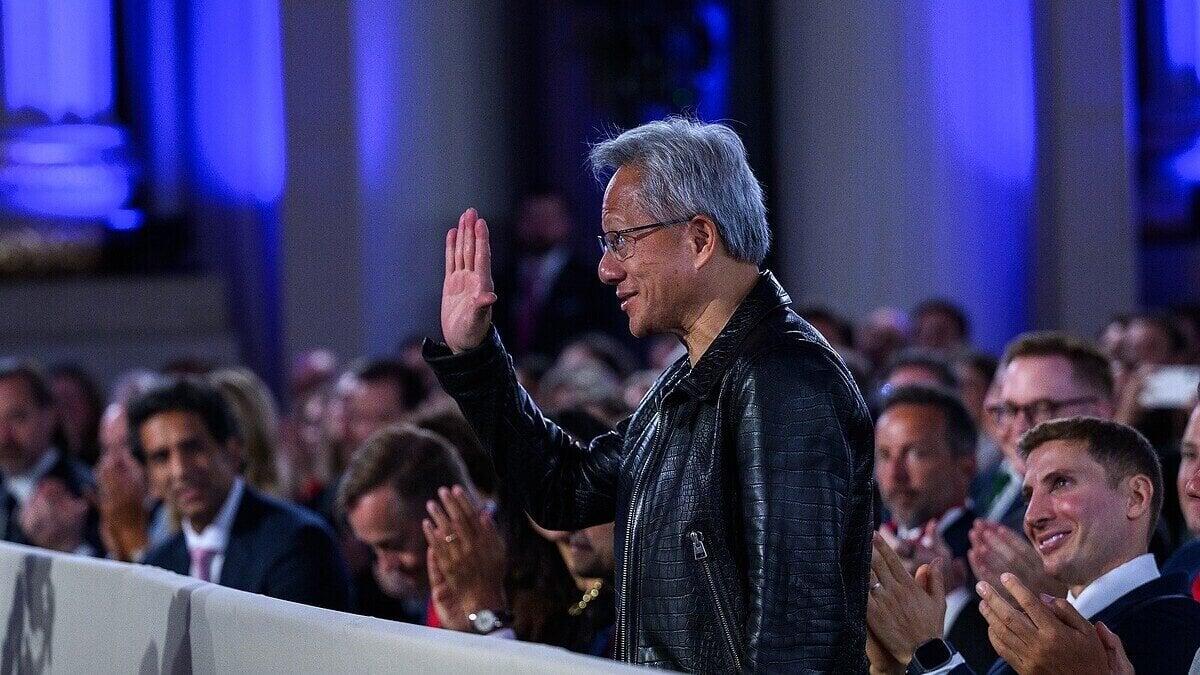
A Chinese sell-off deepens fears that Washington will tighten restrictions on Nvidia chips, with Alibaba and other Chinese stocks hit by the fallout from Nvidia chief executive Jensen Huang's ouster. Investors increasingly expect tougher regulation.
The damage reaches well beyond one company's boardroom.
Billions in projects at risk
Huang's exit and growing US scrutiny imperil more than $3 billion of Chinese AI projects that depend on Nvidia hardware. Those projects form a pipeline of Nvidia-powered AI data centres in China.
The scandal centers on American chips in China. In a recent case involving Supermicro and Nvidia GPUs, both routes involved selling to a neighboring country to keep the real buyer hidden, according to Fortune West Coast editor Amanda Gerut.
Nvidia has hired former acting US attorney Joon H. Kim and the law firm Wachtell Lipton to investigate. Congress may also enact new chip export limits this year.
Washington loses a key voice
Huang had fought hard against tighter chip policy. AI editor Jeremy Kahn wrote that his influence on US policy "is likely to be greatly diminished."
The hit extends to his personal wealth. Reporter Emma Burleigh wrote that the billionaire CEO "is no longer one of the 10 richest people in the world."
Tech correspondent Sebastian Herrera raised a governance question. Nvidia is the linchpin of the AI industry, he wrote, and building the company around one man will test "the limits of its corporate governance and succession planning."
Wider AI market under pressure
The sell-off lands on an AI sector that was already rattled. After the Democrats' major gains in the midterms, fears of stricter regulation and tougher scrutiny, especially around the data center buildout, have spooked investors.
Instability at Nvidia has added to the jitters. Nvidia is also one of Anthropic's key strategic partners.
Anthropic has launched the roadshow for its initial public offering. It set a price range of $70 to $78 a share, which would value the company at up to $1.4 trillion on a fully diluted basis. That is well short of the $2 trillion some news outlets reported weeks earlier.
Anthropic plans to sell 825 million shares on the Nasdaq under the ticker "ANT". At the top of the range, that would raise up to $64.4 billion. Seven strategic partners, including Google and Nvidia, have agreed to buy $26 billion of non-voting stock at the IPO price.
Anthropic filed confidentially in June and made its prospectus public on Oct. 26. An amended filing puts its annualized revenue run rate at about $81 billion at the end of October, up from roughly $71 billion in late September.
The prospectus also carries a fresh warning about recursive self-improvement, the point at which AI systems can substantially build their own successors. Anthropic said internal estimates indicate it "may imminently meet" its Responsible Scaling Policy's definition of "dramatically accelerated progress attributable to AI." It said no current model has crossed that threshold.