M87* Black Hole Ring Confirmed by Independent Imaging Method
A new, independently developed imaging algorithm has reproduced the ring-shaped shadow of the black hole M87*. The result, published in a Nature paper, adds a
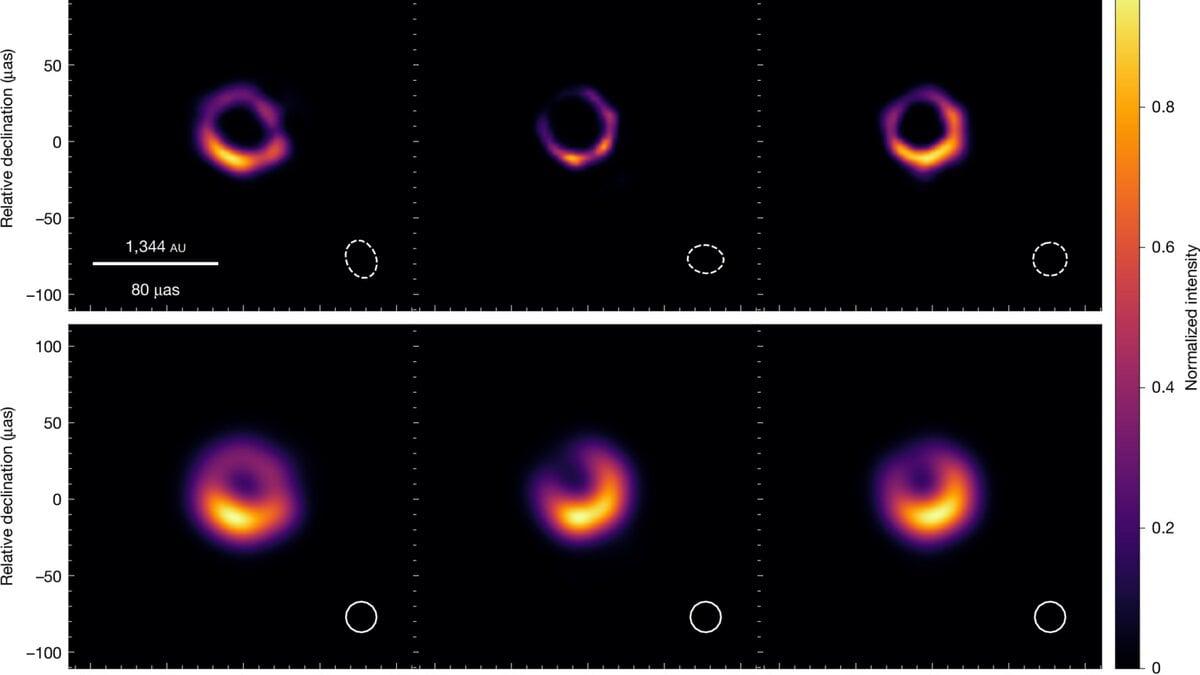
A new, independently developed imaging algorithm has reproduced the ring-shaped shadow of the black hole M87*. The result, published in a Nature paper, adds a second line of evidence to the first picture of a black hole. The technique is described as AI-based.
The Event Horizon Telescope Collaboration made that first image by linking radio dishes into an Earth-sized virtual telescope using millimetre-wavelength interferometry. It showed a ring of light around the supermassive black hole at the center of the radio galaxy Messier 87. The glow in the ring is bent by gravity and stretched to longer wavelengths.
Why the first image drew challenges
Not everyone agreed on what the data showed. Different analysis methods produced different versions of M87*'s fine-scale features. Some outside analyses questioned whether the source was a ring at all.
The disagreement stems from how sparse the measurements are. Interferometry with widely spaced telescopes captures only fragments of the full picture, so turning the data into an image is an underconstrained problem. Many different images can fit the same measurements.
The result also depends on how the instruments were calibrated, which post-processing algorithms were used and how the imaging settings, known as hyperparameters, were chosen.
A separate method, the same shadow
The authors of the new study applied an imaging algorithm they developed themselves to the M87* dataset. Because it was built independently of the original pipelines, its output does not share their assumptions. The paper's title says the independent approach confirms the black hole shadow in M87*.
That matters for how far scientists can trust the ring when they study matter falling toward the event horizon, the boundary around a black hole beyond which nothing escapes. The study describes direct visualization of that infalling material as a new era that began with the first image.
The paper presents the work as an independent check on the original image, not a replacement for it.