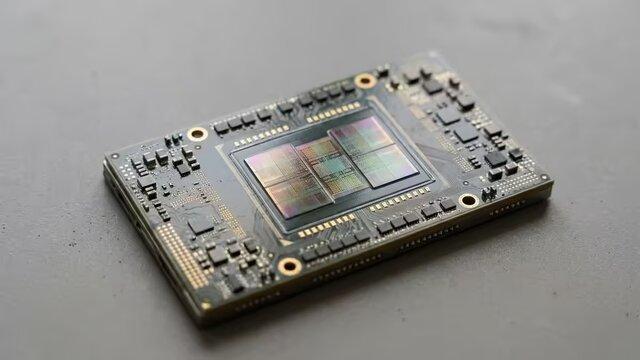
Engineer Turns $2,500 Nvidia Mining Card Into 80GB GPU With Voltage Glitch
An engineer known as Kate used voltage glitching to unlock fuse-locked memory and shader units on Nvidia's $2,500 CMP-170HX mining card. Her tests found nine of ten modified cards ran with the full 80GB of VRAM, in some workloads beating the $20,000 A100.
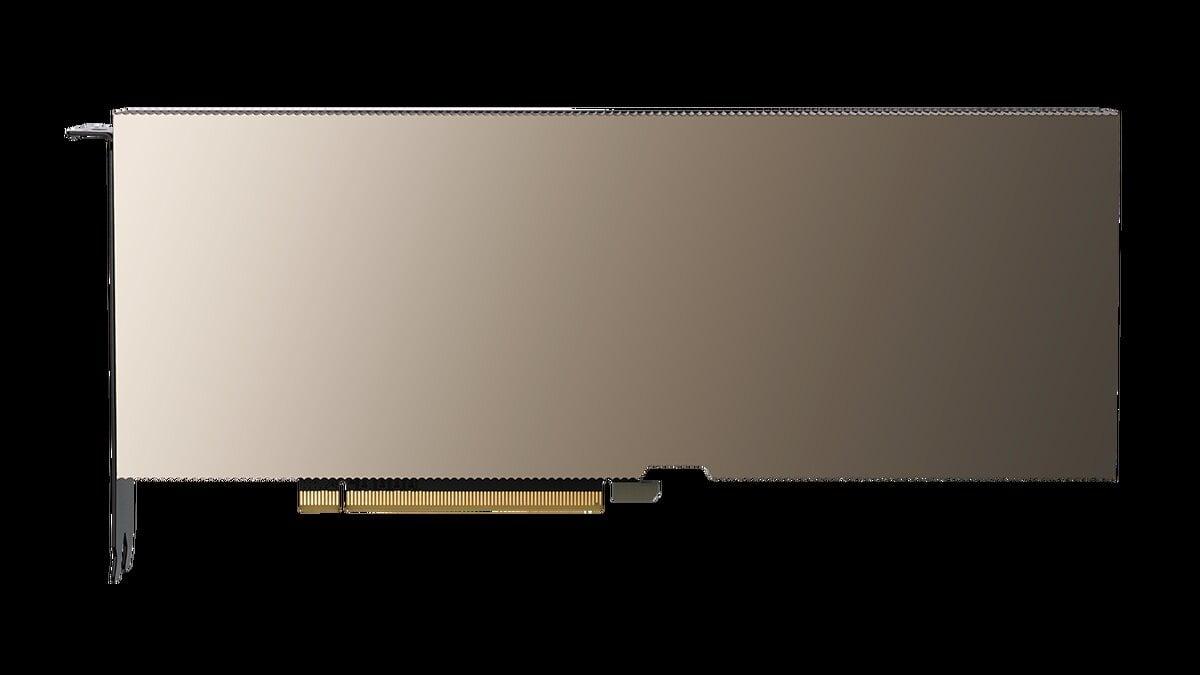
An engineer known as Kate has turned Nvidia's $2,500 CMP-170HX cryptomining card, which ships with 8GB of memory, into a card with 80GB of VRAM, using a nvidia cmp 170hx voltage mod that briefly disrupts the power feeding the GPU. She published the work on GitHub. Her results put the card's FP16 speed about 20% beyond a regular $20,000 Nvidia A100.
How the voltage glitch works
Kate started from a paper describing how to exploit microcode on GA100 cards, the chip family behind the A100. She then focused on the card's protected fuse controller. Chipmakers normally use fuses at the factory to permanently disable parts that tested poorly, so a flawed chip can be sold as a lower-end model.
The CMP-170HX has an elaborate controller of this kind: 16,384 fuses arranged in a 512 x 32 array. Fuses cover VRAM sections, individual shader modules, PCIe 4.0, NVLink and video codec hardware. Users cannot normally write to them.
Kate had GPT-6 Astra design a small circuit board built around an $8 STM32G4 microcontroller. The board taps the card's power signals and intercepts the PWM signals, sent in Nvidia's PWMVID standard, that travel to the voltage regulator controller. It then forces glitches onto the line feeding the GPU, where the fuse controller sits.
Combined with many fuse-status reads in a tight loop, the glitches got the controller into a state where its security flags allowed writes. From there, reconfiguring the card was "easy", in the words of the original report. Kate's central finding was that Nvidia's design lets a popped fuse grant access to more features, not fewer.
What the tests showed
The hardware is all there, according to the explanation of the mod. The GA100 silicon contains the memory dies and shader modules, and they are switched off at the factory. The card in question is based on the GA100 variant with 80GB of HBM2e memory.
Kate applied the mod to ten cards and tested them under multiple workloads. Nine ran with the full 80GB of VRAM, and one had 64GB usable.
Unlocking every shader module (SM) also lifted FP16 FMA performance 20% beyond a regular A100. She attributes that to the chips often having 120 or more working SMs, against 108 on the A100 spec sheet. GA100 dies start with 128 SMs to allow for manufacturing defects.
Risks and limits
The fuses are physical, so there is no undo. Kate force-disabled any shader module previously marked defective rather than risk enabling a bad one.
The existing CMPunlocker soft mod is still needed to enable the new features in the drivers. On its own, it does not unlock the card's full potential, because its VRAM ceiling is lower, at 40GB to 64GB depending on the variant.
The technique targets people building local AI clusters from used data center hardware. It requires a soldering iron, a custom board and tolerance for permanently altering a card.