Astronomers Stunned as James Webb Finds Oldest Quasar Pair
Astronomers using the James Webb Space Telescope have found the oldest and most compact pair of quasars yet, seen 900 million years after the Big Bang. The two black holes are far more massive than current models allow for such an early time.
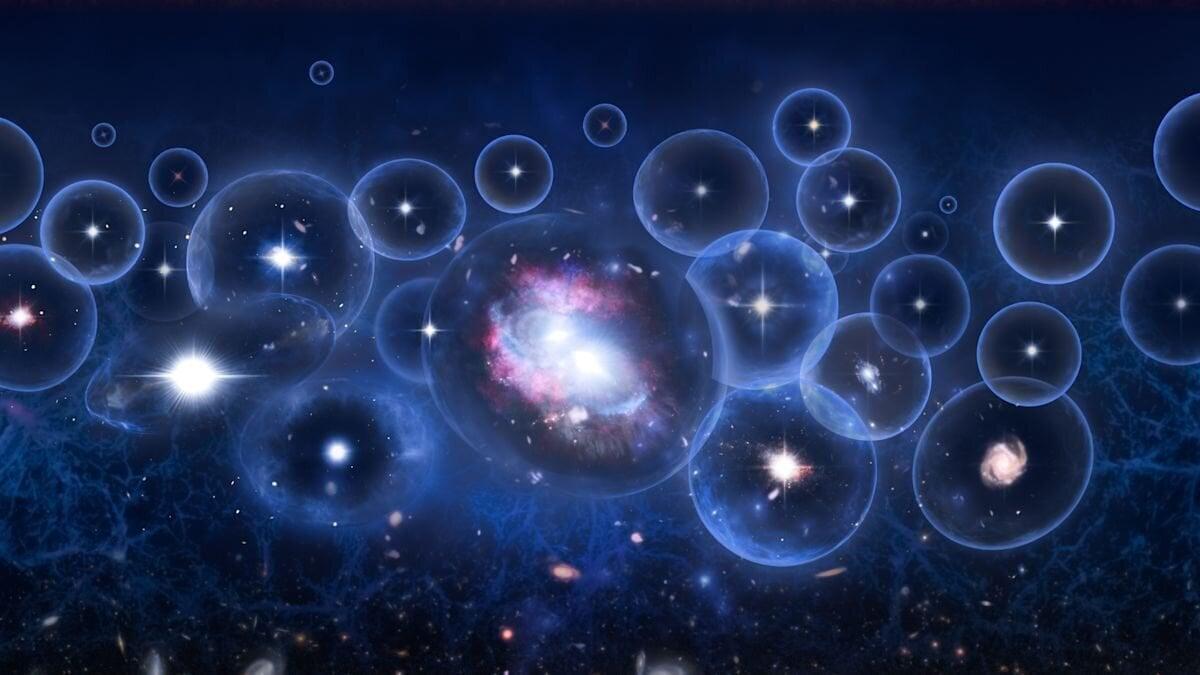
Astronomers stunned by the James Webb Space Telescope (JWST) have identified the oldest pair of black hole-powered quasars ever seen, a system observed as it was 900 million years after the Big Bang. The two objects should not have had time to grow so large, according to current models of black hole growth.
The pair, designated J1602+4228AB, was spotted with help from the Gemini North telescope. It has also been given a Hawaiian name, Nāpōwawāʻenakaulua.
A tight pair, very early
Just 18,100 light-years separate the two supermassive black holes. That is roughly one-fifth the diameter of the Milky Way. Their masses are 1.5 billion and 400 million times that of the sun.
It makes Nāpōwawāʻenakaulua the most compact quasar pair found from Cosmic Dawn, the period shortly after the first stars, galaxies and black holes formed. It is also the third quasar pair seen from that era.
A quasar is a supermassive black hole at the heart of a large galaxy, ringed by a flattened cloud of swirling gas and dust called an accretion disk. Friction heats the disk until it glows, often brighter than all the stars around it.
Why it breaks the models
Current models say black holes need at least 1 billion years to feed and merge enough to reach masses of millions or billions of suns. This system is seen well before that mark.
"There is no definitive theoretical explanation for how a single one of these giant quasars exists so early in the age of our universe, much less two," said research team leader Silvia Onorato of the NOIRLab.
"We observed Nāpōwawāʻenakaulua at a time when the universe was only a thirteenth of its age and, astonishingly, its supermassive black holes are just as massive as those we see today," Onorato said.
Since it began operations in 2022, JWST has routinely found supermassive black holes powering quasars as early as 400 million years after the Big Bang.
Why pairs are hard to find
Galaxy mergers are frequent, so close quasar pairs should be common. Three things make them hard to catch. The quasar phase of a black hole is short in cosmic terms. Distant pairs are faint for ground-based telescopes. And at such distances, the two members are hard to resolve separately.
The find came from data in JWST's Aether survey, a census of objects in the early universe. Using the telescope's NIRSpec Integral Field Unit instrument, the survey has uncovered 200 quasars.