1998 KY26: Mysterious Object Moving Through Space Puzzles NASA
A roughly 36-foot object called 1998 KY26 is accelerating in ways gravity alone cannot explain. NASA Administrator Jared Isaacman says he has seen no evidence it is anything but an asteroid, while a Harvard-linked team tests whether it is a lost Soviet probe.
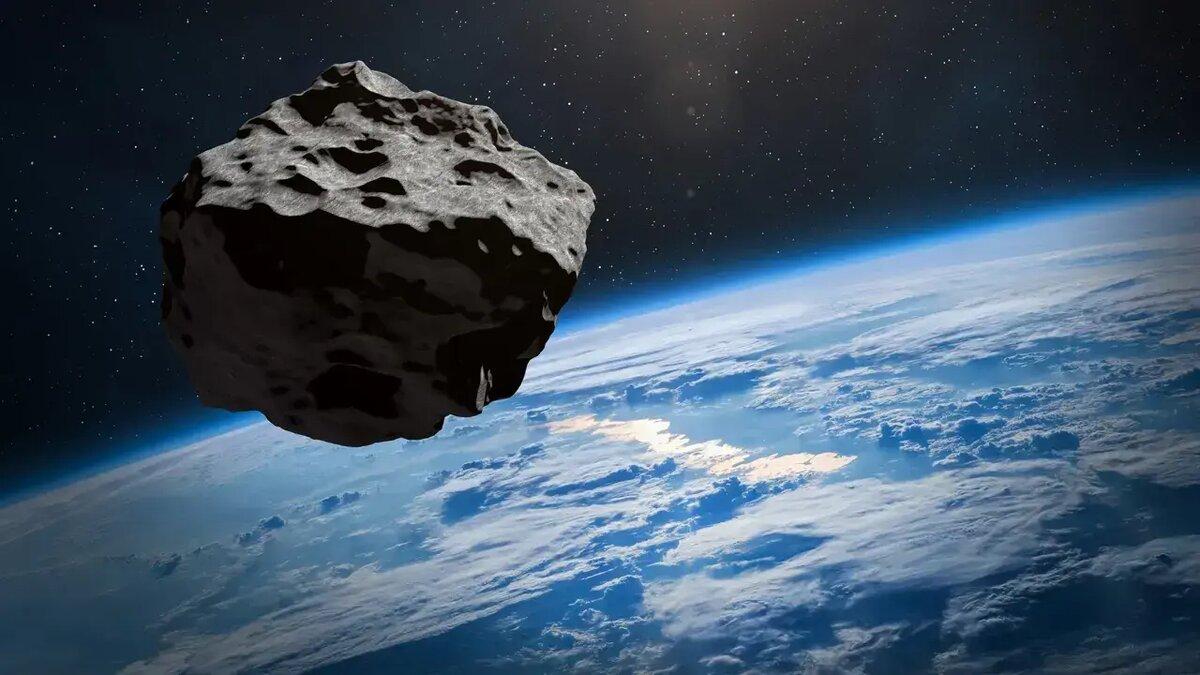
NASA Administrator Jared Isaacman said Thursday, November 12, 2026, that he has seen no evidence that 1998 KY26, a mysterious object moving through the solar system, is anything other than an asteroid. He spoke on "Fox & Friends" as speculation grew that the object could be a Soviet spacecraft lost nearly four decades ago.
"First of all, nothing is about to hit us, to be very clear on this," Isaacman said. He added that he has seen no evidence it threatens the planet.
An unexplained push
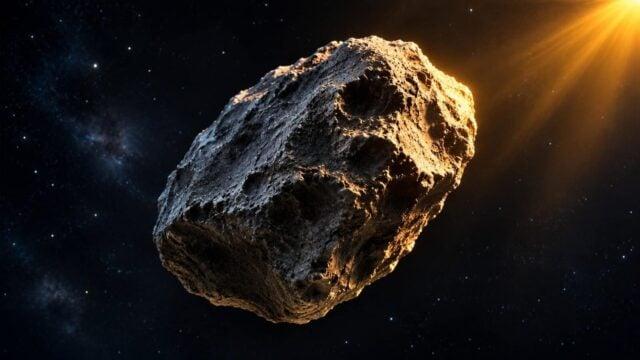
KY26 is roughly 36 feet across and is believed to be a near-Earth asteroid. Something other than gravity appears to be altering its path. Scientists call this "nongravitational acceleration," meaning forces beyond the pull of the sun and planets.
Isaacman said some people in the UAP community believe the object is making unusual movements. UAP is the term for unidentified anomalous phenomena, or what many call UFOs.
Dark comet theory weakens
One explanation was that KY26 is a "dark comet" with buried water that turns to gas and pushes it along. Astronomers have not seen the cloud or tail a comet normally shows.
A new peer-reviewed study in the journal Icarus, by Georgia Institute of Technology researchers Korbin Hansen and Masatoshi Hirabayashi, casts doubt on that idea. They found KY26 is likely too warm for buried water ice to last long enough to explain the motion.
Their calculated water-loss rates "preclude 1998 KY26 being a dark comet at present," the researchers concluded.
Other explanations exist. Earlier research found that sunlight striking the object, and heat escaping from its surface, could supply the extra push without any buried water.
The Phobos 1 hypothesis
Harvard astrophysicist Avi Loeb and researchers Adam Hibberd and Adam Crowl have explored a stranger option. They examined whether KY26 could be Phobos 1, an unmanned Soviet spacecraft that stopped communicating on its way to Mars in 1988.
KY26 reflects about 52% of the sunlight that hits it and rotates once every 5.35 minutes. The team built a simplified Phobos 1 model and compared how it would reflect sunlight while spinning with observations of KY26. The model closely matched eight sets of observations.
They also tested whether sunlight pushing on a cylinder or solar panels could explain the movement. That model better fit hundreds of telescope and radar observations.
The researchers cautioned that "an investigation of this kind cannot be conclusive." They said the findings "add strong weight to the Phobos 1 hypothesis."