Taung Child Fossil Is About 3 Million Years Old, Nature Study Finds
A new study in Nature puts the Taung Child fossil at 2.96 to 3.03 million years old. Researchers led by Professor Gabriele Macho say its growth pattern differs from adult fossils once grouped with it, pointing to several hominin species in southern Africa.
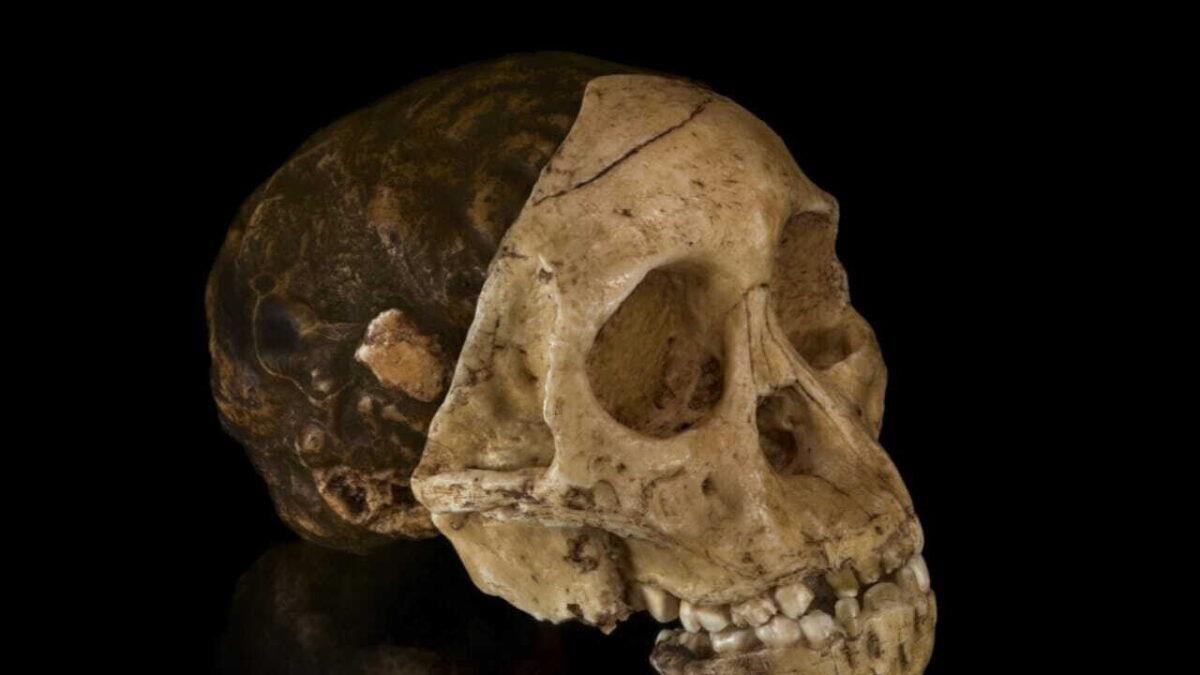
The Taung Child, a famous fossil from South Africa, is between 2.96 and 3.03 million years old, according to a new study in Nature. The Taung Child dated 3 million years back challenges the idea that early human ancestors in southern Africa formed a single, tidy line.
Professor Gabriele Macho of the AMGC research group at Vrije Universiteit Brussel led the international team.
Why the fossil matters
The Taung Child was discovered in South Africa in 1924. It became the type specimen for Australopithecus africanus, meaning the fossil that defines the species. The find gave researchers the first concrete proof that human origins lay in Africa.
Nobody ever set clear criteria for sorting later discoveries into that species. As a result, the Taung Child remains the only fossil definitively linked to Australopithecus africanus.
What the team found
The researchers first reassessed the age of the site. They then studied the child's tooth structure, how its brain and teeth developed during growth, and variation in the boundary between dentine and enamel in a first molar.
Several adult fossils long grouped under Australopithecus africanus did not match the Taung Child's growth pattern. Brain development showed key differences.
The team reads this as a sign that multiple hominin species lived in the Sterkfontein region, either side by side or one after another. The authors conclude Australopithecus africanus is a poorly defined taxon, meaning a group whose boundaries are unclear.
For more than 100 years, researchers assumed the Taung Child was one of many similar fossils from its era. Macho says the findings turn this idea on its head. He describes the family tree as a chaotic, tangled bush driven by climate shifts instead of a neat, straight trunk.
Climate as the driver
The team ties the variety to changing climate. Wet and dry cycles repeatedly reshaped the southern African landscape over millions of years, and hominins followed habitats as they grew and shrank.
Isolated populations diverged, interbred, and met new pathogens and predators along the way. The region sits on a boundary between tropical and temperate ecosystems, so species met and hybridized there again and again over millennia.
The researchers tested whether an eco-evolutionary range dynamics framework helps explain why early hominins in the region looked so different from one another. They combined new climate and environment evidence with the area's position near the Zambezian and southern African biogeographic boundary. Their proposal: population drift and hybridization likely underlie the range of forms seen in the fossils.
Fossil pollen backs up the picture. The Taung Child lived in a much wetter, forested environment than South Africa has today, and some tree species in the pollen now grow hundreds of kilometers to the northeast.
A network of populations, split apart and brought back together by shifting climate, fits the evidence better than a straight line of evolution, the team argues. A century after its discovery, the Taung Child still shapes the story of how diverse hominin populations from around 3 million years ago eventually gave rise to our own genus, Homo.