Grand Canyon Missing Billion Years of Rock Blamed on Rising Mantle
A study published November 4 in Nature says slow heat-driven movement in Earth's mantle lifted three continental regions, letting erosion strip away 1.2 billion years of rock. Researchers say the model explains the Great Unconformity visible in the Grand Canyon walls.
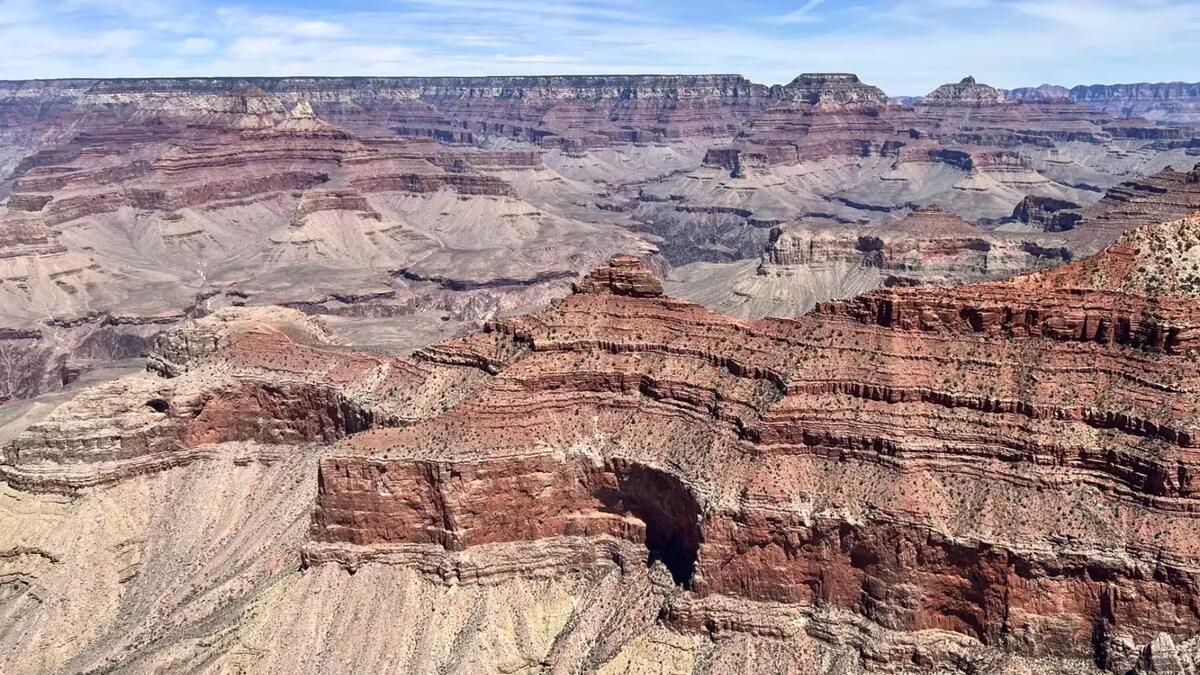
A new study published November 4 in the journal Nature says a slow upwelling of Earth's mantle explains why the Grand Canyon is missing more than a billion years of rock. The finding offers a fresh answer to a long-running geological puzzle.
The canyon's walls show the gap clearly. Metamorphic and igneous rocks that formed 1.7 billion years ago sit directly beneath sedimentary rocks laid down 500 million years ago. The 1.2 billion years in between was not preserved.
The Great Unconformity
Geologists call that gap the Great Unconformity. It is not unique to the canyon. Similar breaks in the rock record appear across North America, the Baltic region of Europe and northern China.
The missing period matters because it came just before and during the Cambrian explosion, a huge diversification of life on Earth. Researchers have debated the cause for years.
What the new model shows
The study uses a new model of the mantle, the layer of Earth beneath the crust. According to the research, slow, heat-driven circulation in the mantle pushed those three regions upward while the Great Unconformity formed.
That uplift helped erosion along. Sediments washed off the continents and ended up in the ocean.
The model also shows that over the past 540 million years the same areas began sinking. Sinking ground traps sediment, which then builds up in neat layers. That marks where the Great Unconformity ends, and it matches what geologists see in North America, the Baltics and northern China.
Study co-author Nicolas Flament, a geoscientist at the University of Wollongong in Australia, described the approach. "We looked at, where are the best places that the mantle would help create a Great Unconformity?" he said.
"And these three places turned out to be three places where it's known to be quite extensive," Flament said.
Ice still played a part
Some researchers argue that Snowball Earth, a global deep freeze, scraped sediment off the continents in this period. Flament said glaciation probably played a major role in erosion. But he said the new study points to something deeper inside the planet as the key driver.
His reasoning is about slope. Without the mantle pushing the continents upward, he said, glaciers and other erosive forces would have had no slope to push sediments down.
Shanan Peters, a geologist at the University of Wisconsin-Madison who was not involved in the study, said tectonics are not steady. Continents break up and rejoin over eons, pushing different materials into the crust.
He also questioned the phrase "missing information" for the Great Unconformity. In his view, the absence of rock from that time reveals something about the processes at work back then.