Martin Says Ireland Sent Clear EU Security Message Ahead of Dublin Summit
Irish Prime Minister Micheal Martin said the EU has set down a clear marker on European security as Russia's war in Ukraine continues, speaking before the European Political Community summit in Dublin. Finland and Lithuania's leaders also spoke on talks and ceasefire prospects.
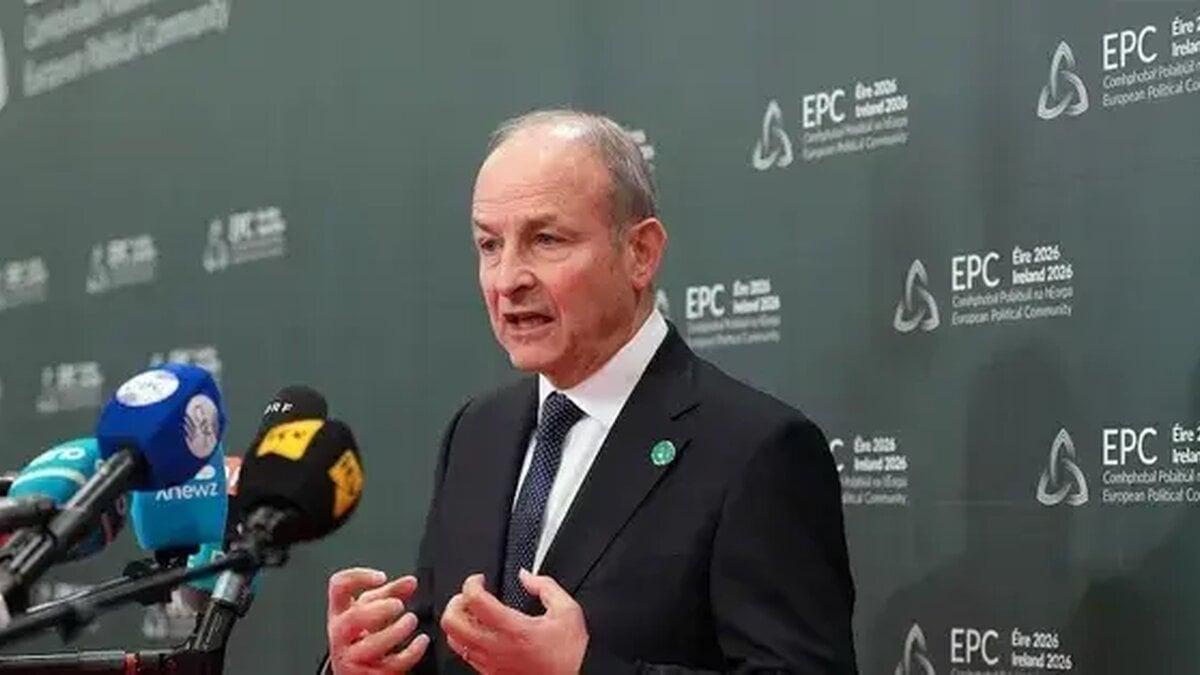
Irish Prime Minister Micheal Martin said on Thursday that Ireland sent a clear message on behalf of the European Union on European security, telling reporters before the European Political Community summit in Dublin that the bloc had held firm against Russian aggression in Ukraine.
"I think the European Union has stood strong in the face of that aggression and has put down a very clear marker in terms of the security of Europe," Martin said.
He said many European countries felt "an existential threat" because of developments in Ukraine and the potential, if Ukraine were to fall, for further aggression on the continent.
Seat at the table
Martin pointed to peace talks held Tuesday and Wednesday in Abu Dhabi, the Emirati capital. He stressed the importance of keeping channels of communication open.
Europe should have a seat at the negotiating table, he said, particularly when discussions touch its economic and security interests.
Finnish Prime Minister Petteri Orpo echoed that call. "No one else can negotiate for us," he said, adding that supporting Ukraine remained the top priority.
Lithuania doubts a quick ceasefire
Lithuanian President Gitanas Nauseda was skeptical about an immediate ceasefire. He alleged that Russia could use the talks to buy time.
"These are only the initial stages of negotiations. I remain of the opinion that Russia will still use the coming winter to torment the people of Ukraine," Nauseda told broadcaster LRT.
He said Russia would "try to buy time and pretend to negotiate, perhaps even reach agreements on some nonessential matters." A ceasefire looked difficult at this stage, he said, but should be the "main condition of peace negotiations."
Nauseda also argued that European security architecture, shaped mainly by NATO as a transatlantic and collective security organisation, must stay in place. "There should be no spheres of influence," he said.
Gaza and the West Bank
Martin also turned to Gaza, where he voiced concern over continued restrictions on humanitarian aid entering the enclave.
"It's absolutely unacceptable the degree to which there's been a blockage of vital humanitarian aid into Gaza, and also the continuing violence of settlers, terrorist settlers who were driving Palestinians out of their land in the West Bank," he said.
Martin warned that such actions threatened to undermine "any potential viability of a two-state solution, which is the collective agreed position of the European Union."