Asteroid 1998 KY26 Is Too Warm for Ice, Georgia Tech Study Finds
Georgia Institute of Technology researchers say the tiny asteroid 1998 KY26 is too warm to hold buried ice, undercutting a leading explanation for its odd acceleration. Japan's Hayabusa2 spacecraft is due to reach the object in July 2031.
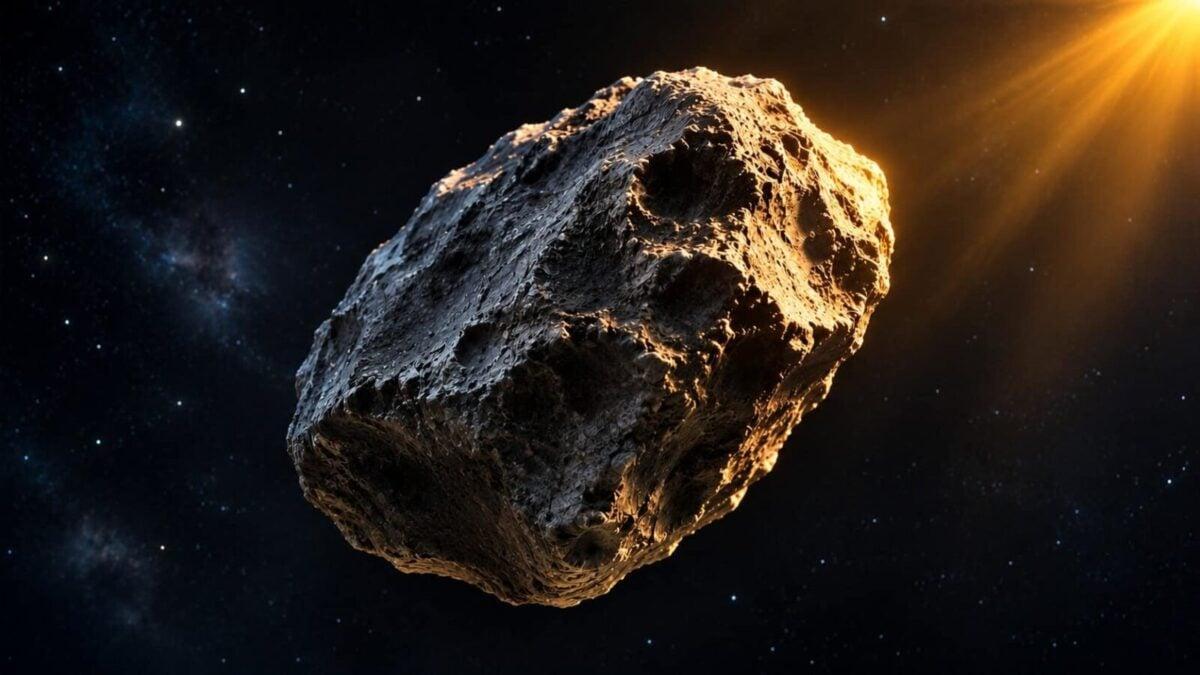
A dark comet mystery just got stranger: researchers at the Georgia Institute of Technology report that the asteroid 1998 KY26 is too warm to hold the buried ice thought to be pushing it through space. Their computer simulations, published in the journal Icarus, challenge one of the leading explanations for its unusual motion.
KY26 is tiny. It is 11 meters (36 feet) wide and completes a rotation every 5.35 minutes.
An acceleration nobody can explain
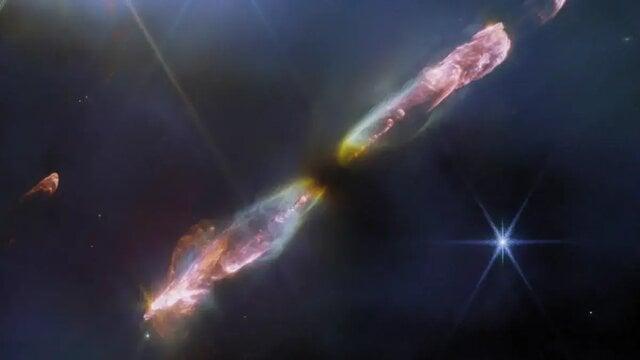
Dark comets look like ordinary asteroids but move as if gas is escaping from inside them. Unlike familiar comets, they show no visible tail.
A 2023 study found an unusual acceleration pushing KY26 out of its orbital plane. Neither the Sun's gravity nor that of the planets accounts for it. Astronomers proposed that water vapor venting from buried ice could act like a small rocket engine.
What the simulations found
Aerospace engineers Korbin Hansen and Masatoshi Hirabayashi built a detailed model of the asteroid. They used estimates of its shape, size, reflectivity, orbit and physical properties. In all, they ran 260 simulations covering 13 sets of assumptions, including different compositions and orientations.
The asteroid's average temperature came out at about minus 47 degrees Celsius. Even its coldest spots averaged at least minus 61 degrees Celsius over an orbit.
That is cold, but not cold enough. Buried water ice generally needs to stay below roughly minus 128 degrees Celsius to survive over long periods.
Hiding the ice deeper did not help. In the main model, the asteroid's center was only about one degree cooler than its surface. Treating it as a loose pile of insulating rubble did not fix the problem either.
"Our temperature model results indicate that the water outgassing rate on 1998 KY26 would be too high to maintain buried ice," the researchers wrote.
A window that is too short
Even if water made up 1% of the asteroid's mass at the start, the calculations suggest that ice would vanish in approximately 2,065 years. If escaping vapor were driving the acceleration, the ice would run out in just 62 years.
That is far too brief for an object that may have spent millions of years traveling from the main asteroid belt to its present orbit near Earth. The team concludes KY26 is probably a largely dry asteroid, not an active dark comet.
The study points to another possible push, one involving sunlight.
Japan's Hayabusa2 spacecraft is already heading for the asteroid, with a rendezvous planned for July 2031. The probe landed twice on the asteroid Ryugu and returned samples to Earth in 2020.