Motorola Signature 27 Three Cameras Tested in Gloomy Norway
Motorola's Signature 27 pairs three rear cameras, including a 200-megapixel periscope lens, with an Event Vision Sensor. Early photos from Tromsø, Norway, show strong dynamic range and natural color in rain and low light, with some oversharpened edges.
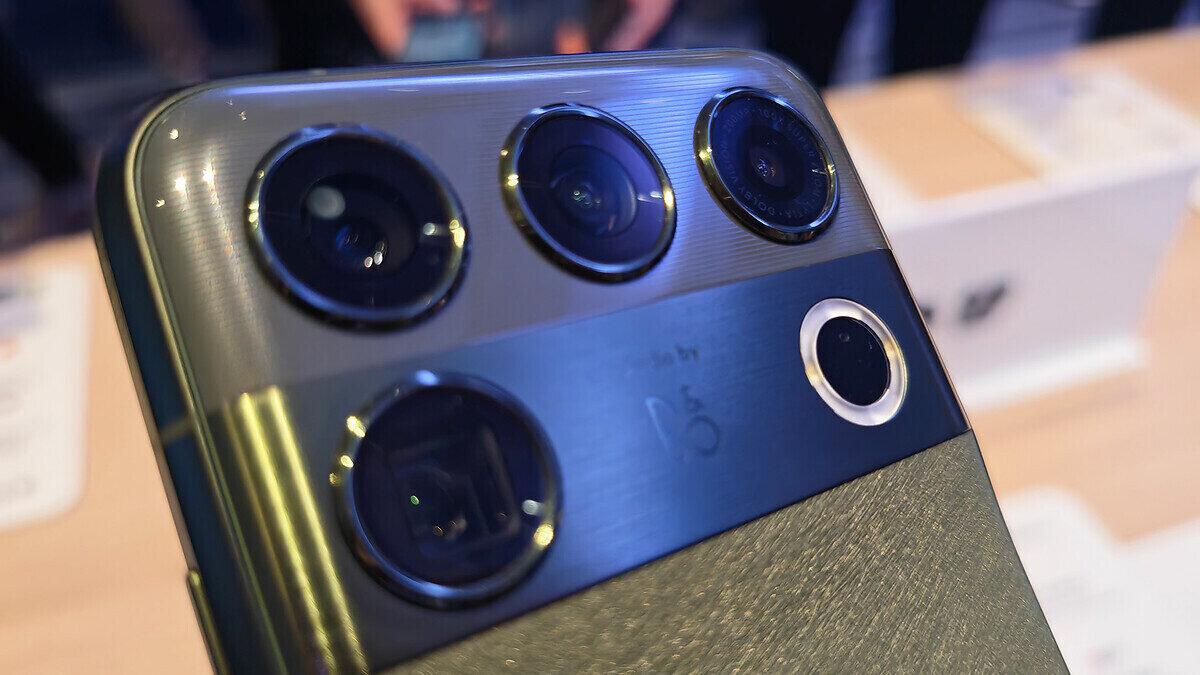
Motorola's Signature 27 phone carries three rear cameras plus a separate Event Vision Sensor, and early test photos taken in rainy Tromsø, Norway, show strong dynamic range. The Motorola Signature 27 three-lens setup is led by a 200-megapixel periscope camera.
What is on the back
The main camera uses a Sony Lytia L910 sensor in a 1/1.28-inch format with 50 megapixels. Its lens opens to f/1.6 and has a 35mm-equivalent focal length of about 24 mm.
It has optical image stabilization, which Motorola says can compensate for movements of up to 3.5 degrees. The sensor also supports LOFIC, short for Lateral Overflow Integration Capacitor, which is designed to widen dynamic range when brightness differs sharply across a scene. By default the camera combines four pixels into one and saves photos of about 12.5 megapixels.
The periscope camera has 200 megapixels and a 1/1.56-inch sensor, likely the Samsung HP5. It pairs that with an f/2.6 aperture and 3x optical zoom, equal to 71 mm. It combines 16 sensor pixels to gather more light, and Motorola offers AI-powered digital zoom up to 100x.
The ultra-wide camera has 50 megapixels, a 1/2.76-inch sensor, an f/2.0 lens and a 122.1-degree field of view. Autofocus lets it double as a macro camera, with a minimum focusing distance of 2.5 cm. The front camera is another 50-megapixel unit with an f/1.9 aperture and autofocus.
The Event Vision Sensor
The extra Event Vision Sensor does not capture full frames continuously. It reacts to local changes in brightness instead. Motorola uses that data, among other things, for an Action Shot mode meant to capture moving subjects better.
Laser autofocus and a multispectral 3-in-1 light sensor round out the system. The light sensor is designed to help detect lighting conditions.
First results from Tromsø
Reviewers shot many photos with the phone at a Motorola event in Tromsø. Low clouds, rain and limited daylight made the weather a tough test for image processing.
The main camera handled it well. City and harbor shots kept detail in both bright clouds and darker building facades, and HDR processing lifted shadows without making them look unnatural. Colors were mostly natural and restrained in photos of a mural and the Arctic Cathedral.
Fine structures came out well, though some edges looked slightly oversharpened up close. In low light, nighttime harbor shots showed well-defined ships and buildings, but finer detail was lost in darker areas. Bright light sources were occasionally overexposed.
At the event itself, intense purple lighting dominated the scene. Many details stayed visible in those shots.