Norway’s EV Boom Lets Oslo Families Spend Less, That’s All
Electric cars made up a record 98.81% of new car sales in Norway in September. As the UN climate summit in Antalya pushes a 35% electricity target by 2035, an Oslo resident describes her power bills, her commute and how she charges.
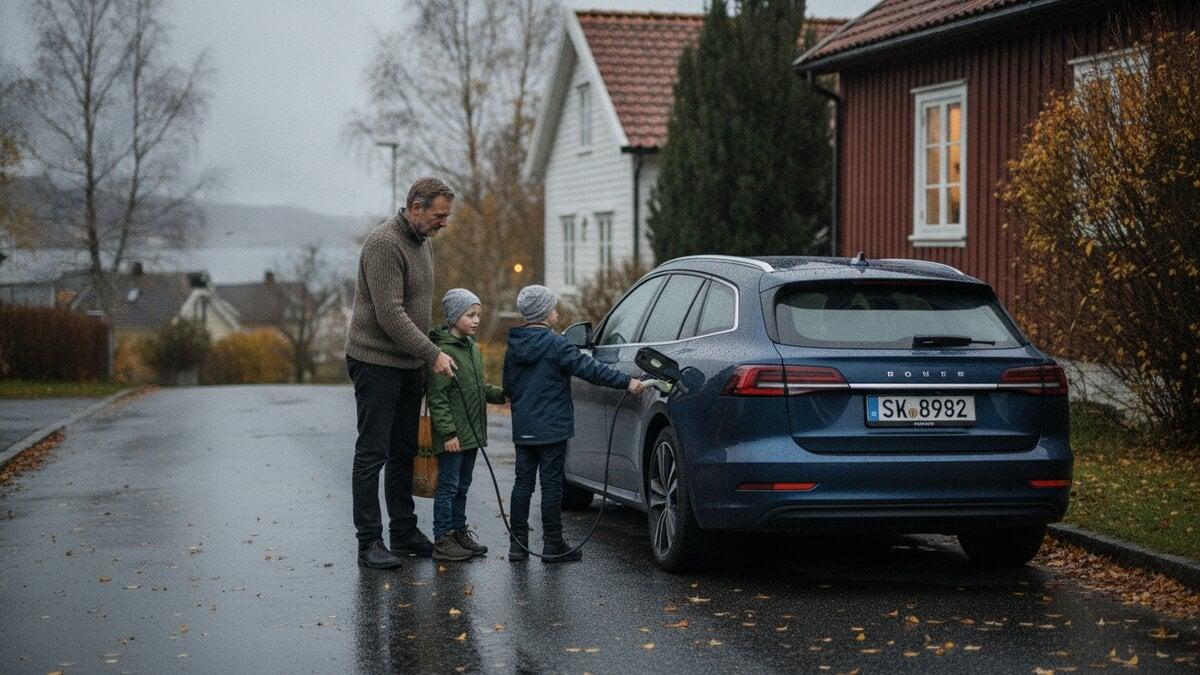
Electric vehicles made up a record 98.81% of new cars sold in Norway in September, and one Oslo household says that helps it spend less, that’s all. The country is a test case for what the UN climate summit in Antalya, Turkey, wants other nations to copy.
The summit’s co-hosts are asking countries to promise that electricity will supply 35% of all energy used by 2035. The global figure is currently 23%. About 100,000 delegates, negotiators and world leaders are working through the details.
Norway’s power mix
Hydropower produces 90% of Norway’s electricity. Even so, authorities warn that rapidly rising demand, including from new datacentres, could soon leave the country short of power and push energy prices higher.
A day in Oslo
Unni Berge, 47, lives in a three-bedroom flat in Oslo with her husband and two teenage sons. She is head of communications at the Norwegian EV Association. Her building uses district heating, where heat travels through a local network from a central source instead of individual boilers.
Her flat is energy efficient, she said, so bills are comparatively low. In October the household spent 730 Norwegian kroner (£57) on electricity, and in September it spent 500 kroner.
Berge commutes by bus. Almost all buses in Oslo are fully electric, she said, and on her street one arrives every fifth minute. “I go outside and a bus comes,” she said.
She owns an electric car but mostly uses it on weekends. Many trips are to sports events for her two children, aged 18 and 15, and to handball matches and tournaments she attends as a team trainer. Driving it into central Oslo for work is not an option because of restrictions on cars there.
Charging and costs
Her building garage has a shared charging system. If everyone plugged in at once it would be slow, she said, but that does not happen in practice. With a large battery, she charges once every two to three weeks.
The household pays for the electricity plus a system fee. “It’s much cheaper than petrol and diesel,” Berge said.
She sees the change as recent. Transport now draws a rising share of electricity, from passenger cars and buses to ferries, and heavy goods vehicles are increasingly electric. That, she said, “changes the system and society.”
She also flagged a limit. She uses Microsoft Copilot at work and called it helpful, but warned that energy demand would become too high if everyone used AI more.