Nvidia CEO Jensen Huang Resigns, Raising Questions for AI Financing
Jensen Huang's resignation from Nvidia leaves the AI industry without its most active financier. Analysts say the $105 billion OpenAI commitment, a $500 billion financing push and the funding of neocloud firms now face questions, even as rival chips give customers more options.

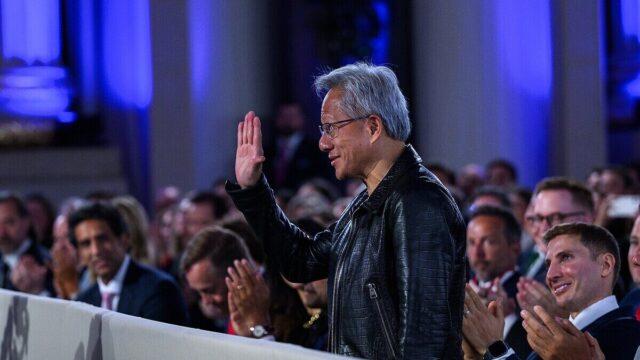
Nvidia CEO Jensen Huang has resigned from the chipmaker, and the AI boom built around Jensen now has to work out how to run without the executive who financed much of it. Huang quit amid revelations of extramarital affairs and a board investigation into whether he was the target of a "foreign intelligence effort."
The fallout reaches past one company. Nvidia, under Huang, guaranteed deals for data centers, invested heavily in AI startups and even backed the companies that bought its chips.
Nvidia as the industry's banker
"It's hard to overstate his personal role in all of this," said Neil Wilson, a strategist at investment bank Saxo. He said Huang made Nvidia the backer of last resort across the AI ecosystem, underpinning much of the financing and infrastructure guarantees.
In August, Nvidia committed $105 billion to an OpenAI data center. It holds a major equity stake in the neocloud CoreWeave, and it is expected to take a $10 billion stake in Anthropic's initial public offering. Neoclouds are companies that rent out computing power.
Jay Goldberg, senior analyst at Seaport Research Partners, called Nvidia "the central bank of AI." Critics label its deals "circular financing" because it backs firms that then buy its products. Goldberg prefers "very aggressive vendor financing."
Nvidia itself flagged the risk in its latest quarterly report. "Commitments, guarantees and other commercial arrangements expose us to financial, counterparty and execution risks and may not provide anticipated benefits," it said.
Deals now in question
Three months ago, Huang gathered Apollo, BlackRock, Blackstone, Brookfield, Goldman Sachs and KKR. They agreed to treat Nvidia's AI infrastructure as an asset class to write debt against, with the aim of mobilizing more than $500 billion.
"That was all driven by [Huang]," Goldberg said. He noted the deal is not finalized, expects it to face more review, and said it could even fall through.
Huang also steadied CoreWeave in October. Its bond yields spiked, and the situation calmed only after he expressed confidence in the company's future.
Rival chips give customers leverage
Another analysis argues the industry can absorb the change. Custom chips from Google, Amazon, Microsoft and OpenAI, plus new deals with Broadcom and AMD, give customers more options than before. Anthropic says its Mythos model helped run certain workloads on AMD chips in about three days, against six to 12 months in the past.
Nvidia's checkbook is harder to replace. Data firm SemiAnalysis says the company has made $530 billion of off-balance-sheet commitments and guarantees, including memory purchases and backstops for data centers.
That analysis expects Nvidia to become less aggressive on startup funding, acquisitions and backstops. It also points to Nvidia's pending acquisition of Hugging Face and its backing of open AI models, whose future funding is unclear.
In Washington, Huang's exit strengthens calls for tighter controls on advanced chip sales to China. Legislation to close loopholes is advancing, and the Commerce Department is reportedly preparing further limits.