Joachim Klement to Sell Stocks After S&P 500 Signal
Panmure Liberum analyst Joachim Klement plans to sell his personal stock holdings after the S&P 500 fell below its 200-day moving average. He said he would move into long-term government bonds, while his team warned that an artificial intelligence investment boom could reverse.

Panmure Liberum research analyst Joachim Klement said on November 19 that he planned to sell all his personal stock holdings after the S&P 500 fell below a key trading threshold. The decision came as artificial intelligence company Anthropic prepared for its Nasdaq debut.
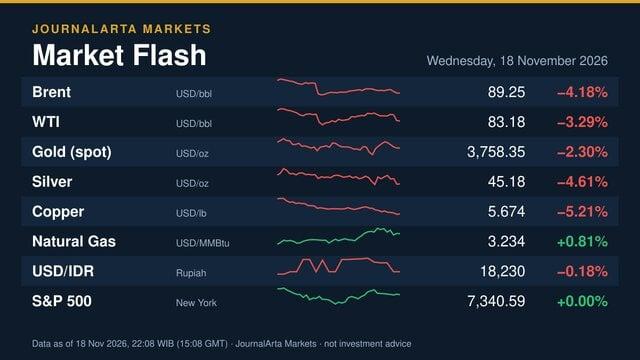
Klement said the index’s position relative to its 200-day moving average, a measure of its average closing price over that period, was his personal trigger. The S&P 500 had closed at 7,323.63 points on November 18.
He planned to sell at the end of European trading and move into long-term government bonds. His personal holdings include stocks outside the United States.
Klement said he would return to stocks if the index rose above the average again. He acknowledged that the rule could lead to frequent trading and that the signal could prove false.
“I may be wrong, and this is not the bubble bursting,” he said.
His team recommended a defensive position, saying market momentum had shifted downward. Klement and his colleagues have warned since May that the boom in AI spending could reverse.
The firm’s analysis suggested such a reversal could cause stock markets to drop 30% or more. In September, its analysts predicted an AI bubble would burst in either 2027 or 2028.
A month later, they raised their assessment of the likelihood of a crash in 2027. They also set an S&P 500 target of 5,000 points for the end of 2027, 35% below where the index traded at the time.
Anthropic and AI spending signals
Panmure Liberum has also monitored Anthropic’s initial public offering and spending by major AI infrastructure companies. Anthropic priced its offering at $83 a share on November 18 and is selling about 980 million shares, raising $81.3 billion.
Klement said Microsoft had cut deals with neocloud providers and focused more of its capital spending on data centers it builds itself. He said that did not yet amount to a reduction against 2027 spending expectations.
His team also said Anthropic’s regulatory filings showed slowing revenue growth, both in absolute terms and relative to computing costs.
Stocks that resisted AI sell-offs
For investors who want to remain in stocks, Klement said his team’s analysis found that “U.K. stocks are the best hiding place from a regional perspective.”
The analysts examined the 10 worst days this year for the Goldman Sachs Broad AI Basket. They looked for European companies with the highest average returns around those sell-offs.
Their FTSE 100 list included GSK, AstraZeneca, Unilever, Experian, Diageo, Sage, Haleon, Relx, Reckitt Benckiser and Croda. Pernod Ricard, L’Oreal and Beiersdorf also performed well in the broader European analysis.
 Take the quizWhat Kind of Holiday Spender Are You? Take the Black Friday QuizStart →
- 1Gold Silver Price November: Futures Rise Near Yearly Lows

- 2Michael Clarke Says Sandpapergate Scars Drew Steve Smith to New York

- 3U.S. Emergency Alert Test Nov. 17 Is Not a Power Outage

- 4Brent Crude Slides 4.05% as Rising US Stockpiles Weigh on Oil
- 52027 NFL Mock Draft Puts Ohio State’s Jeremiah Smith at No. 1

 Lifestyle · Food & HealthWhat Is Raynaud’s Syndrome? Why Fingers Turn White in the Cold
 Lifestyle · Food & Health4 Ways Walking After Meals Helps Your Body, Doctors Say
 Lifestyle · Food & Health4 Reasons to Eat Oatmeal, According to Nutrition Experts
 Lifestyle7 Signs Your Social Battery Is Running Low (and Why You Keep Cancelling Plans)