Australia’s power prices would be up to 50% higher, economist says
Former Reserve Bank deputy governor Guy Debelle says Australia’s wholesale electricity prices would be 30% to 50% higher without renewable capacity. His estimate challenges critics who blame the renewable rollout for rising household bills, although he says expanding grid access remains difficult.
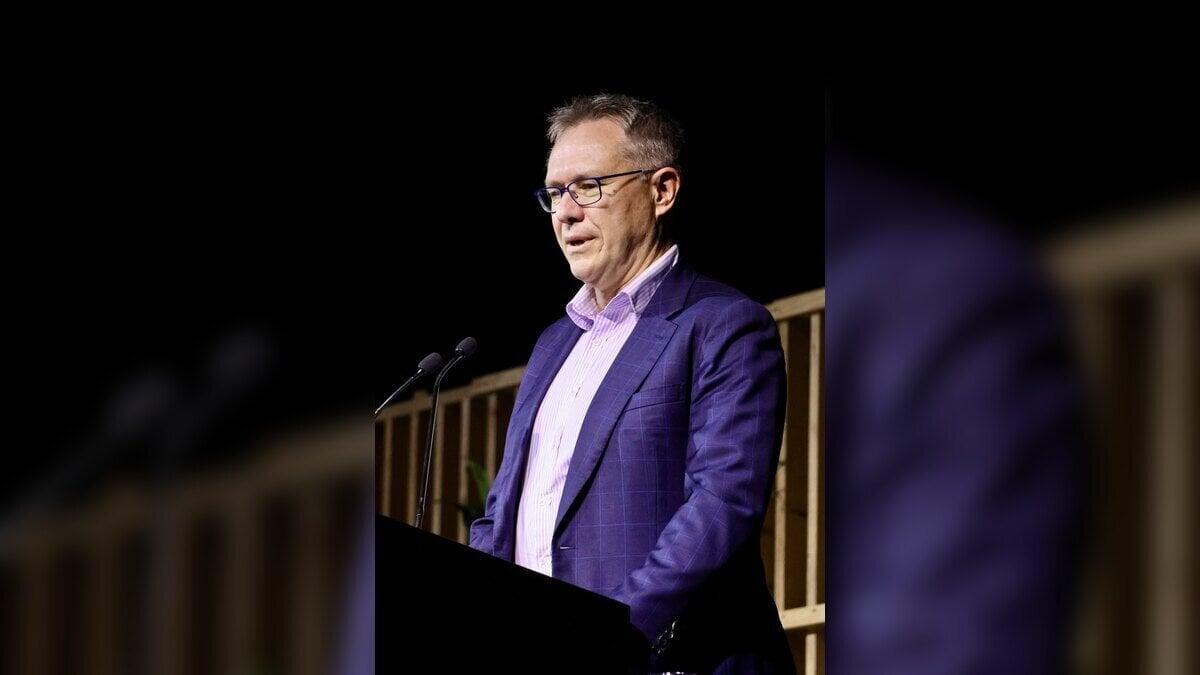
Australia’s wholesale power prices would be 30% to 50% higher without installed renewable energy capacity, former Reserve Bank deputy governor Guy Debelle said. He argued that coal, gas and nuclear alternatives would have cost more and left the country more exposed to rising fossil fuel prices.
Wholesale prices affect the cost of electricity before it reaches households and businesses. Debelle said households had avoided larger bills as renewable and battery costs fell and the cost of coal and gas power stations rose.
His assessment challenges renewable energy critics. Opposition Leader Angus Taylor has said government energy policy prevented gas- and coal-fired plants from being built, causing a 40% price surge.
Debelle, now a non-executive director of independent think tank e61, said many fossil fuel power sources had reached the end of their lifespan. He also sits on the board of the Clean Energy Finance Corporation.
“The energy transition isn’t costless, but the alternatives are considerably more costly,” Debelle said.
Coal plants decline as renewables grow
Since 2010, Australia’s coal-fired power stations have declined from 26 to 15, Debelle said. Their output fell from 28 gigawatts to 21 gigawatts, while renewable energy output grew to 36 gigawatts over the same period.
In the 2025-26 financial year, Australian households installed more than 13 gigawatt hours of battery storage. That exceeded the amount the United States has ever installed.
Debelle said coal-fired stations could not compete with renewables. He also argued that nuclear power was not currently a cost-effective solution and that Australia needed generation capacity now.
Former prime minister Tony Abbott has linked renewable energy growth to higher household power bills and called for nuclear power. Abbott argued that renewables should not need subsidies or mandates if they were cheap.
Grid access remains a challenge
Debelle said expanding renewables and connecting them to the electricity grid remained major challenges. Planning delays and community opposition have slowed projects, including parts of the infrastructure needed to carry electricity.
The Australian Energy Market Regulator warned last year that projects, including new transmission links, faced cost overruns of up to 100%. It estimated that failing to streamline the national rollout could add 30% to project costs.
Debelle said wholesale prices had fallen across the national electricity market in recent months. He contrasted that with large increases in much of the rest of the world, which he attributed to the US-Israel war on Iran.
Debelle suggested encouraging solar installations on businesses and urban warehouses. He said that could increase electricity available to the grid while reducing transmission-line costs.
By 2030, transport would overtake electricity as Australia’s largest source of emissions, Debelle said, citing continued use of diesel- and petrol-powered vehicles.
 Take the quizWhat Kind of Holiday Spender Are You? Take the Black Friday QuizStart →

 Markets · FintechHow to Calculate Compound Interest: Formula, Examples and the Rule of 72
 Lifestyle · Food & HealthNormal Blood Pressure Chart by Age: Healthy Ranges Explained
 Lifestyle · Food & HealthWhat Is Raynaud’s Syndrome? Why Fingers Turn White in the Cold
 Lifestyle · Food & Health4 Ways Walking After Meals Helps Your Body, Doctors Say