Western Union Yields 14.78% as Frozen Dividend Strains Cash Flow
Western Union's near-15% yield reflects a sliding share price, not strength. Its year-to-date free cash flow of about $191 million fell short of the roughly $220 million cost of dividends, and Kraft Heinz and Dow show similar stress.
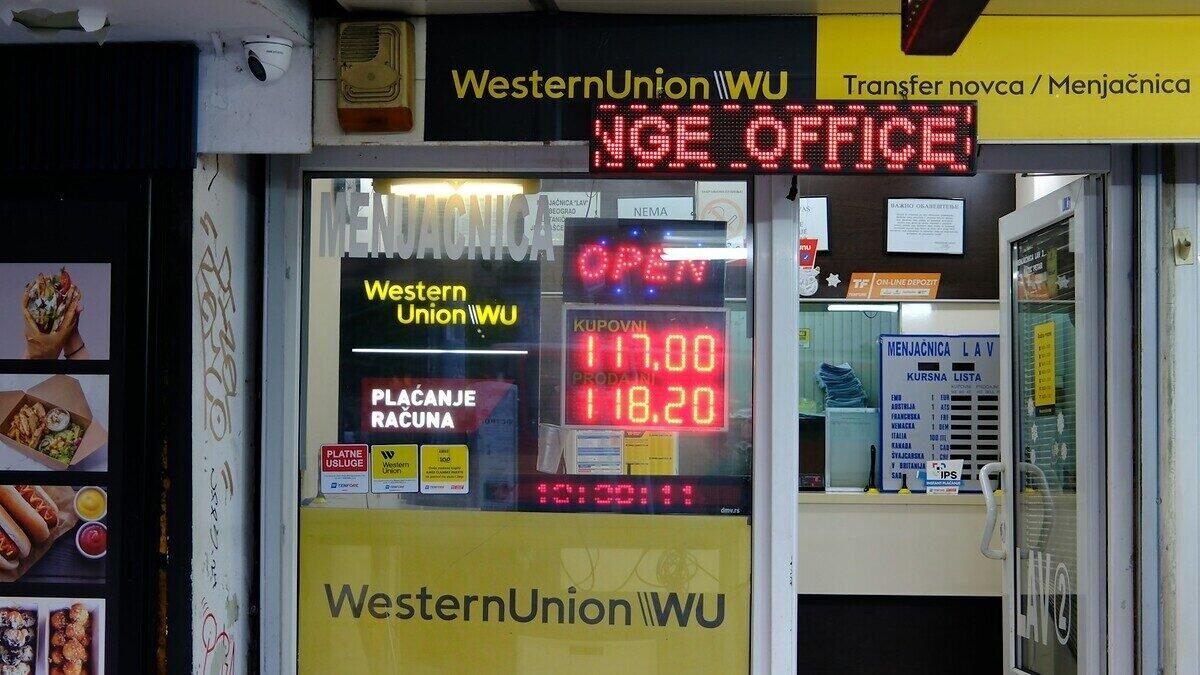
Western Union (NYSE:WU) yields about 14.78%, but the payout has not moved since 2021 and its cash flow no longer covers it. For investors asking what is a dividend worth, the answer depends on whether earnings and free cash flow can fund it without borrowing. A high yield matters only if the payout is secure.
Western Union has paid the same $0.235 per quarter since the March 16, 2021 ex-dividend date. The yield is high largely because the stock has fallen 26.73% year to date and 42.65% over five years.
Year-to-date operating cash flow of $321 million, minus $130 million of capital spending, leaves about $191 million. Three quarters of dividends at the current share count cost roughly $220 million.
Debt stands at $2.9 billion and gross leverage is 3.3x. Buybacks are on hold to protect a leverage target of 2.5x to 3x.
Against trailing GAAP earnings per share of $1.05, the dividend uses roughly 90% of earnings. Adjusted EPS guidance of $1.28 to $1.38 looks more comfortable, but third-quarter results got help from a 9% adjusted tax rate versus 12% a year earlier. Q3 net income fell 44.13%.
Western Union has also terminated its agreement to acquire Intermex (NASDAQ:IMXI), and Intermex has disputed the termination. One bright spot: Branded Digital transactions grew 21%.
Kraft Heinz: covered on adjusted numbers
Kraft Heinz (NASDAQ:KHC) has declared $0.40 per quarter on every ex-dividend date from March 7, 2019 through December 4, 2026, after earlier payments of $0.625. At $26.49, the $1.60 annual payout yields about 6.04%. The stock is down 50.61% over ten years.
Fiscal 2026 adjusted EPS guidance of $2.07 to $2.13 puts the payout ratio at roughly 75% to 77%. GAAP results look worse. Trailing diluted EPS is -$2.93 after a $7.4 billion non-cash impairment of goodwill and intangibles.
The company guides organic net sales down 0.5% to 1.25%. It expects adjusted operating income on a constant-currency basis to fall 16% to 18%. Its chief financial officer said $700 million of brand investment will stay at that level next year and expects inflation of "slightly above 5%".
Dow shows how a freeze can end
Dow (NYSE:DOW) paid $0.70 per quarter in every record from May 2019 through May 2025. It then halved the payout to $0.35, starting with the dividend declared on July 24, 2025. The current yield is about 4.72%.
Even the reduced payout is thinly covered. Trailing diluted EPS is -$1.29, against a $1.40 annual dividend. In the first quarter, Dow posted a $445 million GAAP net loss and still paid $252 million in dividends.
Third-quarter free cash flow reached $1.1 billion, but more than $400 million came from releasing working capital. Management said it is "prioritizing debt reduction with excess cash" and made no direct statement about the dividend. Dow has about $14 billion of liquidity and no substantial debt due until 2029.
 Take the quizWhat Kind of Holiday Spender Are You? Take the Black Friday QuizStart →
- 1Qualcomm shares rise to $168.66 as chipmaker bucks wider tech selloff

- 2Meta Platforms shares rise 2.5% as AI loan and Amazon talks draw focus

- 3Broadcom shares edge down as late rebound trims early AI selloff
- 4Alphabet stock slides to $270 as credit concerns deepen

- 5Sandisk stock slides as memory supply fears hit AI trade
 Lifestyle · Food & HealthNormal Blood Sugar Levels: A1C, Fasting and After-Meal Ranges Explained
 Lifestyle · Food & HealthNorovirus Symptoms: How Long It Lasts and When You Stop Being Contagious
 Lifestyle · Food & HealthCold vs Flu vs RSV: How to Tell the Difference by Symptoms, Speed and Duration
 LifestyleWhy Do Long Lines Make People Curious? 5 Reasons We Join the Crowd