Australia’s 10% Lithium Refining Tax Offset and Asian Costs
See which lithium refining costs Australia’s 10% tax offset covers and how to compare local production with Asian supply using delivered costs.
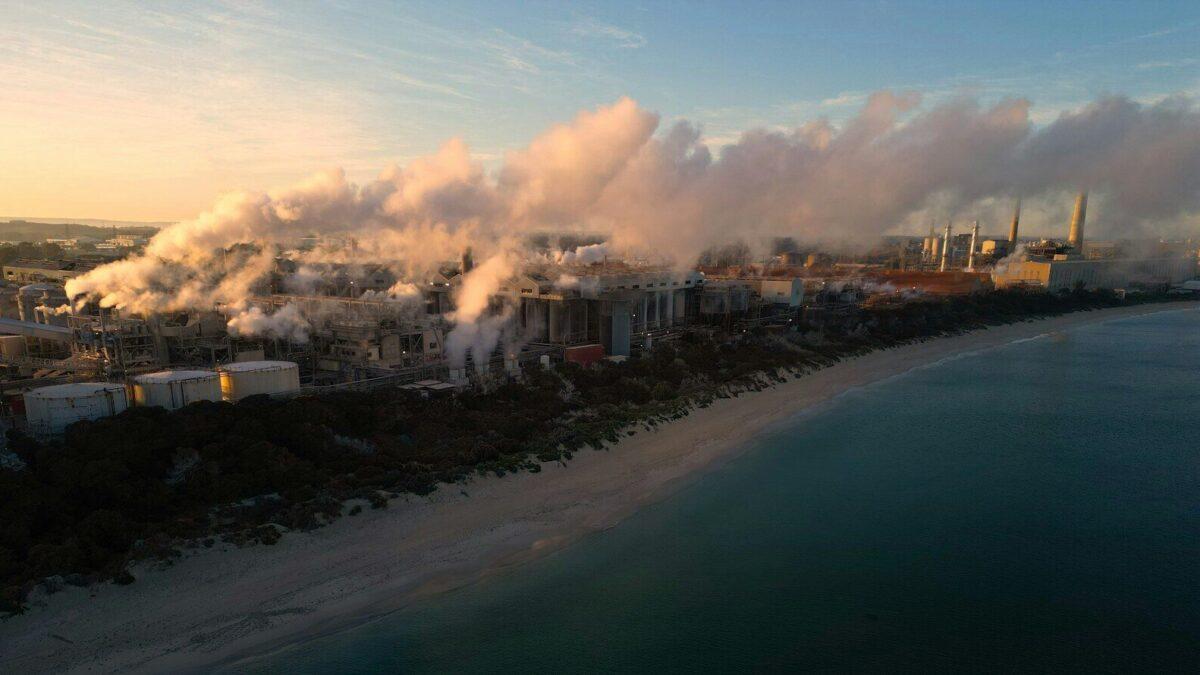
Australia’s refundable 10% production tax offset starts on 1 July 2027 and reduces eligible lithium hydroxide refining costs, while spodumene feedstock, plant construction and financing remain outside the calculation. For buyers assessing the Australia lithium refining supply chain, the commercial test is the delivered cost per qualified tonne against Asian offers. Australian Taxation Office, production tax credit legislation
Key takeaways
- The offset is available for up to 10 income years per registered processing activity within the window ending 30 June 2040. Department of Industry, Science and Resources
- Australia exported 488,000 tonnes of lithium carbonate equivalent in spodumene and 20,000 tonnes in lithium hydroxide in 2025–26. Resources and Energy Quarterly, table 14.1
- Covalent Lithium’s Kwinana refinery has a nameplate capacity of 50,000 tonnes a year. POSCO and PLS’s Gwangyang facility in South Korea has capacity of up to 43,000 tonnes a year and uses Western Australian feedstock. Covalent Lithium, PLS
What the 10% tax offset covers
Under Future Made in Australia, Division 419 lists lithium as an eligible critical mineral and provides a refundable offset equal to 10% of eligible expenditure at registered Australian facilities. The window runs from 1 July 2027 to 30 June 2040, with registration available for up to 10 qualifying income years per activity. Australian Taxation Office, Schedule 2
The Department of Industry, Science and Resources describes eligible processing as a substantial chemical transformation of the feedstock. For a spodumene-to-hydroxide project, map the process boundary before coding invoices. Direct utilities, labour, reagents and waste treatment can qualify. Feedstock, financing, depreciation and capital expenditure, including sustaining capital, are excluded. The underlying feedstock may come from overseas. Existing facilities can apply, and expenditure associated with a saleable non-critical-mineral by-product may need to be apportioned. Department of Industry, Science and Resources, eligibility guidance
For project screening, multiply qualifying expenditure in Australian dollars by 10%, then divide by saleable tonnes for the period. Track that amount separately from the plant’s cash operating cost and model when the offset is expected to be realised through the tax return. For an integrated miner, value internally supplied concentrate against its export alternative after relevant selling and freight costs. A refinery can improve its eligible conversion costs while a stronger concentrate market still makes the export route more attractive.
Keep plant economics and compliance in separate schedules. Use metered utility consumption and the site’s own contracts to build the conversion cost. For facilities subject to the Safeguard Mechanism, model carbon compliance on its own assumptions and check the treatment of individual costs before including them in the offset calculation. Australia Safeguard Mechanism and ACCU economics
Australian export volumes and China’s refining scale
The US Geological Survey estimates Australia mined 92,000 tonnes of contained lithium in 2025, compared with 62,000 tonnes in China. Australia’s Office of the Chief Economist projects China will still produce about two-thirds of global primary lithium hydroxide in 2031, separating Australia’s strength in feedstock from China’s scale in conversion. US Geological Survey, Resources and Energy Quarterly, figure 14.3
| Metric | Unit and period basis | Current reference | Longer-term projection |
|---|---|---|---|
| Australian spodumene exports | Thousand tonnes of lithium carbonate equivalent, financial year | 488 in 2025–26 | 699 in 2030–31 |
| Australian lithium hydroxide exports | Thousand tonnes of lithium carbonate equivalent, financial year | 20 in 2025–26 | 42 in 2030–31 |
| Spodumene benchmark, 6% lithium oxide | US$ per product tonne, 2026 dollars | 2,410 in 2026, forecast | 1,500 in 2031 |
| Lithium hydroxide monohydrate benchmark | US$ per product tonne, 2026 dollars | 21,100 in 2026, forecast | 16,200 in 2031 |
| Total Australian lithium export earnings | A$ billion, 2026–27 dollars | 16.6 in 2026–27, forecast | 13.6 in 2030–31 |
To estimate a conversion margin, multiply the landed concentrate price by the tonnes of feed required per saleable tonne of hydroxide at the plant’s actual recovery. Add conversion costs and adjust the sales price for product grade and delivery terms. The department’s price projections provide inputs for that model. The two headline prices alone leave recovery, feed intensity and the plant’s cost structure unresolved.
Kwinana and Gwangyang show different routes to market
Covalent Lithium produced its first battery-grade hydroxide at Kwinana in July 2025 and disclosed 50,000 tonnes a year of nameplate capacity. PLS reported 3,558 tonnes of hydroxide output from Gwangyang in the September 2026 quarter. For buyers, the useful comparison is the volume each site can deliver to specification during the contract period. Covalent Lithium, PLS
Gwangyang combines Australian spodumene with South Korean conversion. PLS supplies Pilgangoora concentrate under a long-term offtake agreement. In Western Australia, Wesfarmers said odour issues affected Kwinana’s ramp-up and expected conversion recovery to remain below the design target during FY27. Albemarle, which sources Kemerton’s feedstock from Greenbushes, put its remaining operating train into care and maintenance in February 2026. Together, the cases show why secured feedstock, plant availability and customer qualification need separate checks. PLS, Wesfarmers, FY26 results, slides 36 and 38, Albemarle
The International Energy Agency estimates that refining projects outside dominant supplier countries face operating costs around 50% higher on average across the minerals it examined, with feedstock and energy among the drivers. Comparable unit conversion costs for Kwinana and Gwangyang are not disclosed in the cited company releases. For industrial energy procurement, price firm gas and power at the specific site, including network charges and the cost of interruptions. For an east coast project, use local supply assumptions in that sensitivity. International Energy Agency, Global Critical Minerals Outlook 2026, Australia east coast gas supply and AEMO risk analysis
When to fund local refining or contract Asian supply
Use the 2027–28 opening year for the offset and the Office of the Chief Economist’s 2031 hydroxide projection of about US$16,200 per tonne in 2026 dollars as separate inputs. Test whether the Australian project can cover its costs at that price with a slower ramp-up and a later tax receipt. Department of Industry, Science and Resources, Resources and Energy Quarterly, table 14.1
For a buyer prioritising near-term deliveries, seek quotes from qualified Australian and Asian suppliers on the same chemical specification, delivery point and volume schedule. For battery precursor logistics, include freight, insurance, inventory carrying costs, batch testing and the cost of replacing rejected material. Where supply diversification has commercial value, contract a smaller initial tranche with qualification milestones and volume increases tied to accepted deliveries.
For a sponsor, advance local conversion when contracted feedstock, firm utility terms and a buyer’s volume commitment support the plant through ramp-up. Compare Australian-dollar expenditure and the expected offset with US-dollar-linked receipts using consistent exchange-rate assumptions. Stress-test the project after the offset expires. For an integrated producer with an established concentrate sales route, retain that option while the refinery demonstrates sustained recovery and accepted output.
The investment case rests on how much qualified product the refinery can deliver at a cost customers will cover through the cycle. The offset can narrow that gap. An offtake agreement with firm volumes and workable pricing determines how much of the remaining gap the buyer is prepared to pay.
 Take the quizWhat Kind of Holiday Spender Are You? Take the Black Friday QuizStart →
- 1Qualcomm stock climbs to $168.66 as chipmaker sets $500 target for CEO
- 2Sandisk shares jump nearly 16% to $85.36 after Kioxia-Nvidia test
- 3Tesla shares jump 4.86% to $398.60 after German robotics filing

- 4Apple shares edge up to $355.58 as AI selloff spares iPhone maker

- 5Alphabet shares edge lower as AI stock rout deepens

 Lifestyle · Food & HealthNormal Blood Sugar Levels: A1C, Fasting and After-Meal Ranges Explained
 Lifestyle · Food & HealthNorovirus Symptoms: How Long It Lasts and When You Stop Being Contagious
 Lifestyle · Food & HealthCold vs Flu vs RSV: How to Tell the Difference by Symptoms, Speed and Duration
 LifestyleWhy Do Long Lines Make People Curious? 5 Reasons We Join the Crowd