
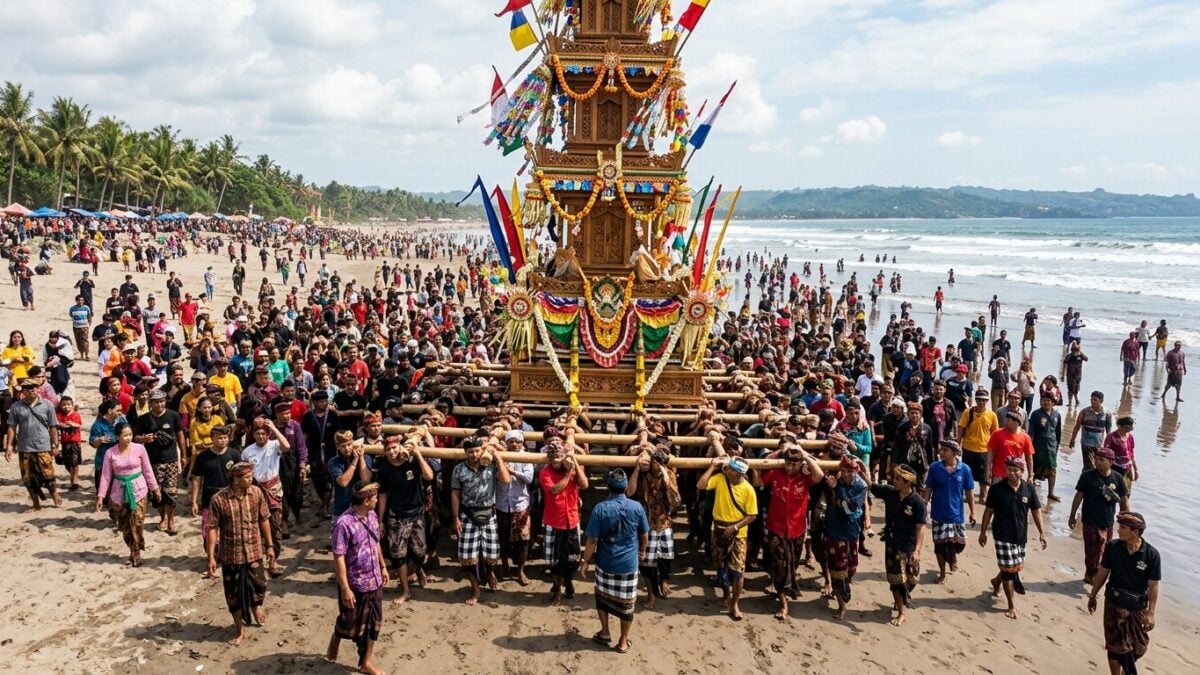
PARIAMAN — The Tabuik tradition in Pariaman, West Sumatra, drew up to 500,000 visitors and gave local businesses a sharp lift during the 2026 Pesona Budaya Tabuik Piaman peak on Sunday, as Deputy Minister of Culture Giring Ganesha praised the event as the living spirit of the community.
The impact was immediate. Hotels filled up, food stalls ran low on stock, and souvenir sellers saw sales jump far above normal.
For many residents, Tabuik is no longer just an annual ritual. It has become a working engine for the coastal economy.
Tabuik tradition, spiritual bond, and communal work
Speaking at the peak celebration in Pariaman, Giring said he admired how the event blends spiritual values, art, and collective labor. The towering wooden structures, each standing more than a dozen meters tall and weighing hundreds of kilograms, can only be built and paraded through communal effort.
Hundreds of young people help make it happen, from construction to the procession itself. No shortcuts.
“When we talk about the Tabuik tradition, there is a warm feeling that appears. This is a cultural expression that combines spirituality, art, and a spirit of mutual cooperation that does not fade with time,” Giring said before a crowd packed along the beach.
He also linked the event to President Prabowo Subianto’s view that culture should stand as one of the pillars of national character. West Sumatra, he said, has long produced major national figures such as Bung Hatta, Sutan Sjahrir, and Buya Hamka, all rooted in a strong cultural environment.
500,000 visitors crowd Gandoriah Beach
The main ritual came when the two large structures, Tabuik Pasa and Tabuik Subarang, were cast into the open sea at sunset. The hoyak procession drew loud cheers from visitors who had come from many regions to witness the moment.
Pariaman Acting Mayor Yota Balad confirmed the sharp rise in attendance this year. The event, which is listed in the Ministry of Tourism’s Kharisma Event Nusantara calendar, pulled in a large crowd from early morning.
“The number of tourists reached 500,000 people,” Yota said. He added that visitors came not only from Indonesia but also from abroad, including the United States and the Netherlands.
Tabuik tradition drives real income for small businesses
Local micro, small, and medium enterprises felt the strongest effect. The city government recorded a surge in transactions around the event area, with demand rising across food, lodging, transport, and crafts.
| Business Sector | Average Turnover Increase | Labor Impact |
|---|---|---|
| Local food (Nasi Sek, seafood) | 300% – 400% | Very high (extra daily workers) |
| Accommodation & homestays | 100% (full occupancy) | High (services & cleaning) |
| Transport & parking | 250% | Moderate (local youth) |
| Handicrafts & souvenirs | 150% | Moderate (home-based artisans) |
The numbers show how the Tabuik tradition does more than attract attention. It supports a chain of earnings that reaches thousands of households in Pariaman.
That link between cultural preservation and community welfare is one reason the festival keeps gaining weight. Culture here pays the bills.
Pariaman officials are now preparing a more orderly vendor zoning plan for next year’s event. The tourism office also wants to extend supporting festivals so visitors stay longer, spend more, and keep the city’s coastal economy moving into the next edition.




📝 Leave a Comment
Comment as . Reviewed by an admin before it appears.